The great olympic lie: untold
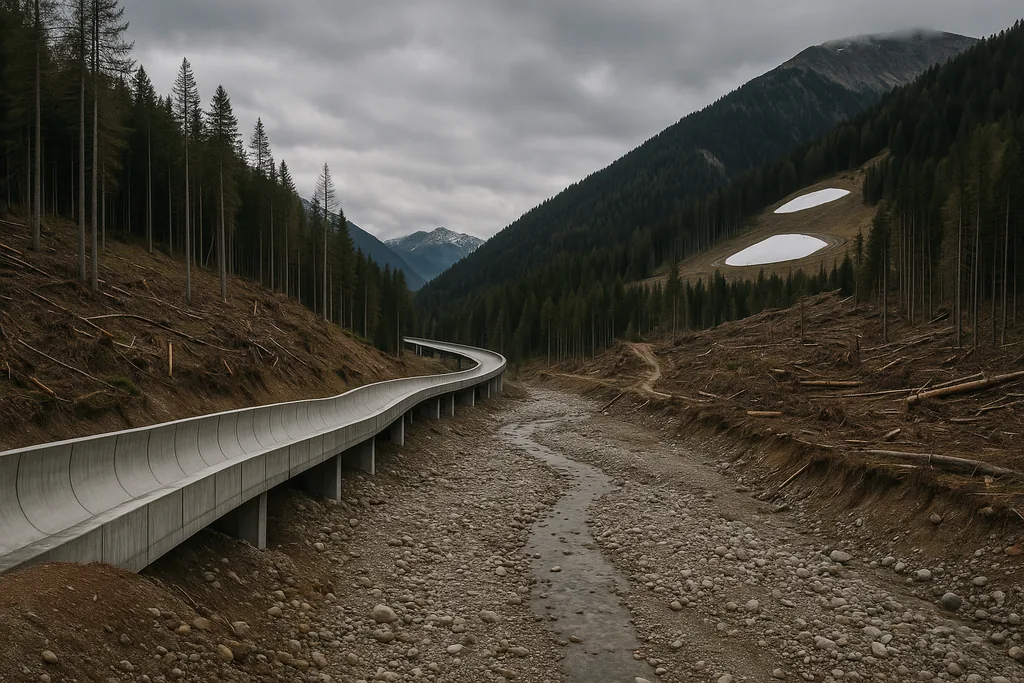
This week, evidence from the Italian Alps has made the phrase great olympic lie: untold painfully literal. Organisers of the Milano Cortina 2026 Winter Games promised a low‑impact, sustainable spectacle, but in the run‑up to the opening ceremonies they pumped drought‑stressed rivers dry to fill four new high‑altitude reservoirs, levelled the Bosco di Ronco forest to build a bobsleigh track, and ran a cable car across a documented landslide. Local environmental groups and World Wildlife Fund Italia pulled back from the organisers’ consultation process, saying the sustainability rhetoric had become window dressing rather than constraint.
The great olympic lie: untold costs to water and snow
Artificial snow is the single most visible example of how a Winter Olympics can demand resources that exist only in limited supply. To meet standards for ski runs, organisers built four new reservoirs and authorised mass pumping from the Spöl and Boite rivers. Hydrologists monitoring the construction reported temporary derogations that allowed three to five times permitted extraction rates, leaving stretches of alpine riverbed effectively dry during critical parts of the year. The short‑term spectacle of immaculate slopes came at the expense of aquatic life and downstream water users who depend on those torrents for drinking water, irrigation and local microclimates.
Professor Carmen de Jong at the University of Strasbourg, who has been studying Olympic water use across multiple Games, describes these reservoirs as a symptom of climate stress: they are a mechanism that turns scarce water into snow for just a few days of competition. Pumping groundwater and river water uphill, chilling and dispensing it over slopes, consumes energy and shifts the burden of climate adaptation onto local ecosystems. When rivers are drawn down to fill reservoirs, the scale of ecological harm is immediate — fish kills and pollution events have been reported — and the recovery timescale for mountain watersheds can be years or decades, depending on seasonal flows and post‑event rainfall.
Those impacts answer a common public question: what is the environmental impact of hosting the Winter Olympics? The short answer is that the Games concentrate enormous resource demand into fragile landscapes — water, energy and heavy civil engineering — for a brief set of events. The visible cost is snow and ski infrastructure; the invisible cost is altered river regimes, energy for refrigeration and the loss of snow’s reflective surface, which accelerates local warming. Host cities sometimes mitigate these harms through water reuse, renewable power commitments and venue reuse, but mitigation is uneven and can be undermined by last‑minute construction and emergency authorisations.
The great olympic lie: untold damage to forests and landscape
In Cortina the Bosco di Ronco exemplifies a different dimension of that damage: land cleared for a track that may not deliver long‑term community benefits. Trees that local residents said had stood for over a century were felled to make way for a concrete and steel bobsleigh run. Residents, writers and a visiting musician publicly mourned the loss; conservationists called it ‘‘one of the most striking examples of violence’’ carried out in the name of sport. Beyond the immediate aesthetic loss, such clearances fragment habitat, destabilise soils and remove the carbon‑sequestering function of mountain forests — a direct contradiction of any credible sustainability claim.
Spread‑out venue plans amplified landscape harm. The Olympics’ insistence on novelty and upgrade — a new ski park here, rebuilt jumps there — meant existing facilities were replaced rather than repurposed. Organisers’ messaging that 85% of venues were ‘‘already existing or temporary’’ concealed that many existing sites required major expansion or were moved, expanding their ecological footprints. The Games also required building a 15‑hectare Olympic village and infrastructural upgrades inside a UNESCO World Heritage landscape, raising questions about whether cultural and ecosystem protections were sufficiently weighed in planning decisions.
Controversies over such claims are predictable: sporting bodies emphasise legacy and local economic benefits, while environmentalists point to lost habitat and the long tail of infrastructural impacts. Local business owners have defended construction as an economic lifeline, but those gains can be transient when they depend on facilities — like bobsleigh tracks — that have historically fallen into disuse after the five‑ring glamour fades.
Infrastructure, economics and waived safeguards
Financial and regulatory choices deepened environmental harm. Reporting from the region shows that only a small fraction of construction spend was strictly necessary for staging competition; the lion’s share was on roads, rail improvements and car parks whose benefit to local communities post‑Games is uncertain. Worse, the Italian government waived environmental impact assessment requirements for roughly 60% of the projects. That shortcut accelerated construction but eliminated a key mechanism for independent scrutiny and mitigation planning.
The inflation of public works around the Games illustrates a familiar pattern: mega‑events shift risk and cost from private bidders to public balance sheets and natural capital. For towns relying on winter tourism, climate warming is already erasing the natural advantage of reliable snow. Around 200 Italian resorts have essentially vanished since the 1960s era boom. Investing in large, permanent installations and new infrastructure to prop up an economy in long‑term decline can lock communities into fossilized liabilities rather than adaptive strategies that would distribute benefits and reduce harm.
This dynamic helps answer the question Are the Winter Olympics really sustainable or is there a hidden environmental cost? The evidence from Milano Cortina 2026 suggests the latter: sustainability labels can mask environmental offsets that are outsourced to rivers, forests and future taxpayers.
Paths to more responsible Games
There are practical steps host cities and organising committees can take to reduce environmental damage — and several are already standard recommendations from conservation and planning experts. First, independent, line‑by‑line environmental impact assessments should be mandatory and publicly transparent early in the bid process, not retroactive or waived. That gives communities the evidence to push back on high‑impact proposals and to negotiate real legacy planning rather than symbolic pledges. Second, water budgets for snowmaking should be capped and tied to drought triggers with third‑party monitoring; where reservoirs are used they should prioritise seasonal storage compatible with local hydrology and downstream needs.
Other measures include focusing bids on genuinely reused venues, limiting new permanent construction, and building enforceable legacy funds that ensure decommissioning and habitat restoration after the Games. Host cities can also pilot low‑water and low‑carbon event formats — shorter competition windows, regionalised sport hubs that avoid cross‑mountain transport, and virtual spectator options that cut travel emissions. Communities and environmental NGOs should be empowered participants in oversight, with legal standing to challenge emergency derogations that would deplete rivers or remove protected land.
When asked how host cities mitigate environmental impact, the short answer is that mitigation exists but its strength depends on governance. Independent oversight, enforceable contracts tied to climate‑resilient criteria, and a precautionary approach to water and forest use are essential. Without them, sustainability becomes marketing rather than a constraint.
The Milano Cortina case is a warning for any jurisdiction considering a Winter Games bid. The great olympic lie: untold is not just a slogan but a structural problem: mega‑events can channel public money and political will into quick‑win construction that degrades the very natural assets those communities need to survive climate shifts. If future Games are to avoid repeating these mistakes, the international sporting community, national governments and local residents must insist on binding environmental protections, transparent accounting of true costs, and democratic oversight that keeps ecosystems and future generations at the centre of legacy planning.




Comments
No comments yet. Be the first!