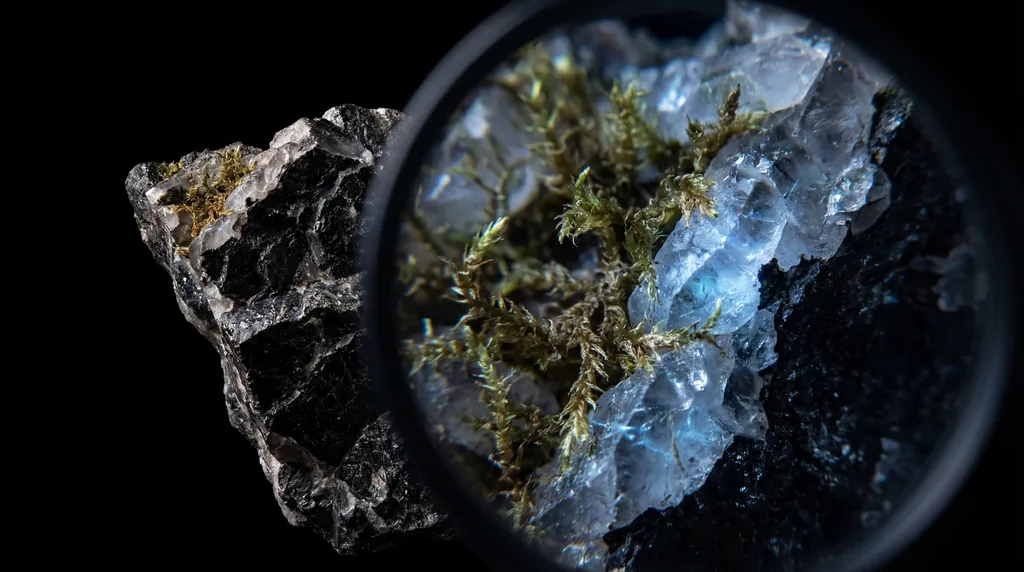

The piezoelectric effect in natural environments refers to the generation of electric charges from mechanical stress on certain crystals, such as quartz, potentially powering microbial life in deep Earth realms without sunlight. According to a groundbreaking review published in Environmental and Biogeochemical Processes on February 05, 2026, sediment compaction and tectonic movements apply pressure to these minerals, producing voltage gradients that microbes harness for metabolism. This discovery establishes a third pillar of energy for life, extending beyond the traditional reliance on photosynthesis and chemical redox reactions.
For decades, the scientific consensus held that life on Earth was sustained by two primary energy pathways: photosynthesis, which captures solar energy, and chemosynthesis, where microbes feed on reduced compounds in oceans and soils. However, researchers in Tokyo, Japan, led by corresponding author Shungui Zhou, have identified a "hidden" energy source: mechanical force converted into usable electricity. This new framework, termed mechano biogeochemistry, suggests that the physical movement of the planet itself—from flowing rivers to shifting tectonic plates—provides a continuous, diffuse flow of electrons that supports the deep biosphere.
What is the piezoelectric effect in natural environments?
The piezoelectric effect in natural environments is the process by which mechanical stress—such as squeezing, bending, or vibrating—deforms specific minerals to generate a measurable electric charge. Common minerals including quartz, barium titanate, and zinc oxide act as natural transducers, converting kinetic energy from environmental motion into electrical potential. This energy becomes accessible to electroactive microorganisms, which utilize specialized electron transfer systems on their cell surfaces to fuel their metabolic processes.
The research team outlines a sophisticated two-step energy pathway that functions independently of solar input. First, mechanical deformation of piezoelectric materials generates a surplus of electrons; second, local microbial communities capture these electrons to drive redox reactions and support growth. This mechanism is particularly vital in mechanically active settings like subduction zones or riverbeds, where physical movement is abundant but traditional chemical fuels may be scarce. Laboratory experiments have already demonstrated that these stimulated minerals can sustain microbial carbon fixation, nitrogen transformations, and even the production of bioplastics.
Could mechanical energy explain life on early Earth?
Mechanical energy likely played a critical role on early Earth by providing the necessary activation energy for prebiotic chemical reactions and sustaining primitive metabolisms before the evolution of photosynthesis. During the Hadean and Archean eons, intense tectonic activity, wave action, and frequent meteorite impacts generated significant mechanical stress. These forces could have produced the electrical gradients and reactive molecules required for the synthesis of amino acids and the first biogeochemical cycles.
Co-author Lingyu Meng notes that this framework helps bridge the gap in our understanding of how life persisted in the extreme, oxygen-poor environments of the young Earth. Before the atmosphere became oxygen-rich, tectonic strain and sediment grinding provided a stable, albeit small, amount of energy that was less volatile than surface conditions. This "mechanical battery" may have offered a transitional pathway, allowing early organisms to develop the complex metabolic machinery seen in modern life-forms. By accounting for these energy flows, scientists can now refine models of Earth's early history and the resilience of the deep biosphere.
How does mechanical energy impact astrobiology and the search for life?
In the field of astrobiology, mechanical energy is a transformative concept because it suggests that life could thrive on geologically active worlds where sunlight is absent, such as the subsurface of Mars or the icy moons of Jupiter and Saturn. Tidal forces on moons like Europa and Enceladus cause constant internal friction and "ice delamination," potentially generating enough piezoelectric energy to support microbial ecosystems in their hidden oceans. This expands the definition of "habitability" to include any world with significant mechanical or tectonic activity.
The implications for astrobiology are profound, as the search for extraterrestrial life has historically focused on the "habitable zone" where liquid water and sunlight are present. However, if mechanical force can sustain metabolism, then planets previously dismissed as barren might harbor life deep within their crusts. For instance, the tectonic activity or cryovolcanism on distant bodies could provide the necessary electrons for carbon capture and biomass production, mirroring the processes observed in Earth's deep-sea sediments and seismic zones.
How does sediment compaction generate energy for microbes?
Sediment compaction generates mechanical energy through the immense pressure and friction of overlying layers, which triggers piezoelectric voltages in mineral grains that microbes use for ATP synthesis. As layers of silt and sand accumulate in deep subsurface environments, the physical "squeezing" of quartz-rich sediments creates a persistent electric field. Microbes inhabiting these dark, high-pressure zones have evolved to exploit these voltage gradients, allowing them to survive for millennia in energy-limited states.
- Electron Flux: Compaction provides a slow but steady release of electrons, creating a "deep battery" effect.
- Carbon Sequestration: Microbes use this energy to convert dissolved CO2 into organic biomass, contributing to the global carbon cycle.
- Pollutant Degradation: In some environments, this mechanical-to-electrical conversion helps drive the breakdown of complex pollutants.
- Metabolic Resilience: This pathway allows for survival in "starvation" conditions where organic matter is unavailable.
Beyond the theoretical implications for biogeochemical cycles, this discovery has practical applications for green technology. The authors suggest that mechano biogeochemistry could inspire new methods for sustainable biomanufacturing and wastewater treatment. By using the natural vibrations of flowing water or structural movement to stimulate piezoelectric materials, industrial systems could support contaminant-removing microbial communities without the need for energy-intensive aeration or external power inputs.
As researchers look toward the future, the primary challenge remains the quantification of these energy flows in situ. Measuring electron fluxes within the Earth's crust requires highly sensitive equipment and new methodologies to distinguish between mechanical energy and traditional chemical energy. Nevertheless, the integration of physics, geology, and microbiology marks a paradigm shift in our understanding of life's endurance. Mechanical energy has always been present in the Earth's dynamic systems, and its role as a silent partner to sunlight is finally coming into focus.




Comments
No comments yet. Be the first!