Regulatory gap behind pesticides latin america: nearly
The paper at the center of this reporting compared national authorizations in eight countries with the EU list of approved active substances as of December 2020. It highlighted wide variation across the region: Costa Rica and Mexico showed the highest counts of substances not allowed in Europe (around 140 and 135, respectively), followed by Brazil (115), Argentina (106) and Chile (99). Those totals include commonly used compounds such as the herbicide acetochlor, the insecticide bifenthrin and the fungicide carbendazim — all examples of products that regulators in Europe have removed, restricted or never approved because of concerns about persistence, toxicity to non-target species, endocrine-disruption potential or other human-health hazards.
Why does this divergence exist? EU regulation tends to be precautionary and hazard-focused: substances demonstrating carcinogenicity, endocrine disruption, reproductive toxicity or unacceptable environmental persistence are often banned or not renewed. By contrast, approvals in many Latin American systems have historically followed risk-assessment models that rely on local application patterns, economic considerations and, in some cases, datasets submitted by industry. Researchers who worked on the analysis describe the regional framework as «considerably less rigorous», noting gaps in monitoring capacity, residue surveillance and periodic re-evaluation of older chemistries. Economic dependence on export crops, the speed of approvals to support intensive agriculture, and limited institutional resources all help explain why so many substances remain authorized south of the Atlantic while Europe pulls them off the market.
Export crops and economic drivers
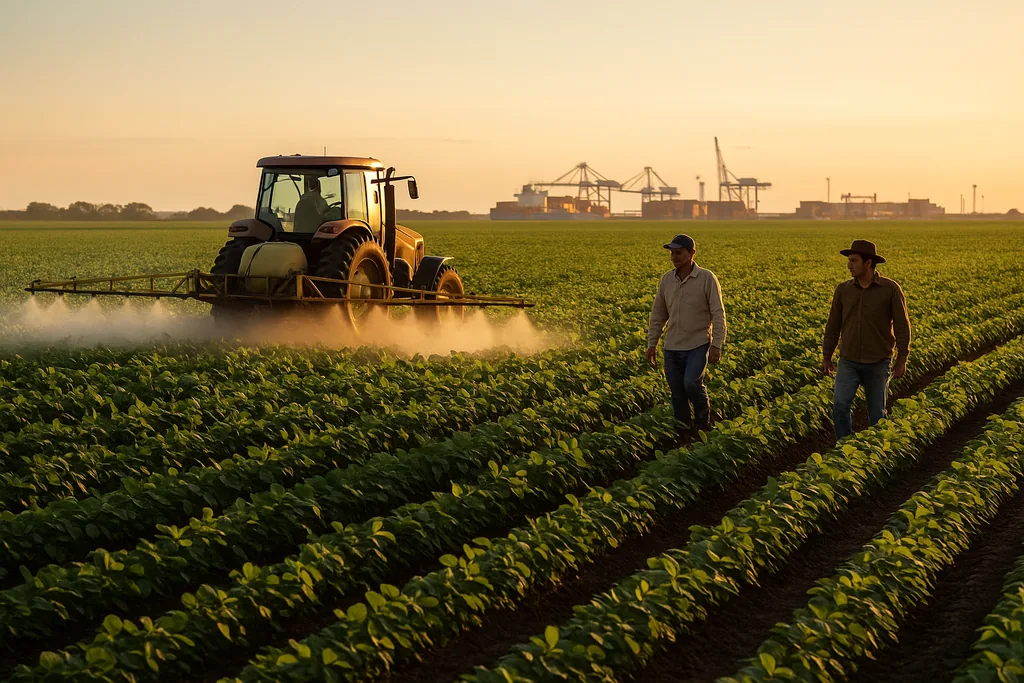
The analysis shows that the pesticides most likely to be banned in Europe concentrate on the crops that underpin regional agricultural export earnings. Soy, corn, wheat and rice — the commodities with the highest production and export value in the sample — account for the largest share of authorized-but-EU-banned active ingredients. For governments and producers the pressure is clear: yield stability and pest control for large monocultures often depend on chemical tools that global regulators increasingly view as risky.
That economic reality makes regulatory shifts politically and technically difficult. Producers and agrochemical distributors argue that sudden bans can leave farmers without reliable alternatives, especially where integrated pest management (IPM) systems have not been widely adopted and extension services are thin. At the same time, public-health and environmental scientists stress that continued reliance on hazardous active ingredients externalizes health costs to rural workers and neighbouring communities and degrades soil, water and biodiversity — outcomes that, in the long run, undermine agricultural resilience and market access.
Health and environmental harms of pesticides latin america: nearly
Scientific literature and regional health studies document multiple exposure pathways and harms. The Food and Agriculture Organization reported that pesticide consumption in Latin America increased roughly 500% between 1990 and 2019, reflecting intensification of agriculture. That rise translates into far higher contact rates for farmworkers and people living near fields, and increased residue loads in food, water and even breast milk. A multi-country public-health study published in 2024 detected pesticides in breast milk samples across at least ten Latin American countries, raising concerns about endocrine disruption, developmental neurotoxicity and later-life disease risks for children.
Clinical and epidemiological studies add to the alarm. Work from Paraná state in Brazil has linked chronic occupational pesticide exposure to more aggressive forms of breast cancer among women with occupational histories in agriculture. Acute poisonings remain common in some rural areas because of inadequate training, insufficient personal protective equipment and limited access to emergency care. For ecosystems, pesticides drive biodiversity loss by killing beneficial insects (including pollinators), reducing soil microbial diversity, contaminating freshwater systems and accumulating in food webs; neonicotinoids, pyrethroids and persistent fungicides have all been implicated in such harms elsewhere and are part of the mix under review in the Latin American context.
Policy and practical steps for safer agriculture
Researchers who authored the Proceedings analysis and public-health experts advocate a multi-layered response. At the regulatory level they recommend rapid bans of highly hazardous pesticides (HHPs), harmonized risk-assessment protocols across countries, and mandatory re-evaluation cycles so legacy chemistries are not grandfathered indefinitely. They also call for expanded, targeted monitoring — residue testing in food, biomonitoring among exposed populations, and environmental surveillance of water and soil — to generate the local evidence that drives policy change.
What consumers, health systems and regulators can do next
Policymakers should prioritize a handful of immediate steps: ban or phase out proven HHPs, implement regionally coordinated monitoring and make data publicly available, strengthen occupational health protocols and emergency response in rural clinics, and fund practical transition programs that replace hazardous chemistries with effective, lower-risk methods. Civil society and universities will need to be central partners in training programs and in conducting independent monitoring; scientific institutions such as national research councils can provide the analytical backbone for re-evaluations.
For consumers, awareness of residue standards and demand for sustainably produced food can shift incentives. For health systems, surveillance of poisonings, cancer incidence and developmental outcomes in agricultural regions should be a priority so that regulatory decisions are guided by both hazard data and real-world health trends. The analysis in Proceedings of the Royal Society B is a clear invitation: harmonize regulation with emerging science, protect vulnerable workers and communities, and invest in farming models that reduce dependence on hazardous pesticides while maintaining livelihoods.
Sources
- Proceedings of the Royal Society B (analysis comparing pesticide approvals)
- Food and Agriculture Organization (FAO) pesticide use statistics
- CONICET (Argentina) — regional regulatory and research commentary
- Public health research on pesticide residues and breast milk (peer-reviewed public health journal)
- Mercosur–European Union trade agreement (text and policy analyses)




Comments
No comments yet. Be the first!