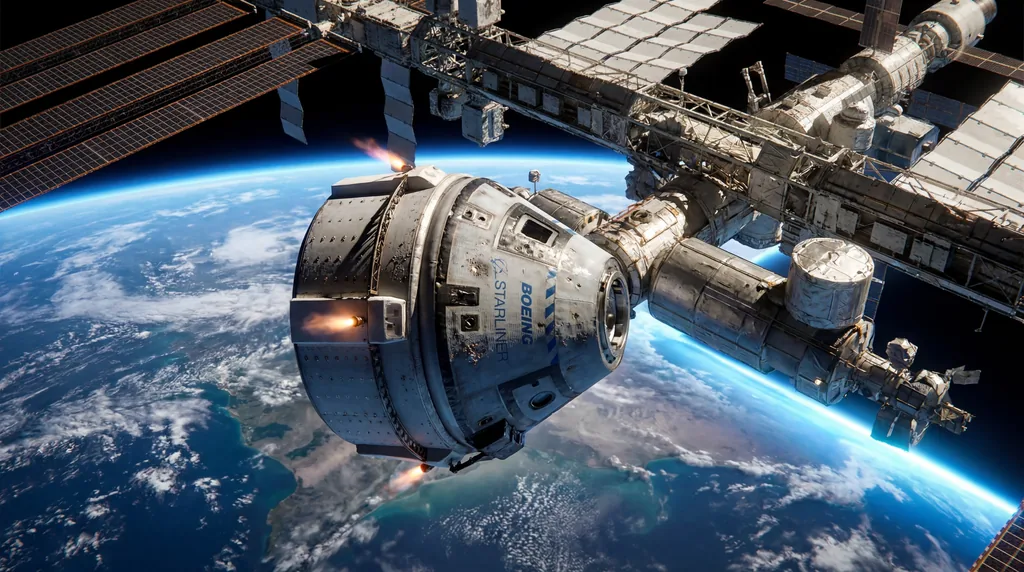

On February 19, 2026, NASA released a formal assessment of the 2024 Boeing Starliner Crew Flight Test (CFT), officially classifying the mission's failures as a Type A mishap. This designation, the agency’s highest severity level for accidents, places the botched mission in the same administrative category as the Challenger and Columbia shuttle disasters. The report cites a combination of engineering vulnerabilities in the Starliner spacecraft and internal leadership failures within the agency that left two veteran astronauts stranded aboard the International Space Station (ISS) for nine months.
NASA Administrator Jared Isaacman delivered the findings during a sharply critical briefing, noting that while the crew returned safely via a SpaceX vehicle, the potential for a catastrophic loss was significant. The investigation revealed that the Starliner propulsion system and decision-making protocols were insufficient for human spaceflight. According to Isaacman, the mission's failures were not merely technical but represented a cultural breakdown where "programmatic advocacy" overshadowed safety concerns and objective risk assessment.
How does the Starliner mishap compare to Challenger and Columbia?
NASA classified the Boeing Starliner crewed test flight as a Type A mishap because it met the criteria for property damage exceeding $2 million and involved a high potential for loss of life. While the 2024 mission resulted in no fatalities, the classification triggers an independent investigation and high-level scrutiny equivalent to that seen following the Challenger and Columbia tragedies.
The comparison to historical shuttle disasters serves as a somber institutional warning regarding risk management and safety culture. During the briefing, officials noted that the "Type A" label reflects the "potential for a significant mishap" rather than the actual outcome. By using this classification, the US space agency acknowledges that the thruster failures and helium leaks encountered in orbit could have led to a loss-of-crew event if alternative transport options, such as the SpaceX Dragon, had not been available.
Institutional memory played a significant role in this assessment, as investigators found echoes of the "normalization of deviance" that preceded previous spaceflight tragedies. In the case of Starliner, engineers and managers reportedly accepted recurring technical issues as "known risks" rather than addressing their root causes. This mindset allowed the spacecraft to launch with known helium leaks, a decision that NASA leadership now admits placed the mission and the lives of astronauts Butch Wilmore and Suni Williams at unnecessary risk.
What hardware failures were identified in the NASA Starliner report?
The NASA report identified critical failures in Starliner's Reaction Control System (RCS), specifically five thruster malfunctions that occurred during the spacecraft's approach to the ISS in June 2024. These hardware failures were attributed to components operating outside their qualification limits, compounded by incomplete fixes to prior thruster risks and inadequate pre-flight testing of the propulsion housing.
Technical investigators discovered that the spacecraft’s propulsion system suffered from the following issues:
- Helium Leaks: Multiple leaks within the pressurized propulsion system that compromised the integrity of the thruster manifolds.
- Thruster Degradation: Five RCS thrusters failed during docking, four of which were eventually recovered but deemed unreliable for the return journey.
- Teflon Seals: Heat-induced expansion of Teflon seals within the valves restricted propellant flow, a phenomenon that was not fully characterized during ground testing.
- Software Logic: Errors in how the flight computer handled thruster de-selection during high-stress maneuvers.
Boeing has stated it has made "substantial progress" on corrective actions, yet the NASA report emphasizes that the spacecraft remains "less reliable for crew survival than other crewed vehicles." The investigation found that Boeing engineers relied too heavily on designs approved for different applications without verifying their performance in the specific thermal environment of the Starliner's "doghouse" thruster pods. As a result, NASA will not certify the vehicle for future crewed missions until the propulsion system is fundamentally redesigned and proven through rigorous testing.
Why did NASA’s internal oversight fail during the Starliner mission?
Internal NASA oversight failed due to programmatic advocacy that exceeded reasonable bounds, leading the agency to prioritize Boeing's reputation and schedule over rigorous safety verification. Associate Administrator Amit Kshatriya admitted that the agency "failed" the astronauts by accepting a vehicle that was not mission-ready and making flawed decisions throughout the docking and post-mission phases.
The report highlights a breakdown in communication between the Commercial Crew Program and mission controllers, where dissenting engineering opinions were reportedly marginalized. This environment created a "culture incompatible with human spaceflight," according to Jared Isaacman. The investigation suggests that the desire to maintain a second domestic launch provider led to NASA officials being less critical of Boeing’s technical shortcomings than they were of other partners.
To address these systemic errors, NASA is implementing new accountability measures:
- Enhanced Transparency: New protocols for reporting dissenting engineering opinions directly to the Office of Safety and Mission Assurance.
- Independent Reviews: Mandatory third-party audits for all Type A mission classifications.
- Leadership Training: Focused curriculum on the lessons of the Challenger and Columbia disasters for current program managers.
Will SpaceX replace Boeing for ISS crew transport?
No, SpaceX will not replace Boeing as the sole provider, as NASA remains committed to maintaining two independent commercial crew providers to ensure redundant access to the International Space Station. While the SpaceX Dragon currently handles the majority of US crew transport, the agency views a second provider as a strategic necessity for national space security.
Despite the harsh findings, NASA officials confirmed they will continue to work with Boeing to rectify the Starliner's deficiencies. The path forward for Boeing involves a series of uncrewed milestones, including a potential cargo flight in mid-2026, before the agency will consider another crewed mission. The financial implications for Boeing are significant, as the company has already absorbed over $1.5 billion in cost overruns related to the program's delays and technical fixes.
The safe return of Wilmore and Williams in March 2025, facilitated by the Crew-9 Dragon mission, proved the value of NASA's redundancy strategy. However, the 2026 report makes it clear that the "dual-provider" goal cannot come at the expense of astronaut safety. Future Starliner missions will require a complete overhaul of both the hardware and the management culture that allowed the 2024 mishap to occur, ensuring that the mistakes of the past are not repeated in the final years of the ISS program.





Comments
No comments yet. Be the first!