Открытие и траектория
Обзор ATLAS сообщил об объекте 1 июля. Получив обозначение 3I/ATLAS, он движется по гиперболической траектории, которая унесет его обратно в межзвездное пространство, что делает его третьим подтвержденным межзвездным посетителем после 1I/ʻOumuamua и 2I/Borisov.
Соединение с Солнцем и ограничения для наблюдений
С точки зрения Земли 3I/ATLAS вступил в фазу соединения с Солнцем 21 октября и пройдет ближайшую к Солнцу точку (перигелий) 29 октября. Пока объект находится на небе вблизи Солнца, наземные телескопы не могут вести за ним наблюдение.
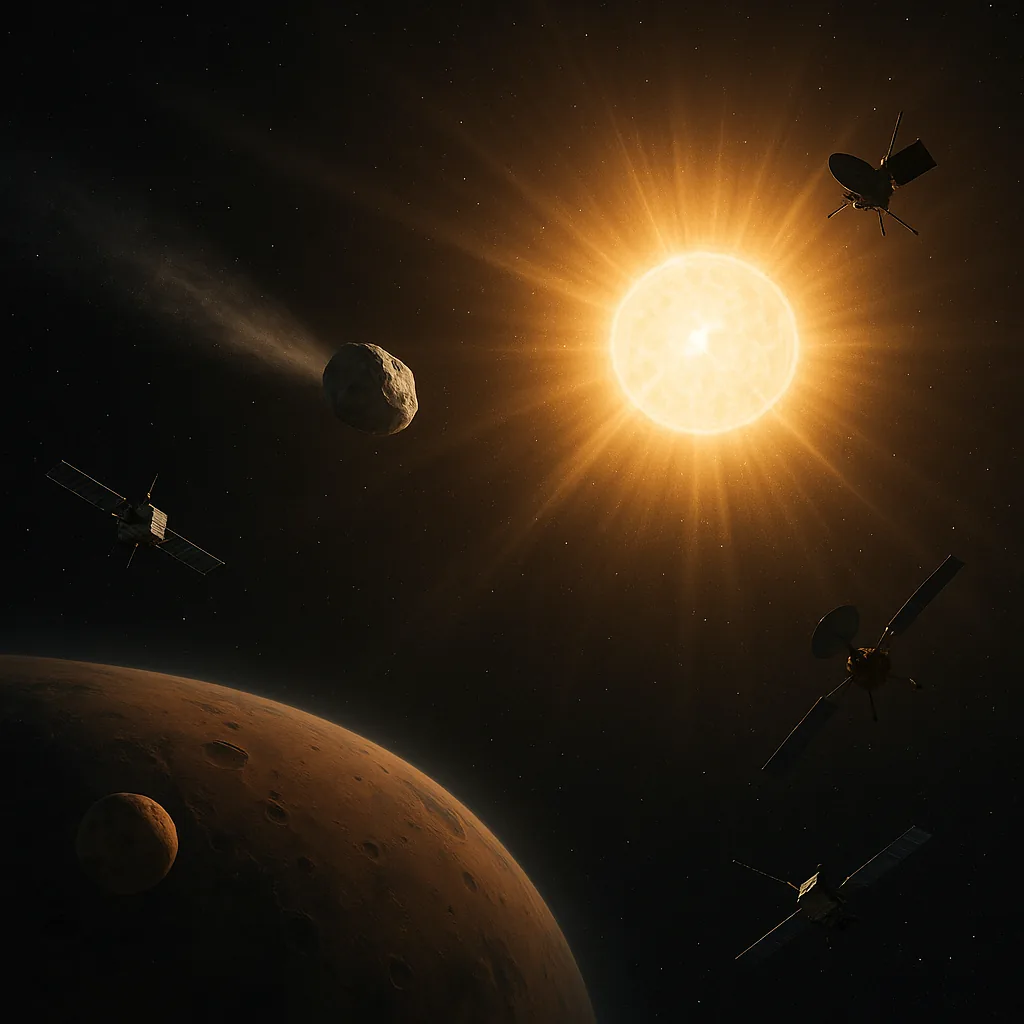
Космические аппараты и орбитальные модули в других частях внутренней области Солнечной системы — включая платформы, работающие вблизи Марса — могли бы провести наблюдения во время максимального сближения. Однако доступные углы обзора ограничивают перечень инструментов, которые можно использовать, и виды измерений, возможных в перигелии.
Гипотеза искусственного происхождения и сценарий маневра Оберта
Небольшое число исследователей выдвинуло предположение о маловероятной возможности того, что объект может иметь искусственное происхождение. Один из предложенных сценариев предполагает наличие более крупного аппарата, выпускающего зонды меньшего размера, которые выполняют включение двигателя вблизи Солнца или гравитационный маневр (так называемый маневр Оберта) для изменения своих вылетных траекторий.
Приведенные в этом контексте оценки по порядку величины указывают на характерное радиальное изменение порядка 0,36 астрономической единицы и скорость в перигелии около 68 км/с. Эти значения используются для оценки изменения удельного углового момента и тяговых усилий, которые потребовались бы зондам для выполнения таких корректировок траектории.
Наблюдения после прохождения перигелия и научные перспективы
Измерения, проведенные после прохождения перигелия — особенно высокоточное отслеживание скорости и траектории, а также поиск резких сдвигов в распределении массы — будут иметь решающее значение для проверки конкурирующих гипотез. До тех пор, пока данные после перигелия не будут собраны и проанализированы, основной интерпретацией остается то, что 3I/ATLAS является естественным кометным телом.




When do the aliens get here ? :-)