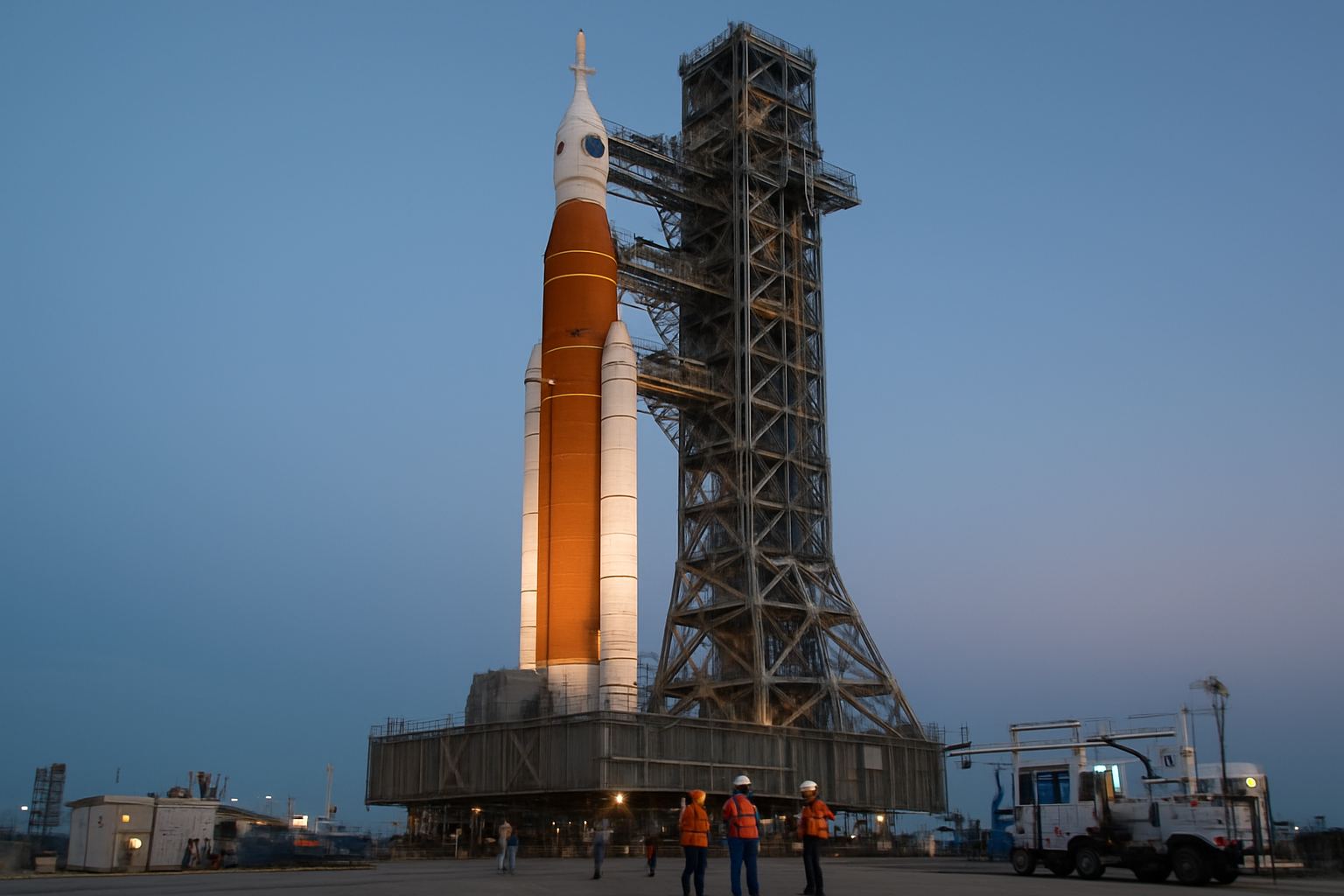
A bold step back to the Moon’s neighborhood
NASA is moving the Space Launch System rocket and its Orion spacecraft toward Launch Complex 39B this month as teams race to complete final checks ahead of a launch window that opens in early February 2026. If the schedule holds, Artemis II will lift four astronauts on a roughly 10‑day journey that goes out past the Moon and back — the first time humans will travel beyond low Earth orbit since Apollo 17 in 1972. The rollout to the pad and a string of launch rehearsals represent the last major on‑ground milestones before crews strap into the vehicle for a deep‑space test flight.
Liftoff preparations and the launch calendar
The crew, the capsule and what they will do
Artemis II will carry Commander Reid Wiseman, Pilot Victor Glover, Mission Specialist Christina Koch and Canadian Space Agency astronaut Jeremy Hansen. The quartet has already named their Orion crew module "Integrity" — a symbolic nod to the teamwork and standards the mission demands — and will test life‑support, navigation and other critical systems while in deep space. The flight is a test, not a landing: Orion will take the crew on a high‑speed loop around the Moon and then return them safely to Earth, validating hardware and procedures needed for subsequent Artemis missions that will attempt lunar surface operations.
Mission profile and technical checkpoints
The planned mission profile uses a free‑return trajectory that sends Orion around the Moon and back to Earth, simplifying abort options and offering robust margins during the flight. Engineers will exercise the spacecraft’s environmental control and life‑support systems under real crew loads, run rendezvous and proximity operations using the spent upper stage as a target, and demonstrate communications links between Orion and Earth networks. Mission planners have also tailored launch days to ensure the capsule’s return entry can follow the planned thermal and guidance profiles; some adjustments to the re‑entry plan — including a shorter or modified "skip" entry in earlier planning cycles — have constrained which days within a monthly window are viable for launch. Those trajectory and entry constraints are a major reason the program has a limited set of launch opportunities each month.
Why Artemis II matters beyond symbolism
Technically, Artemis II is a proving ground. Flying humans to lunar distance and back exposes life‑support, radiation management, navigation and thermal systems to a harsh environment that cannot be reproduced in low Earth orbit. The data and operational experience gathered on this mission will feed directly into the design choices and flight rules for Artemis III and later missions that aim to land astronauts on the lunar surface and build sustained operations there. Politically and programmatically, a successful Artemis II will also bolster international partnerships and private‑sector supply chains that are being assembled to support a long‑term presence on the Moon and, ultimately, crewed missions to Mars.
People and milestones on board
The composition of the Artemis II crew highlights how U.S. human spaceflight has evolved since Apollo. Victor Glover will become the first Black person to travel beyond low Earth orbit and Christina Koch will become the first woman to do so; Jeremy Hansen’s flight will mark another first for the Canadian Space Agency, which has contributed hardware and training to the mission. Those milestones are individually historic and reflect broader shifts toward more inclusive crews and international collaboration in deep‑space exploration. At the same time, the mission is deliberately conservative in scope: it tests capabilities rather than attempting a landing, which reduces programmatic risk while giving engineers and flight surgeons a validation platform in the real environment of deep space.
Risks, readiness and public expectations
Safety remains the overriding constraint. Artemis I exposed the program to classic cryogenic and fueling risks — including hydrogen leaks that required engineering fixes and procedural changes — and those lessons have been folded into Artemis II preparations. Before any launch decision, teams must complete a Flight Readiness Review that draws evidence from integrated tests, simulations and hardware inspections; that process can delay a launch even after the vehicle has rolled to the pad. NASA officials have repeatedly emphasized that an early‑February ambition depends on flawless execution of the remaining tests and a clean set of reviews, and they will let system readiness determine the final date.
How this fits into the broader Artemis roadmap
Artemis II is an essential intermediate step between the uncrewed Artemis I and the crewed lunar landing planned for Artemis III. The candle‑lighting projections, public events and capsule‑naming ceremonies around the mission are part of a wider effort to reconnect the public with a new era of lunar exploration, but the program’s engineers and mission planners are focused on more prosaic deliverables: verified hardware, validated procedures and a robust set of telemetry and test data. Success on Artemis II does not guarantee the timing of future landings — those will still hinge on the development of a human landing system, suit and surface logistics — but it is the first moment that humans will re‑enter the deep‑space environment the program intends to operate in for decades to come.
What to watch in the coming weeks
Watch for the crawler transfer to the pad, the outcome of the wet dress rehearsal, and the Flight Readiness Review. Each of those steps is both technically meaningful and schedule‑critical: a problem revealed during fueling or an unexpected hardware anomaly could move the launch to the next available window in March or April. If launch proceeds in February, expect a tightly choreographed series of burns, a lunar flyby, and a high‑precision reentry and recovery operation in the Pacific roughly 10 days after launch. Throughout those events, NASA will publish mission status updates and scientific data that will be scrutinized by space agencies and mission planners worldwide.
Sources
- NASA (Artemis II mission and press materials)
- NASA (Final Steps Underway for Artemis II)
- NASA Kennedy Space Center / Vehicle Assembly Building operations
- NASA Johnson Space Center (crew and Orion naming)
- Canadian Space Agency




Comments
No comments yet. Be the first!