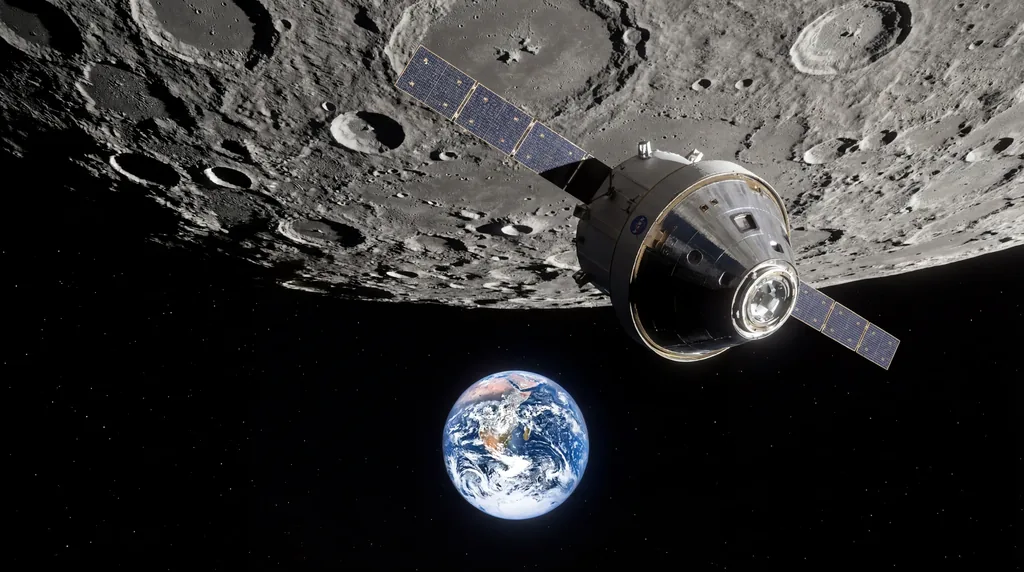

NASA has officially restructured the Artemis Program architecture to include an additional mission in 2027, aimed at standardizing vehicle configurations and accelerating the path toward a sustained human presence on the Moon. Announced on February 27, 2026, by NASA headquarters, this strategic overhaul shifts the focus of the Artemis III mission to a comprehensive test flight in low Earth orbit (LEO). By introducing this incremental step, the agency intends to bridge technical gaps between initial orbital tests and complex lunar surface operations, ensuring that the return of American astronauts to the lunar south pole is both safe and repeatable.
The decision to update the Artemis Program roadmap follows the successful arrival of the Artemis II Space Launch System (SLS) rocket at the Vehicle Assembly Building in Florida. As NASA prepares to launch four astronauts around the Moon, leadership has recognized the need for a more robust "step-by-step build-up of capability" reminiscent of the Apollo era. This transition involves moving away from evolving hardware configurations for every flight and instead settling on a standardized "Block 1" configuration for the SLS and Orion stack. This move is designed to minimize production risk and maximize the "learning" gained from each successive launch.
What is the new Artemis mission added in 2027?
The new Artemis mission added in 2027 is a reconfigured Artemis III flight that will serve as a high-stakes test mission in low Earth orbit. Instead of an immediate lunar landing, this mission will focus on rendezvous and docking procedures with commercial landers from SpaceX and Blue Origin, alongside testing life support and new xEVA spacesuits.
This mission represents a strategic pivot in the Artemis Program timeline, prioritizing the integration of complex systems before attempting a crewed descent to the lunar surface. During the 2027 flight, astronauts aboard the Orion spacecraft will conduct in-space checkouts of communications, propulsion, and navigation systems while docked with one or both of the Human Landing System (HLS) vehicles. This "test like we fly" philosophy allows NASA to validate the interoperability of hardware from different commercial partners in a controlled environment, significantly reducing the variables for future deep-space missions.
According to NASA Associate Administrator Amit Kshatriya, the revised mission sequence is born from the "wisdom of the folks that designed Apollo." By maintaining the Block 1 configuration for both the rocket and the pad systems, NASA avoids the "needlessly complicated" process of altering the SLS stack between missions. This stability allows the workforce to master the existing technology, ensuring that the Artemis IV mission in 2028 can proceed with a much higher degree of operational certainty and safety for the crew.
Who is Jared Isaacman and why was he appointed NASA head?
Jared Isaacman is the NASA Administrator appointed to lead the agency through a "Golden Age" of exploration by applying private-sector efficiency to federal spaceflight. His leadership focuses on increasing flight cadence, eliminating bureaucratic delays, and ensuring the United States maintains a competitive edge against geopolitical adversaries in the race to the Moon.
Administrator Isaacman brings a unique perspective to the Artemis Program, having previously commanded private space missions and founded major aerospace ventures. His appointment signals a shift toward rebuilding core competencies within the civil servant workforce. Under his direction, NASA is implementing a new workforce directive that emphasizes "in-house and side-by-side development" with commercial partners. This approach is intended to create a safer and more reliable launch cadence by ensuring NASA engineers are deeply involved in the design and production of the hardware they operate.
Isaacman’s strategic focus is explicitly tied to geopolitical competition. In recent statements, he noted that the pressure from "greatest geopolitical adversaries" requires NASA to move faster and standardize its approach. By streamlining the architecture and committing to at least one surface landing every year following the 2028 milestone, Isaacman aims to transform the Artemis Program from a series of sporadic flights into a permanent, industrialized pipeline for lunar exploration and economic development.
Is the 2028 Moon landing still realistic with these updates?
Yes, the 2028 Moon landing remains the primary objective, with the newly updated architecture making the goal more realistic by de-risking the Artemis IV mission. By moving the first landing attempt to Artemis IV, NASA ensures that all docking and life-support systems have been combat-proven in Earth orbit during the 2027 mission window.
The revised schedule addresses the "production risk" that had previously threatened the program's viability. Rather than rushing a landing with untested docking interfaces, the Artemis Program will now follow a logical progression:
- Artemis II: Crewed flight around the Moon to test the Orion capsule.
- Artemis III (2027): Integrated system testing in low Earth orbit with HLS partners.
- Artemis IV (2028): The first crewed landing on the lunar surface since 1972.
- Post-2028: Annual surface missions to build the Lunar Gateway and permanent habitats.
Technical feasibility is further bolstered by the decision to keep pad systems and the SLS upper stage in the Block 1 configuration. As Amit Kshatriya noted, altering these systems for early landings would have "left too much learning on the table." By stabilizing the hardware, NASA can focus on the operational complexities of lunar descent and surface stay, rather than constantly troubleshooting new rocket variants. This conservative but steady approach is designed to ensure that once Americans return to the Moon, they have the infrastructure to stay.
What role will SpaceX and Blue Origin play in the updated Artemis plan?
SpaceX and Blue Origin provide the critical Human Landing Systems (HLS) that will interface with NASA's Orion spacecraft to ferry astronauts to the lunar surface. In the revised 2027 mission, both companies will participate in rendezvous and docking tests in low Earth orbit to validate their respective Starship and Blue Moon lander designs.
The Artemis Program relies heavily on these commercial partnerships to achieve its mission frequency. Under the updated architecture, SpaceX’s Starship HLS and Blue Origin’s Blue Moon lander must prove they can successfully dock with Orion and sustain life-support for extended periods. The 2027 orbital test will specifically evaluate:
- In-space propulsion: Testing the ability of commercial landers to maneuver and maintain stable orbits while docked.
- Integrated Life Support: Ensuring air, water, and waste systems work seamlessly across the two different pressurized vessels.
- Advanced EVA: Testing the next-generation xEVA suits in the vacuum of space before they are used on the lunar surface.
This collaborative framework allows NASA to leverage the rapid prototyping capabilities of the private sector while maintaining federal oversight of safety and mission success. By involving both SpaceX and Blue Origin in the 2027 orbital rehearsals, NASA creates a competitive and redundant environment. If one provider faces delays, the other can maintain the mission cadence, ensuring that the national objective of an enduring lunar presence remains on track despite the inherent risks of deep-space exploration.
Looking ahead, NASA will continue to refine the specific objectives of the updated Artemis III mission following detailed reviews with these industry partners. The agency has committed to sharing a finalized list of flight objectives in the near future. This transparency is part of a broader effort to maintain public and congressional support for a program that is now positioned as the cornerstone of a new "Golden Age" of human spaceflight, stretching from the Earth's orbit to the lunar surface and, eventually, toward Mars.





Comments
No comments yet. Be the first!