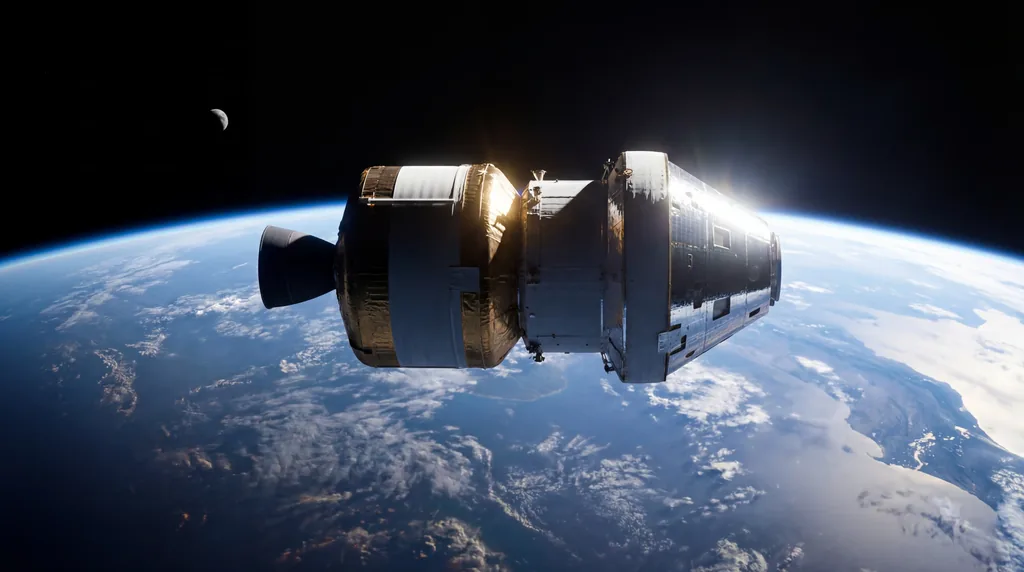

NASA Administrator Jared Isaacman announced a significant "course correction" for the Artemis program on February 27, 2026, shifting the agency’s strategy toward a phased, risk-reduction model for lunar exploration. This reconfigured plan introduces a mandatory Earth-orbit test flight to validate mission-critical hardware before astronauts attempt a surface landing. By increasing the cadence of Space Launch System (SLS) launches and standardizing rocket configurations, the agency aims to land humans on the Moon by 2028 while ensuring a more stable and sustainable operational foundation.
The strategic shift was prompted by internal assessments suggesting the previous "direct-to-landing" approach carried unacceptable levels of technical risk. NASA officials, including Associate Administrator Amit Kshatriya and Acting Associate Administrator Lori Glaze, emphasized that the original 2024 and 2025 targets were no longer realistic. The new roadmap prioritizes "muscle memory" for ground teams and flight crews, drawing inspiration from the incremental success of the 1960s Apollo program to avoid the pitfalls of a rushed schedule.
Why add an Earth-orbit test flight before the lunar landing?
NASA added an Earth-orbit test flight to reduce mission risk by testing the integration of the Orion spacecraft, the Human Landing System (HLS), and new lunar spacesuits in a controlled environment. This intermediate mission allows for the validation of rendezvous, docking, and life support systems without the immediate requirement for complex deep-space cryogenic refueling. This approach ensures that all hardware interfaces function correctly before the crew is committed to a lunar descent.
The decision to include an Earth-orbit mission is rooted in the need to verify how the Orion capsule interacts with commercial landers developed by SpaceX and Blue Origin. Currently, the Starship HLS and Blue Moon MK2 require multiple refueling launches to reach the Moon, a process that is still under development. By conducting a test in Earth orbit first, NASA can practice integrated operations and "wring out" the systems of the lander and Axiom Space suits while remaining within reach of immediate Earth return trajectories.
Historical precedents, such as the Apollo 9 mission, demonstrate the value of testing lunar hardware in Earth orbit before proceeding to the lunar surface. Wayne Hale, former Space Shuttle Program Manager and former chair of the NASA Advisory Council’s Human Exploration and Operations Committee, noted that a pre-lunar-landing mission is "exactly what needed to happen" to ensure safety. This phased methodology mirrors the successful strategy used to land the first humans on the Moon in 1969, providing a logical bridge between orbital flight and surface operations.
What happened to Artemis III in the new NASA plan?
In the reconfigured 2026 plan, Artemis III has been repurposed from a lunar landing mission to a high-stakes Earth-orbit systems validation flight scheduled for 2027. Instead of landing the first woman and person of color on the lunar surface during this mission, the crew will focus on docking with an HLS vehicle and testing surface-duration life support systems. The actual lunar surface return has been rescheduled for the Artemis IV mission, which is currently targeted for early 2028.
The Artemis III crew will now perform complex orbital maneuvers to rendezvous with either the SpaceX Starship or Blue Origin’s Blue Moon lander. This mission serves as a critical checkpoint for the Human Landing System program, which has faced significant development delays. By removing the requirement for cryogenic propellant transfer during this specific flight, NASA allows its commercial partners more time to perfect in-space refueling while still making progress on crewed hardware integration.
Technical hurdles with the SLS rocket’s upper stage have also influenced the timing of Artemis III. The recent return of the Artemis II hardware to the Vehicle Assembly Building to address upper-stage issues highlighted the need for a more deliberate launch sequence. Administrator Isaacman clarified that while Artemis III will no longer land on the Moon, the experience gained during the 2027 flight is the only way to ensure the subsequent 2028 landings are executed with high confidence and safety.
How does the new NASA plan increase launch cadence?
The new NASA strategy increases launch cadence by standardizing the SLS rocket configuration and aiming for a mission every 10 months. By eliminating the transition to the more complex Block 1B and Block 2 versions of the rocket, the agency can streamline production and maintain a consistent flight rate. This approach builds operational "muscle memory" for launch teams and mission control, reducing the long intervals between missions that previously hindered program momentum.
Strategic funding and political support have been instrumental in enabling this increased frequency of flights. The One, Big Beautiful Bill Act (OBBBA), supported by Senator Ted Cruz (R-TX), provided an additional $4.1 billion specifically for the Artemis IV and Artemis V rockets. This influx of capital allows NASA and its contractors to maintain a steady production line for the SLS and Orion, moving away from the "one-off" mission mentality toward a sustainable, recurring launch cycle.
Standardizing the Interim Cryogenic Propulsion Stage (ICPS) rather than waiting for the Exploration Upper Stage (EUS) is a key component of this acceleration. Isaacman noted that sourcing a standardized upper stage will simplify the integration process and allow for multiple missions in a single calendar year. The revised schedule now targets two lunar landings in 2028—Artemis IV in the spring and Artemis V in the fall—representing the most aggressive lunar flight schedule since the 1970s.
Building a Sustainable Lunar Presence
Establishing a permanent presence on the Moon requires a shift from "flags and footprints" to long-term infrastructure and resource utilization. The revised Artemis plan maintains the importance of the Gateway, a small space station in lunar orbit that will serve as a transfer point for crews moving between Orion and surface landers. This architecture is designed to support international partnerships and commercial ventures that are essential for a lasting lunar economy.
Sustainable exploration also serves as a critical testing ground for future missions to Mars. By perfecting long-duration life support and surface operations on the Moon, NASA gains the expertise required for the multi-year journey to the Red Planet. Administrator Isaacman emphasized that this "course correction" is not just about reaching the Moon faster, but about building a program that is resilient enough to survive technical setbacks and shifting political cycles over the coming decades.
- Safety First: The new plan addresses concerns from the Aerospace Safety Advisory Panel (ASAP) regarding integrated system risks.
- Commercial Integration: Increased reliance on SpaceX, Blue Origin, and Axiom Space for critical mission components.
- Standardization: Moving to a single SLS version to reduce engineering complexity and costs.
- Political Alignment: Adhering to the 2025 Executive Order on Assuring American Space Superiority.
The Road to 2028 and Beyond
Future directions for the Artemis program will focus on the successful execution of the Artemis II crewed flyby, currently anticipated as early as April 2026. Following that mission, the agency will pivot entirely to the 2027 Earth-orbit test and the subsequent 2028 landing attempts. Scott Pace, Director of George Washington University’s Space Policy Institute, described the changes as "necessary and realistic," noting that the agency must now balance flight rates with long-term sustainability.
Industry partners have reportedly been involved in these strategic discussions for several weeks, with a general consensus that the phased approach is the most viable path forward. By acknowledging the technical realities of in-space refueling and hardware development, NASA has positioned the Artemis program to move beyond the limitations of the past. The goal remains clear: returning American astronauts to the lunar surface to stay, using a foundation built on safety, standardization, and a high-frequency launch cadence.





Comments
No comments yet. Be the first!