
Building the Future: How Scientists Are Transforming Lunar Regolith into Durable Space Infrastructure
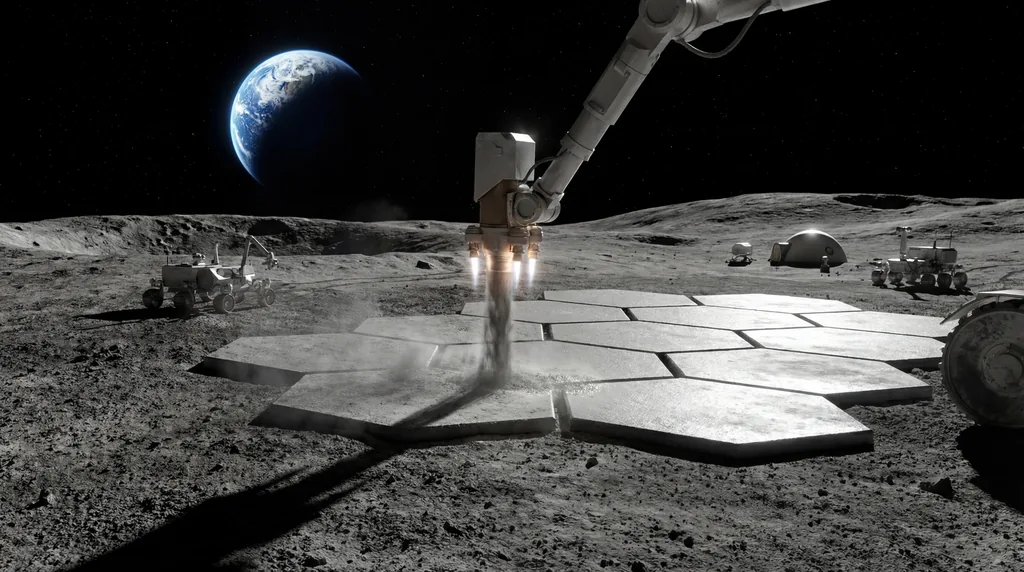
Lunar regolith is the unconsolidated layer of fragmented rock material, dust, and minerals covering the Moon's surface, which scientists are now transforming into durable building materials through laser 3D printing. This process, known as In-Situ Resource Utilization (ISRU), allows for the creation of heat-resistant habitats and tools directly on the lunar surface, bypassing the need to transport heavy supplies from Earth. By melting this dusty material into solid layers, researchers are laying the foundation for permanent human colonies.
Transporting construction materials to the Moon remains one of the most significant hurdles for space exploration, with costs historically estimated at tens of thousands of dollars per kilogram. For the NASA Artemis program to succeed in establishing a long-term human presence by the end of the decade, missions must transition from a "bring-everything-with-you" model to one of self-sufficiency. This paradigm shift relies on In-Situ Resource Utilization (ISRU), where the natural resources of the destination—specifically the lunar regolith—become the primary feedstock for infrastructure. This strategy drastically reduces the payload weight of launch vehicles, making deep-space exploration both economically viable and logistically feasible.
What is lunar regolith and how can it be used for construction?
Lunar regolith is the layer of loose, fragmented debris covering the Moon's solid bedrock, formed over billions of years by meteorite impacts and solar wind bombardment. In construction, this material serves as a raw feedstock that can be melted via high-power lasers or concentrated solar energy to create 3D-printed bricks, landing pads, and radiation-shielded habitats for astronauts. Because it contains silicate minerals like pyroxene, olivine, and plagioclase feldspar, it can be processed into ceramic-like structures with high thermal stability.
The physical properties of lunar regolith vary significantly across the Moon's geography. The material used in recent simulations, known as LHS-1 (Lunar Highland Simulant), replicates the soil found in the lunar highlands—a region characterized by heavily cratered terrain and dark basaltic rocks. Scientists have discovered that when this fine dust is subjected to additive manufacturing techniques, it can be fused into complex shapes. This "lunar concrete" is not only durable but also inherently resistant to the toxic and abrasive nature of the Moon's environment, providing a safe material for housing delicate scientific equipment and human crews.
Is the new study on laser 3D printing lunar simulant real?
Yes, a groundbreaking study published in the journal Acta Astronautica in February 2026 confirms that simulated lunar regolith can be turned into durable, heat-resistant structures using laser 3D printing. Conducted by researchers at The Ohio State University, the study utilized a "laser directed energy deposition" method to melt lunar simulant into layers. Led by graduate research associate Sizhe Xu and senior author Sarah Wolff, the team successfully manufactured small objects that could withstand extreme conditions.
The methodology involved using a specialized 3D printing system that melted the LHS-1 simulant and fused it onto various base surfaces. According to Sizhe Xu, the material’s final properties are highly sensitive to the environment in which they are printed. The research revealed that factors such as atmospheric oxygen levels, laser intensity, and even the speed of the printing process dictate the structural integrity of the final product. By testing these variables, the Ohio State team provided the first comprehensive roadmap for how manufacturing machines might need to be calibrated for the lunar vacuum.
How durable are structures made from simulated lunar soil?
Structures manufactured from simulated lunar soil exhibit extreme durability, high mechanical strength, and exceptional thermal shock resistance, making them ideal for the Moon's volatile temperature swings. The Ohio State study found that when lunar regolith is printed on alumina-silicate ceramic surfaces, the two materials form a crystalline bond that enhances stability. This resulting material is capable of protecting astronauts from micrometeorite impacts and harsh solar radiation while remaining nontoxic.
To verify these findings, the research team compared the printed regolith against various substrates, including stainless steel and glass. They observed the following key performance metrics:
- Thermal Stability: The material maintained its shape and strength despite rapid heating and cooling cycles.
- Adhesion Quality: The simulant bonded most effectively with ceramics, which share similar chemical compounds with the Moon's crust.
- Structural Density: Laser-fused layers showed high resistance to compression, rivaling the strength of high-performance concrete used on Earth.
The Role of 3D Printing in Autonomous Construction
3D printing is more viable than traditional construction in space because it allows for autonomous, robotic manufacturing without the need for heavy machinery or human intervention in hazardous zones. Before the first Artemis crews arrive at a site, robotic units could potentially be deployed to print essential infrastructure, such as lunar landing pads and blast walls. This pre-arrival construction ensures that when humans land, they have a shielded environment ready for occupation, significantly lowering the risk of mission failure.
One of the critical challenges of this technology is power consumption. While the Ohio State laboratory system currently relies on electricity, Assistant Professor Sarah Wolff suggests that future iterations could use solar-driven architectures. Utilizing the Moon’s abundant solar energy to power the directed energy deposition lasers would create a truly circular and sustainable construction ecosystem. This flexibility is vital for In-Situ Resource Utilization in resource-scarce environments where every watt of energy must be carefully managed.
Future Implications for the Artemis Program
The success of the MMPACT project (Moon & Mars Pervasive Additive Construction) and related research at Ohio State signals a new era for the NASA Artemis missions. As the 2030 goal for a permanent lunar base approaches, the ability to scale 3D printing from small tools to large-scale "lunar skyscrapers" or shielded habitats becomes paramount. This technology does more than just facilitate space travel; it provides a blueprint for sustainable manufacturing that could be applied back on Earth.
According to Sarah Wolff, the lessons learned from manufacturing in the resource-scarce environment of the Moon could help address material shortages and sustainability issues on our home planet. "If we can successfully manufacture things in space using very few resources, that means we can also achieve better sustainability on Earth," she explained. As researchers continue to refine the flexibility of these 3D printing machines, the dream of a self-sustaining lunar colony moves closer to reality, turning the "dust" of the Moon into the cornerstone of human expansion into the cosmos.





Comments
No comments yet. Be the first!