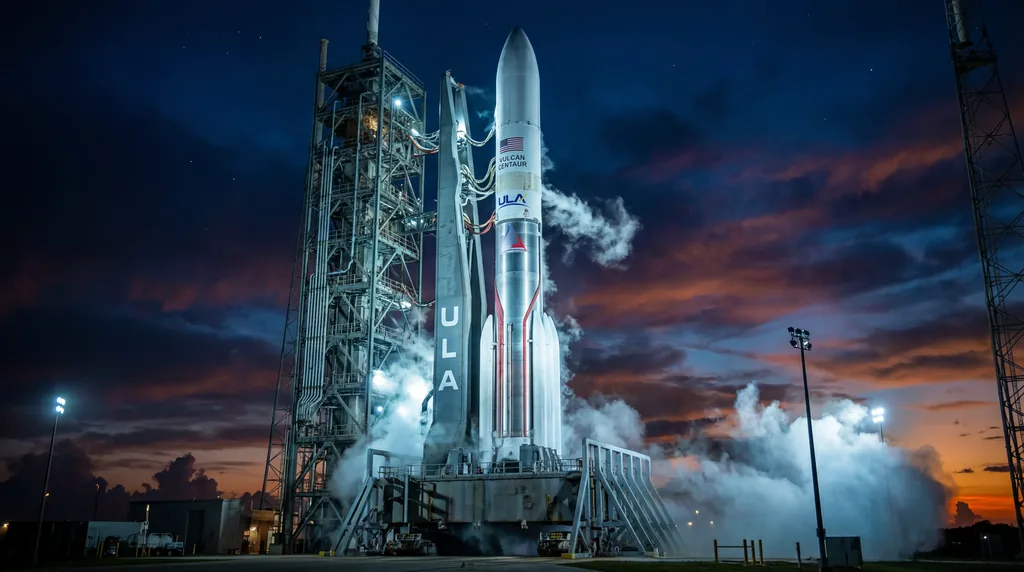

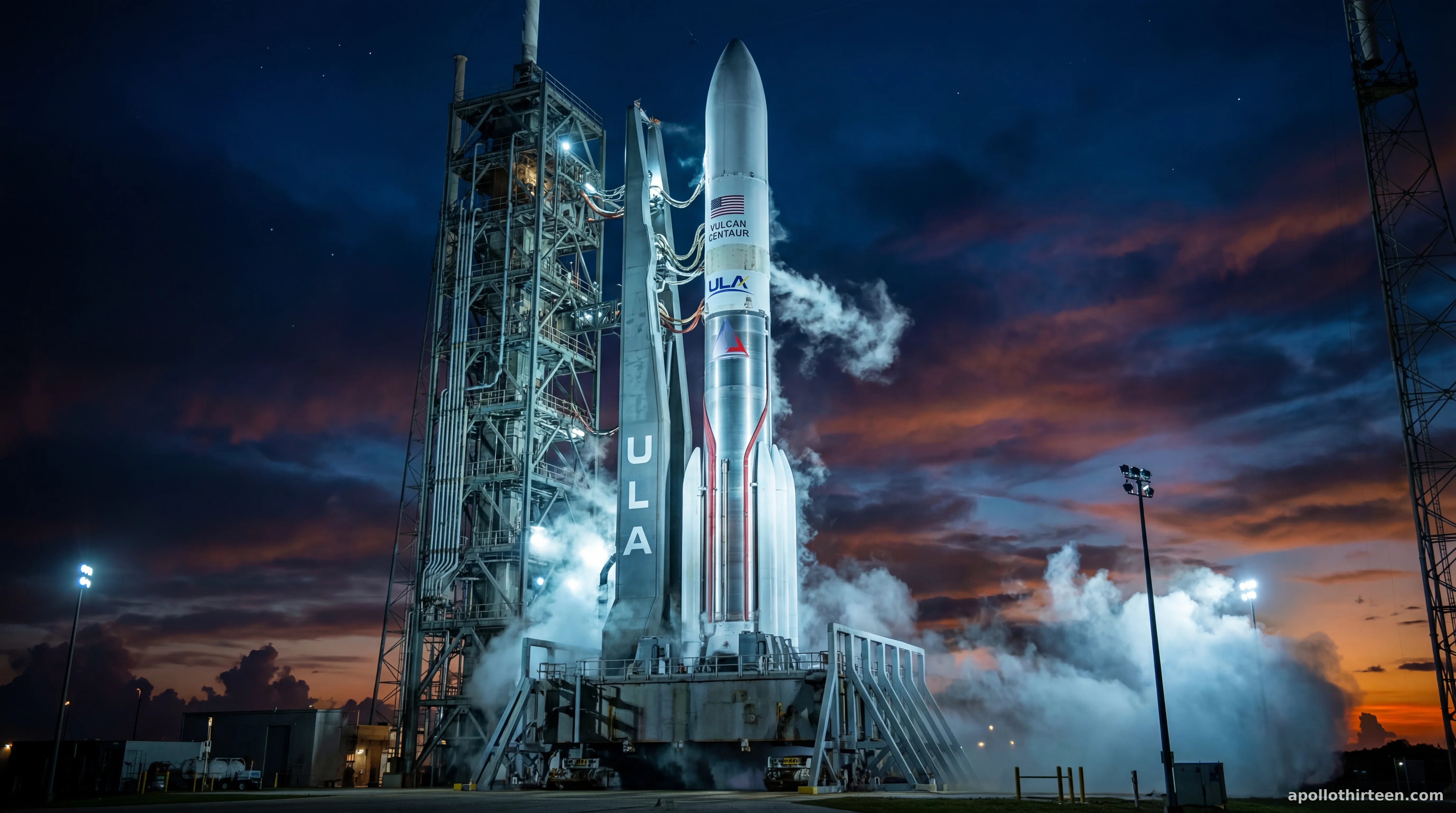
The United Launch Alliance (ULA) is prepared to execute its first mission of the year as the Vulcan Centaur rocket stands on the pad for the USSF-87 mission. Scheduled for liftoff from Space Launch Complex 41 at Cape Canaveral Space Force Station on February 12, 2026, this launch serves as a cornerstone for the U.S. Space Force’s (USSF) strategic monitoring capabilities. The primary objective of USSF-87 is the deployment of the Geosynchronous Space Situational Awareness Program (GSSAP), a sophisticated satellite constellation designed to provide high-resolution "neighborhood watch" surveillance of the critical geosynchronous orbit. By enhancing the Space Surveillance Network, this mission ensures that the United States can accurately track, characterize, and avoid potential collisions between high-value assets in deep space.
What time is liftoff for USSF-87 and how can I watch?
Liftoff for the USSF-87 mission is scheduled for 3:30 a.m. EST (0830 UTC) on Thursday, February 12, 2026. The launch window remains open for two hours, and the public can view live coverage of the Vulcan Centaur ascent through Spaceflight Now and official ULA streaming channels beginning approximately one hour before engine ignition.
The flight, designated V-005, represents the longest duration mission for the Vulcan vehicle to date. According to Gary Wentz, ULA’s vice president of Atlas and Vulcan Programs, the mission will span a total of 10 hours from launch to final payload deployment. This extended timeline is necessary to deliver the satellites directly into Geosynchronous Earth Orbit (GEO), approximately 22,000 miles above the planet. To ensure a successful ascent, the 45th Weather Squadron has forecast a 95 percent chance of favorable conditions, although experts are monitoring potential solar activity and X-ray flares that could impact sensitive electronic systems during the launch window.
Is the Vulcan rocket certified for national security missions?
Yes, the Vulcan rocket is fully certified for national security missions, having achieved this milestone from the United States Space Force in March 2025. This certification followed a rigorous evaluation process that included two successful certification flights and the fulfillment of 52 specific technical criteria, solidifying ULA as a primary provider for the National Security Space Launch (NSSL) program.
The USSF-87 flight utilizes the VC4S configuration of the Vulcan Centaur. This specific build includes four side-mounted Graphite Epoxy Motor (GEM) 63XL solid rocket boosters and a standard 51-foot-long payload fairing. The use of this heavy-lift vehicle is a critical component of the Space Force’s transition away from legacy systems like the Atlas V and Delta IV. By utilizing the Vulcan Centaur, the Department of Defense aims to maintain a resilient and cost-effective bridge to space, ensuring that "multi-manifested" national security payloads can reach complex orbits with high precision.
How does GSSAP improve space surveillance?
GSSAP improves space surveillance by operating as a dedicated Space Surveillance Network sensor that monitors objects in geosynchronous orbit. Unlike ground-based radar, GSSAP satellites fly near other spacecraft, allowing them to characterize objects, track orbital debris, and provide "neighborhood watch" capabilities that enhance the safety and transparency of the space domain.
The Geosynchronous Space Situational Awareness Program satellites are built by Northrop Grumman and are designed to provide the U.S. Space Command with clear, actionable data regarding activities in the GEO belt. While the exact number of satellites on USSF-87 remains classified, historical missions have typically deployed these assets in pairs. These satellites perform Rendezvous and Proximity Operations (RPO), maneuvering close to other objects to gather intelligence and ensure that critical communications and weather satellites are not threatened by hostile actors or accidental collisions. The addition of these new sensors is vital as the geosynchronous orbit becomes increasingly crowded and contested.
Technical Specifications and Secondary Payloads
In addition to the primary GSSAP sensors, the USSF-87 mission carries a suite of secondary payloads designed to advance orbital tactics. These systems are integrated using Northrop Grumman’s ESPAStar platform, a highly maneuverable spacecraft capable of hosting multiple payloads simultaneously. Key mission components include:
- Research and Development Systems: Used by Space Force Guardians to refine tactics for precision on-orbit maneuvers.
- Resiliency Training: Hardware designed to validate protection techniques for assets in high-altitude orbits.
- Centaur 5 Upper Stage: A high-energy stage responsible for the complex orbital insertions required for a 10-hour mission profile.
The Strategic Shift in Launch Cadence
The deployment of USSF-87 highlights a broader strategic shift as United Launch Alliance ramps up its launch cadence for 2026. This mission is the first of several planned National Security Space Launches intended to prove the reliability of the Vulcan architecture. The Space Systems Command (SSC) has emphasized that the Vulcan Centaur was "purpose-built" for these specific, high-complexity missions. By moving toward a more frequent launch schedule, the USSF aims to reduce the "bottleneck" of ground-based satellite storage and place active sensors in orbit as quickly as technological advancements allow.
Future Directions for Space Domain Awareness
Looking ahead, the success of USSF-87 will likely influence the procurement of future Space Domain Awareness (SDA) assets. As older GSSAP units, such as the space vehicle 2, are retired to "graveyard" orbits, the Space Force must continuously replenish the constellation to maintain a continuous chain of custody over objects in the GEO belt. Future iterations of these satellites may include enhanced optical sensors and improved autonomous navigation to further reduce the risk of orbital accidents. For now, the focus remains on the flawless execution of the Vulcan Centaur V-005 flight, a mission that underscores the intersection of commercial innovation and national defense.
The USSF-87 mission is a testament to the evolving requirements of modern spaceflight, where duration and precision are as important as raw lifting power. As the U.S. Space Force and ULA continue their partnership, the data gathered by the GSSAP constellation will provide the foundational intelligence necessary to protect the global infrastructure that relies on a secure and stable space environment.




Comments
No comments yet. Be the first!