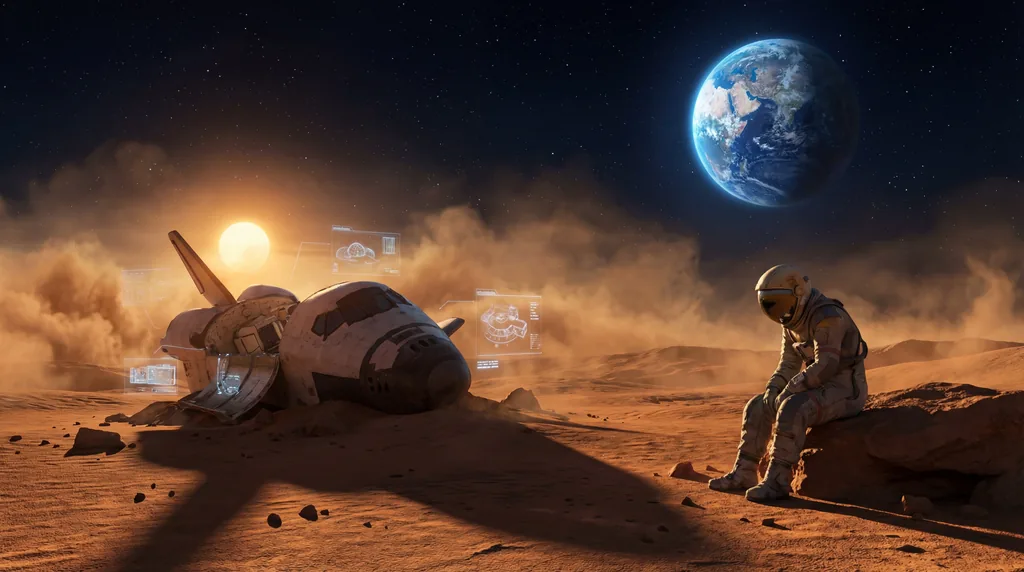

SpaceX’s Lunar Infrastructure: The Strategic Shift Toward a Sustainable Moon Base
Elon Musk has officially pivoted SpaceX’s immediate interplanetary priorities, announcing a fundamental shift from the colonization of Mars toward the establishment of a self-growing city on the Moon. This revelation, shared during an extended social media address in early 2026, marks a historic departure from the company’s quarter-century obsession with the Red Planet. By prioritizing lunar development, SpaceX aims to leverage the Moon’s proximity and resource availability to create a permanent human presence within the next decade, a timeline significantly more aggressive than the 20-year horizon currently projected for a sustainable Martian settlement. This strategic realignment suggests that while Mars remains the ultimate goal for human consciousness expansion, the Moon has become the essential logistical and industrial stepping stone for the modern space age.
What is the self-growing city on the Moon?
The self-growing city on the Moon is a proposed SpaceX settlement designed to expand autonomously using modular construction and in-situ resource utilization (ISRU). Elon Musk indicates that this lunar base can be established in less than 10 years by utilizing Starship’s massive payload capacity to deliver industrial hardware capable of extracting oxygen and silicon from lunar regolith. This infrastructure is intended to support a "self-growing" architecture where initial robotic and AI-driven systems lay the groundwork for human habitation and industrial manufacturing.
This concept of a self-growing city relies heavily on the integration of artificial intelligence and advanced robotics. According to reports from Eric Berger at Ars Technica, the recent merger between SpaceX and xAI has accelerated plans to deploy orbital data centers and autonomous construction crews on the lunar surface. Unlike traditional terrestrial construction, a lunar city must grow by processing the materials available on-site. The Moon’s abundance of silicon and oxygen makes it an ideal candidate for manufacturing solar arrays and life-support consumables, allowing the base to scale without a constant, prohibitively expensive supply chain from Earth.
Furthermore, the vision for this city includes the construction of a lunar mass driver, a catapult-like mechanism designed to launch materials into space efficiently. Because the Moon lacks an atmosphere and has significantly lower gravity than Earth, a mass driver could serve as a logistical hub for building O’Neill cylinders, solar farms, and orbital factories. Musk’s references to becoming a Kardashev-level civilization suggest that the Moon is no longer viewed merely as a destination, but as a power plant and shipyard for the entire solar system. This shift represents a move toward the industrialization of space, prioritizing energy collection and material transit over the immediate biological settlement of a distant planet.
Is the Mars colonization program cancelled?
No, the Mars colonization program has not been cancelled, but its primary timeline has been deferred in favor of lunar development. Elon Musk maintains that SpaceX will continue its Mars efforts in parallel, with uncrewed missions potentially launching within the next six years, but the bulk of the company's capital and engineering focus has shifted to the Moon. This "practical pivot" allows SpaceX to prove its long-duration life support and landing technologies in a low-gravity environment that is only three days away from Earth, rather than six months.
For decades, the identity of SpaceX was inextricably linked to Mars. Gwynne Shotwell, SpaceX President and COO, has long described the company’s mission as "messianic" regarding the Red Planet, with the Starbase facility in Texas even being nicknamed the "Gateway to Mars." However, the reality of orbital mechanics—where Mars is only accessible every 26 months—has made the Moon a more attractive immediate target. The Moon-to-Mars pipeline is now the official framework, suggesting that the lessons learned on the lunar surface will directly inform the eventual arrival of Starship on the Martian surface in the 2030s.
Practical and political factors have also influenced this shift. The rise of Jeff Bezos’ Blue Origin and its New Glenn rocket has introduced real competition in the lunar sector. Blue Origin’s development of the Blue Moon Mark 1.5 lander, which aims for lunar landings without complex orbital refueling, has pressured SpaceX to solidify its dominance on the Moon first. By securing the lunar high ground, SpaceX ensures its financial and operational stability through NASA contracts and commercial lunar ventures before embarking on the much riskier and more expensive Martian voyages.
How does Starship play into the new Moon focus?
Starship is the central technological pillar of the new Moon focus, serving as the primary vehicle for NASA’s Artemis program and the foundation for lunar infrastructure. As the Human Landing System (HLS), Starship is capable of delivering over 100 metric tons of cargo to the lunar surface, a capacity that dwarfs any previous or competing spacecraft. This allows for the transport of heavy manufacturing equipment, large-scale habitat modules, and the robotic fleets necessary to begin building the self-growing city.
The success of the lunar pivot depends on orbital refueling, a process where a Starship "tanker" transfers propellant to a lunar-bound Starship in Low Earth Orbit (LEO). This capability is critical because landing a vehicle as massive as Starship on the Moon requires significant fuel reserves that cannot be carried in a single launch from Earth’s deep gravity well. Once established, the lunar base could potentially produce its own methalox propellant from lunar ice, although the primary focus remains on using Starship as a high-volume ferry between the Earth and the Moon to build out initial energy and communication grids.
Moreover, Starship’s role extends beyond transportation to serving as a temporary habitat and research laboratory. During the early stages of the self-growing city, the spacecraft itself will provide the necessary radiation shielding and thermal management systems for crews. Elon Musk has frequently highlighted that the Moon provides a "proving ground" for these systems. If a life-support system fails on the Moon, the crew is 72 hours from home; on Mars, they would be months or years away from rescue. Therefore, Starship’s operations on the Moon are a prerequisite for the engineering reliability required for the eventual settlement of the solar system.
The Strategic Importance of Lunar High Ground
The decision to prioritize the Moon also carries significant geopolitical and military implications. A lunar mass driver, while intended for industrial use, is theoretically capable of launching large projectiles toward Earth, a concept famously explored in Robert Heinlein’s The Moon Is a Harsh Mistress. The U.S. Space Force and NASA are both acutely aware that whoever controls the lunar surface controls the "ultimate high ground" of the Earth-Moon system. By shifting focus now, SpaceX aligns itself with the strategic interests of the United States government, which seeks to establish a permanent presence before international rivals.
From an economic standpoint, the Moon offers a shorter return on investment for SpaceX’s shareholders and partners. The Artemis missions provide a steady stream of revenue, and the potential for lunar tourism, helium-3 mining, and orbital data centers creates a viable commercial ecosystem. Musk's pivot is a recognition that the "light of human consciousness" cannot be extended if the enterprise is not financially sustainable. The Moon provides the economic engine required to eventually fund the multi-billion dollar endeavor of terraforming Mars.
Ultimately, the transition to a Moon-first strategy is a maturation of SpaceX’s vision. While the romantic allure of Mars remains a powerful recruitment tool, the pragmatic reality of 2026 demands a closer, more accessible laboratory. The "self-growing city" represents the first true attempt at extra-terrestrial industrialization. As Elon Musk moves forward with this lunar infrastructure, the path to Mars is not being abandoned; it is being paved with lunar basalt and powered by the lessons learned on our closest celestial neighbor.
Future Outlook: The Timeline to a Multi-Planetary Future
Looking ahead, the timeline for human spaceflight has been rewritten by this lunar priority. Current projections suggest the first crewed Starship landing on the Moon will occur by 2027 as part of the Artemis III or IV missions, with the first modules of the self-growing city being deployed shortly thereafter. If SpaceX can achieve autonomous resource extraction by 2030, the 10-year goal for a functional lunar base becomes highly plausible. This accelerated lunar schedule serves as the logistical framework for the first crewed Mars missions, which are now tentatively eyed for the 2031 or 2033 launch windows.
The success of this pivot will be measured by SpaceX’s ability to transition from a launch provider to a lunar developer. The integration of xAI's autonomous systems with SpaceX's heavy-lift hardware will be the defining technical challenge of the late 2020s. If Elon Musk succeeds in building a self-sustaining presence on the Moon, the hurdles of Martian atmospheric entry and long-duration radiation exposure will be far easier to overcome. The Moon is no longer a distraction; it is the foundational architecture for humanity's future among the stars.




Comments
No comments yet. Be the first!