

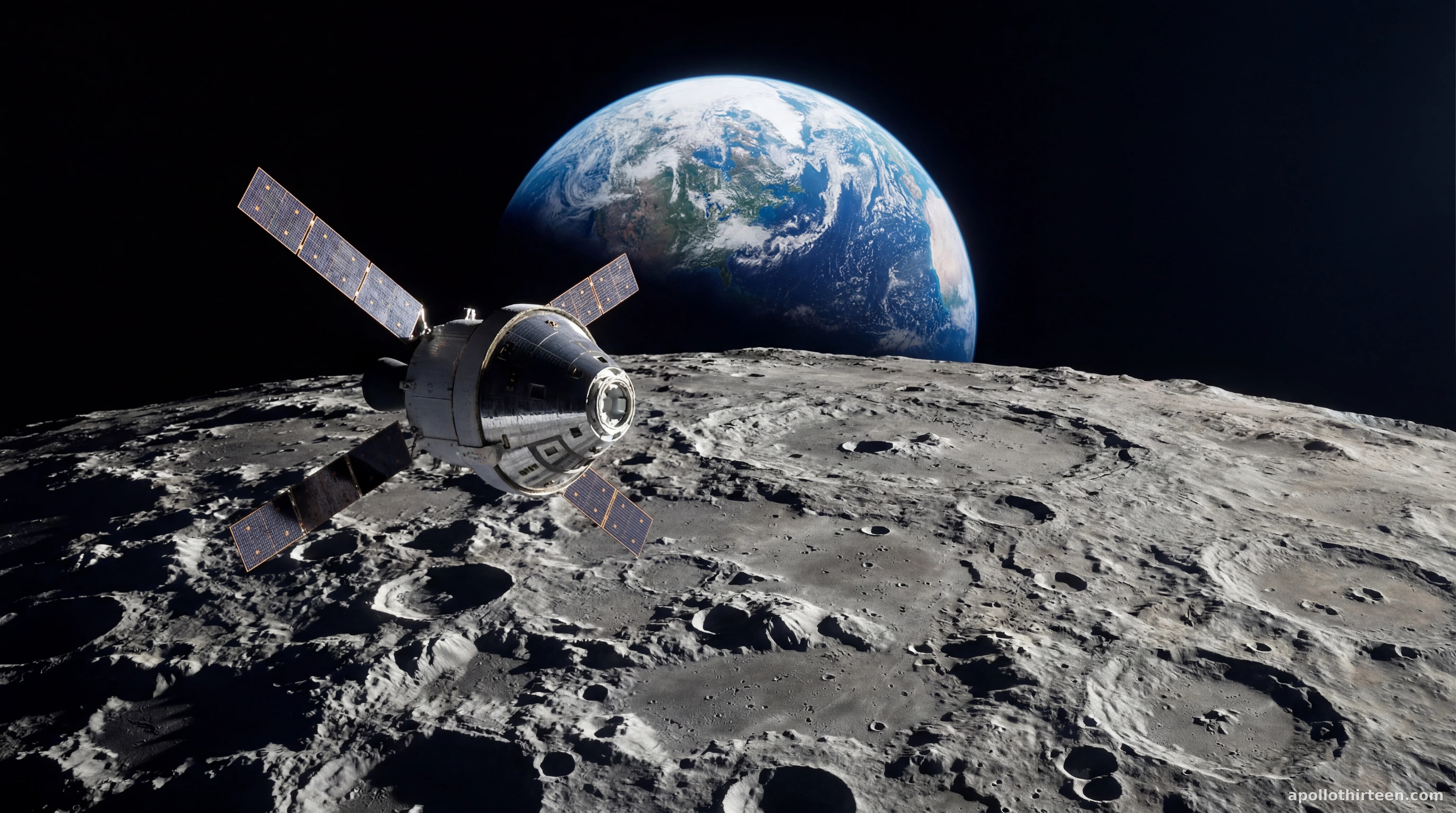
The scheduled launch of Artemis II represents a transformative shift in global spaceflight, signaling the end of low-Earth orbit dominance and the beginning of a high-stakes geopolitical contest for the Moon. When the mission’s engines ignite at Cape Canaveral, currently targeting no earlier than March 6, 2026, it will send four astronauts—Commander Reid Wiseman, Pilot Victor Glover, and Mission Specialists Christina Koch and Jeremy Hansen—on a ten-day journey around the lunar far side. This mission is more than a technical rehearsal; it is the official start of a race involving NASA, the China National Space Administration (CNSA), and SpaceX to define the narrative and infrastructure of the cislunar economy.
How does China's lunar program compare to Artemis?
China's lunar program is more centralized and state-directed, following a stepwise "ladder" approach with robotic missions building toward a crewed landing by 2030, emphasizing steady capability development. In contrast, the Artemis II program adopts a partner-first coalition model with greater transparency, focusing on proving crewed system reliability early through a lunar flyby to enable long-term shared lunar activity. Both strategies aim for sustained lunar presence but differ significantly in governance, pacing, and coordination openness.
The technical architecture of China’s Long March 10 heavy lifter reflects a risk-averse, methodical strategy. Unlike the Space Launch System (SLS) which aims for massive single-launch power, Chinese planners utilize a two-launch profile to minimize engineering hurdles. In this sequence, one rocket delivers the Lanyue lander to lunar orbit, while a second carries the Mengzhou crew vehicle to a rendezvous point 380,000 kilometers from Earth. This modular approach relies on rendezvous and docking technologies honed during the Chang’e robotic missions, positioning China as a consistent, independent alternative to the U.S.-led Artemis Accords.
Journalist Amcen West reports that while Artemis II is technically conservative, following a free-return trajectory with no surface landing, its political weight is immense. It will be the first time a human crew has departed Earth's immediate vicinity since Apollo 17 in 1972. While Beijing remains in the prototype phase of its crewed hardware, the Artemis II mission will allow the United States to capture the global narrative of "returning" to deep space, forcing China into a defensive position regarding its own 2030 landing goal.
What role does SpaceX play in the Artemis program?
SpaceX plays a critical role in the Artemis program by developing the Starship Human Landing System (HLS), essential for lunar landings starting with Artemis III. Without SpaceX's lunar module, the U.S. lacks an alternative for crewed Moon landings, making the company's progress vital to meeting current timelines. Early Starship tests faced technical hurdles, but sustained success is necessary to avoid significant delays in the face of China's competing lunar ambitions.
Elon Musk has recently pivoted his company's public mission, shifting focus from a distant Mars crusade to the immediate establishment of a "self-growing city" on the Moon. This shift aligns SpaceX closely with Washington’s strategic priorities, particularly following a 2025 executive order on American space superiority. Musk argues that lunar windows, which open roughly every ten days, allow for much faster hardware iteration than the 26-month windows required for Mars exploration. This rapid cadence is essential for testing Starship derivatives and building the logistics backbone for the U.S. national project.
This alignment also serves a significant commercial purpose regarding a potential SpaceX IPO. By positioning Starship as indispensable to national security and the lunar infrastructure, Musk provides future investors with a vision of consistent, state-backed demand. The development of a permanent lunar outpost is increasingly viewed by Capitol Hill as defense spending, ensuring that the Human Landing System remains a primary recipient of federal aerospace funding through the end of the decade.
What is the strategic importance of the Moon race?
The Moon race holds strategic importance as a competition to establish repeatable lunar activity, influence norms, and shape governance through practical operations in high-interest regions. The U.S. Artemis program seeks dominance via international coalitions and predictability, while China's centralized approach builds capabilities for long-term presence, testing legal concepts like "due regard" amid converging missions. The side fostering greater predictability and coordination may gain the most influence over future lunar laws.
Central to this competition is the Lunar South Pole, where water ice deposits represent a vital resource for life support and propellant manufacturing. Controlling access to these craters is not just a scientific goal but a geopolitical necessity. The establishment of "Safety Zones" under the Artemis Accords has sparked debate over the Outer Space Treaty, as nations grapple with how to manage resource extraction and territorial presence without formal sovereignty claims. The first nation to achieve a permanent presence will likely set the precedent for property rights in space.
Beyond physical resources, the Moon is being eyed as a hub for space-based data centers and solar power harvesting. Speculative concepts involve orbital server farms powered by megawatt-scale solar satellites, crunching AI workloads outside Earth's atmospheric and thermal constraints. While these ventures rely on private capital and face stiff competition from terrestrial facilities, they underscore the Moon's role as the strategic high ground for the 21st-century digital and physical economy.
The Wolf Amendment continues to restrict formal cooperation between NASA and the CNSA, intensifying the "bloc-based" nature of lunar exploration. As the U.S. strengthens ties with ESA, JAXA, and the CSA, China is building its own International Lunar Research Station (ILRS) with partner nations. This fragmentation means that the technical success of Artemis II is vital for maintaining the diplomatic momentum of the U.S.-led coalition, ensuring that western standards of space safety and transparency remain the global benchmark.
Looking ahead, the success of the Artemis II mission will provide the critical flight data needed for Artemis III, the first planned landing of the 21st century. As NASA transitions from proving its Orion spacecraft and SLS capabilities to deploying SpaceX’s landing systems, the focus will shift to sustainability. The "What's Next" for the lunar frontier involves moving from brief visits to the construction of the Gateway space station and the first permanent habitats. The race is no longer about the first step, but about who stays and who defines the rules of the new lunar frontier.




Comments
No comments yet. Be the first!