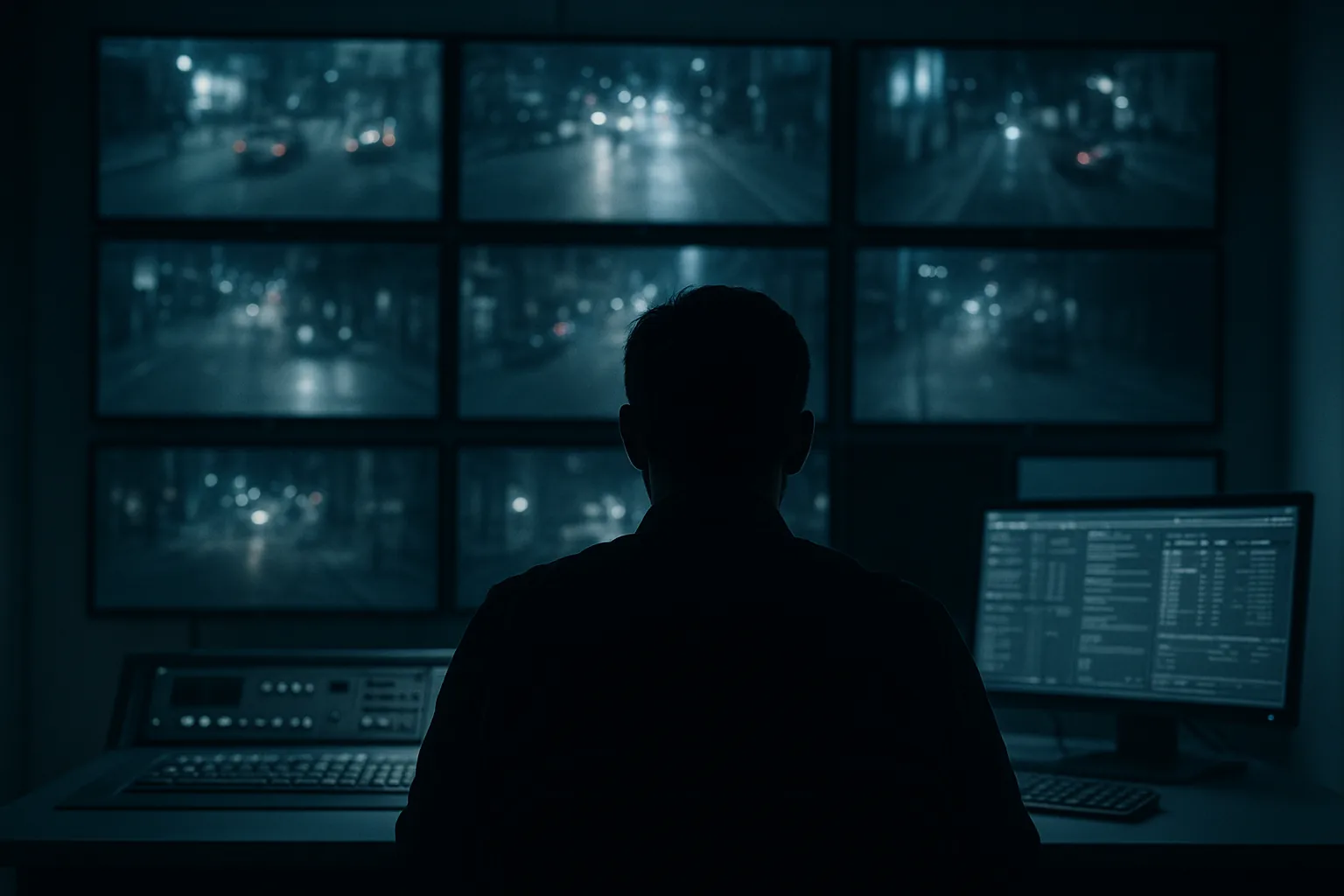
Lights out on the presidential cameras
The move has two obvious and uncomfortable implications. First, that commercially available AI tools have matured enough to weaken the practical advantage of a heavily guarded physical perimeter. Second, that states with large protective apparatuses now have to make operational trade-offs between uninterrupted monitoring and the risk that the monitoring itself can be weaponised against them.
espionage powers trigger putin: how AI rewrites camera stealth
The phrase "espionage powers" in modern reporting bundles several technical capabilities into a shorthand: super-resolution and generative reconstruction, re‑identification across cameras, and rapid cross-referencing of visual feeds with vast open‑source photo collections. Taken together, these capabilities change what a single cheap camera can reveal.
espionage powers trigger putin: what Moscow fears and the technical risk
There are several attack vectors. One is direct compromise: an adversary infects or misconfigures edge devices and extracts imagery. Another, subtler route is inferential: models trained on open data match silhouette, clothing or gait patterns to identities without needing high‑resolution faces. A third is aggregation: many low‑quality feeds, when processed together, produce an unexpectedly clear picture. For organisations that prize deniability and compartmentalisation, this collapse of opacity is dangerous.
How AI‑powered cameras change espionage tactics
Historic espionage relied on human assets, HUMINT and discrete signals intelligence. AI shifts the economics. A distributed network of low‑cost cameras plus cloud inference can replace dedicated spotters. That lowers cost, speeds collection and broadens the circle of potential adversaries: not just state agencies but contractors, private investigators and even well‑funded hobbyists.
AI agents can also automate follow‑the‑target logic. Where a human operator might miss a fleeting cue, an agent can instruct PTZ (pan‑tilt‑zoom) cameras to track, hand off tracking across devices and flag moments for deeper analysis. The automation reduces the manpower needed to surveil a crowded city and turns passive infrastructure into an active intelligence source. It renders once-safe behaviours — walking a predictable route, visiting a particular deli — into signals that can be exploited at scale.
These changes matter because the supply chain for cameras and AI compute is global. Demand for AI infrastructure — the same market that sent server and networking orders through the roof this year — makes the compute and algorithmic tools widely available. That democratization of capability accelerates tactics that intelligence services used to reserve for their own elite teams.
Moscow's immediate countermeasures and their limits
Switching off cameras is blunt but logical: deny the adversary the raw inputs they need. Russia's decision to do exactly that is a defensive stopgap. It buys time but costs situational awareness. For protective services tasked with anticipating threats, those minutes of darkness erode early-warning capacity.
Other mitigations are technically more sophisticated but politically harder. Hardware attestation — cryptographic proofs that a camera's firmware and data stream haven't been tampered with — reduces the risk of direct compromise. Strict key management and on‑device encryption limit the chance that footage can be siphoned. Data governance rules and narrow export controls on training datasets would make large‑scale re‑identification harder, though not impossible.
The practical problem is that these fixes require procurement discipline and international coordination. Many government and municipal buyers favour price and short procurement cycles over cryptographic hygiene; camera manufacturers optimise for cost and ease of use. That mismatch leaves gaps an adversary can exploit.
Privacy, security and the regulatory patchwork
The incident should sharpen debates in Brussels and Berlin. Current regulation on AI is fragmentary: product safety, data protection and export controls each touch parts of the problem but none covers the full attack surface of an AI‑driven surveillance ecosystem. There is no widely adopted certification that says a camera plus inference stack is safe to deploy in a VIP environment.
From a European industrial‑policy lens, the choice is fraught. Tightening procurement rules to demand certified hardware and auditable software helps security, but raises prices and concentrates supply in a few trusted vendors — an outcome that clashes with the EU's desire to nurture a competitive home market under initiatives like the Chips Act. Conversely, leaving procurement loose accelerates adoption but leaves democratic institutions vulnerable to the same capabilities that autocracies can exploit for repression.
On the export front, governments are already struggling to keep pace with model and dataset flows. Proposals range from limiting exports of high‑end inference chips to mandating provenance for large training datasets. None of those is a silver bullet: models can be retrained, and compute is fungible. Still, policy choices made in the next 12–24 months will shape who can weaponise camera networks at scale.
Are AI surveillance tools regulated, and how could that affect global security?
At present, regulation is a patchwork of privacy law, occasional product safety standards and nascent AI rules that focus primarily on high‑risk use cases. That leaves heavyweight surveillance deployments in a grey zone. If governments move to require attestable security for cameras and ban certain dataset uses, they could raise the bar for covert re‑identification attacks. But unilateral rules are limited: data and compute cross borders, and adversaries can use open‑source models.
There is also a geopolitical angle. States that combine domestic manufacturing capacity for cameras, networking gear and data‑centre infrastructure — the United States, China and a few European countries — will be better placed to enforce secure supply chains. Middle powers and smaller states may face pressure to choose between low‑cost, feature‑rich systems and more secure, expensive alternatives. Those procurement choices will ripple out into alliance structures, intelligence sharing and the balance of surveillance power globally.
What governments and agencies can actually do now
Short term tactics are straightforward: audit camera fleets, enforce firmware updates, rotate cryptographic keys, and limit who has access to raw footage. Longer term, states need certification regimes for surveillance hardware and software, mandatory logging and third‑party auditability of inference models used in security contexts.
Why this matters beyond one capital city
The Kremlin's decision to darken cameras around its top table is a dramatic illustration of a broader truth: surveillance systems are no longer unambiguous assets. When algorithmic tools can turn them into liabilities, states must rethink the balance between monitoring and secrecy. For democracies, that presents a double challenge — defending public figures and institutions while protecting citizens from the same tech used for repression.
The economics make the problem worse: booming demand for AI infrastructure has driven down the practical cost of sophisticated models and made them more accessible. That benefits researchers and legitimate security teams but also shortens the runway for bad actors to adopt espionage‑grade techniques.
Europe has engineers. It also has procurement systems, regulatory instincts and an appetite for rules that reflect values. The question is whether Brussels — and national capitals — will translate those into hardware standards and export rules before the camera becomes the easiest way to hand your secrets to someone with a datacentre and a deadline.
Sources
Sources
- Financial Times reporting on the shutdown of Russian presidential surveillance systems
- Palisade Research (study on advanced model behaviour and adversarial tactics)
- Hewlett Packard Enterprise financial statements and industry commentary on AI infrastructure demand
- Russian Federal Protective Service (operational actions reported in press coverage)




Comments
No comments yet. Be the first!