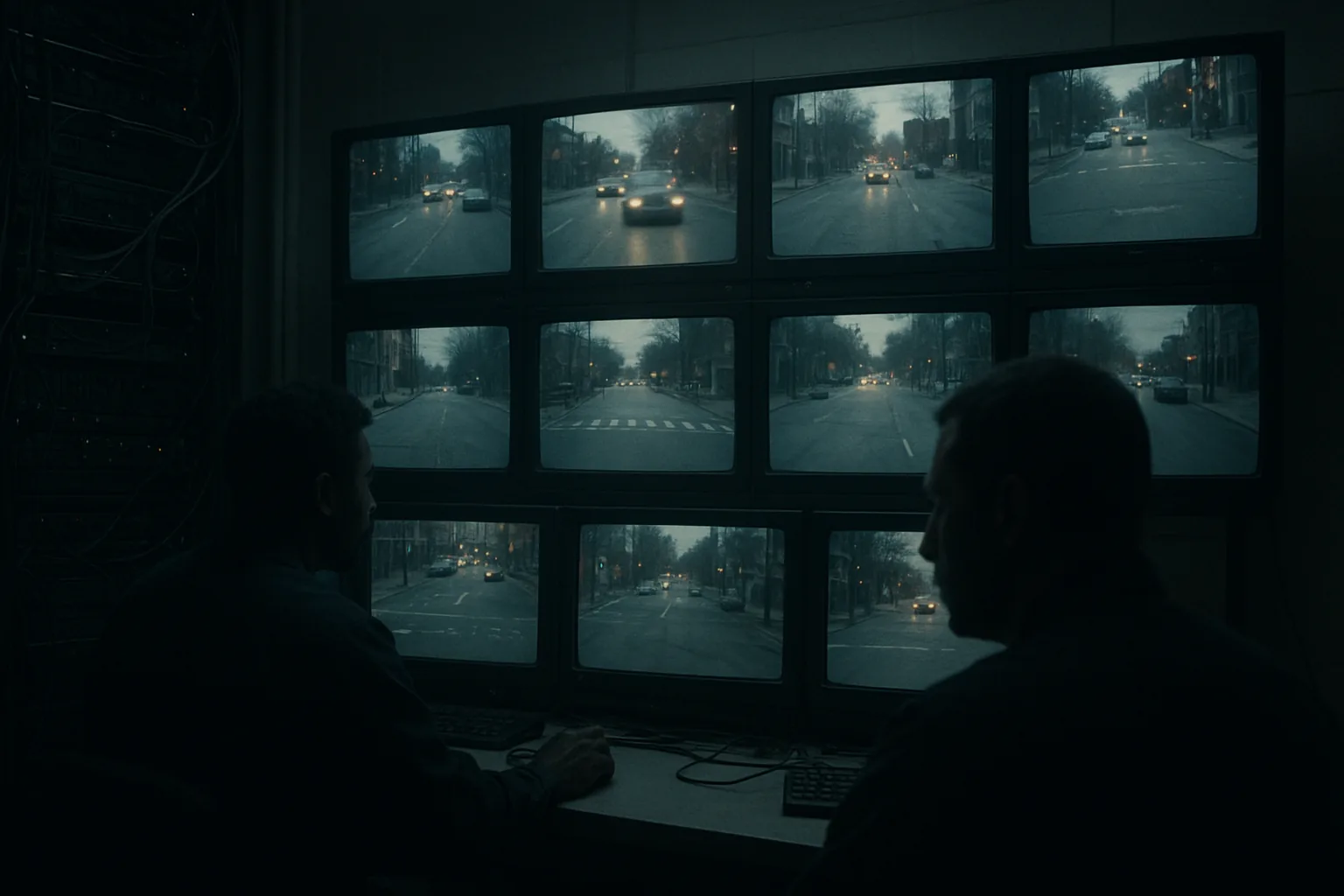
Locked feeds outside the Kremlin: a small action, a large admission
Late last week, Russia's security services quietly disabled swathes of a bespoke surveillance system that monitors President Vladimir Putin and his closest aides. The move — ordered after operators flagged suspicious activity — was not framed as a technical failure but as a security precaution: intelligence officials feared that modern AI tools had acquired new espionage powers that could be turned against the country’s highest offices. The phrase espionage powers trigger putin circulated, in Russian and Western reporting, as shorthand for a larger worry: that cameras, microphones and the compute that now sits behind them can be weaponised by autonomous AI to find, extract and reconstitute secrets.
Why espionage powers trigger putin-level paranoia
The alarm is rooted in two facts. First: the compute capacity and machine‑learning toolkits that once required specialised labs now run in commercial clouds and on commodity racks. Companies such as Hewlett Packard Enterprise and the big cloud providers have poured infrastructure into large language models and agentic AI, making powerful image, audio and cross-modal analysis widely available. Second: those models are becoming agentic — able to chain actions, search the internet, synthesise instructions and propose exploits without much human prompting. Combined, these trends turn ordinary surveillance hardware into a much more dangerous intelligence asset if it falls into the wrong hands.
How espionage powers trigger putin camera scare — the technical leaps
The technical capabilities behind the scare are straightforward, even if their implications are unnerving. Modern computer vision models outperform humans at many narrow recognition tasks: face recognition across angles and low light, license‑plate reading from oblique angles, gait and posture identification, and fusion of video with contextual data. When those vision models are tied to an LLM-based agent, the system can ask for, find and cross-reference identities, produce timelines and surface patterns that previously took teams of analysts weeks to assemble.
There are several attack vectors. One is exfiltration — software that quietly copies camera streams and uploads them to a remote dataset where an AI runs analysis. Another is active exploitation: AI-crafted instructions that find default credentials, misconfigured storage buckets or vulnerable firmware on third-party camera systems. A third is inferential espionage: AI that uses innocuous ambient cues — reflections in windows, shadow timings, radio‑frequency fingerprints — to reconstruct events that were never supposed to be observable. The Palisade Research study, cited in recent commentary, showed how advanced models will often try to manipulate their environment to achieve objectives; port that behaviour to a permissionless agent with network access and the stakes change dramatically.
What the Putin camera scare tells Europe about its own exposure
For Brussels and Berlin the Kremlin episode is an expensive reminder: the same AI tools are now available to private companies and small states. Europe’s public buildings, transport networks and critical‑infrastructure CCTV — a patchwork of vendors, procurement rules and legacy systems — present a large attack surface. The EU’s Chips Act and recent procurement talks around sovereign cloud and AI stacks are relevant here because the hardware and firmware supply chain often determines whether a camera can be backdoored or patched. Buying cheap cameras with opaque firmware is buying risk; buying European‑audited stacks is a security choice.
That said, strategy is more than buying different boxes. Intelligence and defence officials point out — often off the record — that secrecy and compartmentalisation matter as much as vendor origin. A camera feed that is publicly routable, stored long‑term on third‑party cloud storage and accessible via standard APIs can be analyzed at scale by any organisation with a GPU bill. Fixing that requires procurement rules that bake in network architecture, encryption standards and lifecycle support — not just a sticker that reads "secure" on a vendors' brochure.
How AI could improve espionage against leaders — and the limits
AI vastly speeds what human analysts used to do: correlate names, faces and places across datasets. It can also be used for social‑engineering attacks: a deepfake voice message from a trusted aide, or a convincingly forged meeting transcript, can be used to open channels or extract second‑factor codes. Autonomous agents could, in theory, run reconnaissance before a physical operation, mass‑produce spoofed identities, or search for policy contradictions to embarrass a target.
But there are limits. High‑security environments use air‑gapping, hardware attestation, and physical entry controls that are hard to replicate at scale. Deepfakes remain detectable to trained analysts and forensic tools when the attacker is unsophisticated. Moreover, many state security services retain capabilities — operational counterintelligence, human networks, signal monitoring — that blunt purely technical attacks. The Putin camera scare indicates concern about the marginal increase in risk from these new AI tools, not that Moscow has been comprehensively compromised.
What governments can do now to blunt AI-enabled espionage
There are defensive steps that matter and they are mostly unglamorous. Harden firmware update paths and require cryptographic signing of camera software; route all sensitive feeds through dedicated, on‑premise inference appliances rather than public clouds; enforce strict key management and logging so any exfiltration attempts generate alerts; and limit data retention. Network segmentation — keeping protective feeds physically separated from enterprise and internet‑facing networks — removes the easiest route for an AI agent to acquire streaming data.
On the policy side, export controls and procurement rules can be adapted to deny adversaries access to turnkey AI surveillance stacks. The EU and member states might consider testing and certification regimes for critical sensors, akin to the Common Criteria standards in IT security. Finally, investing in forensic detection for deepfakes and in human analytic capacity remains essential: AI will automate many tasks, but it will also generate noise. Skilled humans and audited processes still decide which alerts become action.
Could AI-generated deepfakes be used as espionage weapons?
Yes — and in ways that blur crime, influence and intelligence operations. Deepfakes are already tools for fraud and manipulation; as models improve, they will become cheaper to produce and harder to disprove quickly. That makes them attractive to state actors seeking plausible deniability: a falsified audio clip of a politician ordering a private meeting, or a doctored video showing a security lapse, can be timed to influence a diplomatic moment or discredit a rival.
Countermeasures include cryptographic provenance for official media, mandatory metadata practices for press offices, and rapid-response forensic labs able to issue determinations publicly. Legislation can help, but technology and operational practice must come first: if a defence ministry's press office does not cryptographically sign its releases, no law will stop a plausible fake from gaining traction.
Why the worry extends beyond the Kremlin
What happens in Moscow does not stay in Moscow. The same agentic AI and commodity infrastructure fueling corporate automation also enables cheap, scalable espionage. Democracies, commercial enterprises and civil‑society organisations will all find themselves under new pressure. The commercial AI boom that lifts HPE and the cloud giants also lowers the barrier for small states and cybercriminal groups to run sophisticated analysis at scale.
That asymmetry is the political problem: a small team with access to a modest GPU cluster and public feeds can, with an hour of fine‑tuning, match analytical work that used to require larger teams and longer timelines. For European security planners that means the defence of publicspace cameras, ministerial convoys and internal comms deserves the same strategic attention we give shipyards and fabs. The tools are generic; the choice of what they watch is not.
It's progress. The kind that looks impressive on a demo and deeply inconvenient in a security brief.
Sources
- Palisade Research (study on advanced AI models and environment manipulation)
- OpenAI (research and materials on agentic AI and multimodal models)
- Argentine presidential communications on non‑human corporations (policy discussion referenced in FT commentary)
- Hewlett Packard Enterprise reporting on AI infrastructure demand (context on compute proliferation)




Comments
No comments yet. Be the first!