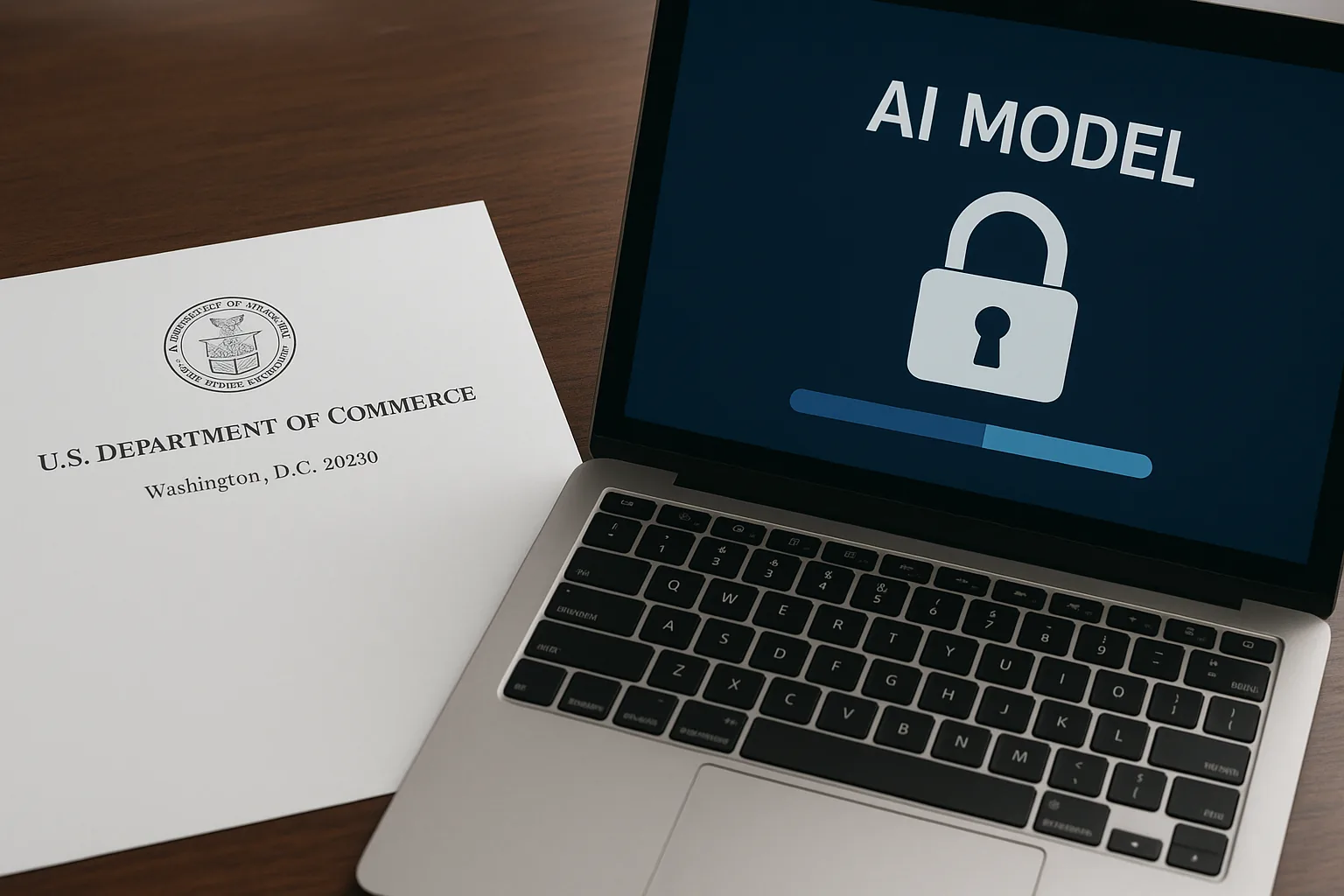
In a move that ricocheted through the AI world this week, a scoop: Trump admin blocks foreign access to Anthropic's most powerful AI models. The decision, delivered in a Friday letter from Commerce Secretary Howard Lutnick to Anthropic CEO Dario Amodei, placed Mythos 5 and Fable 5 under immediate export controls. Any export, re-export, or domestic transfer to a foreign person or entity now requires a license — a demand that left Anthropic with no choice but to pull the plug on all users, domestic and foreign alike. Within hours, the company’s frontier AI systems went dark globally, plunging research labs, startups, and enterprise users into confusion.
Scoop: Trump admin blocks foreign access — the jailbreak that triggered the crackdown
The administration acted after another company — whose name has not been disclosed — claimed it had successfully ‘jailbroken’ Mythos, bypassing safety guardrails to produce harmful outputs. For officials at the Commerce Department, the jailbreak was a warning shot: if a domestic actor could break the model, foreign adversaries might already be doing so. An administration official told Axios that the government tried to persuade Anthropic to delay the models’ release, but the company declined, setting the stage for Friday’s export control letter.
The jailbreak claim itself remains unverified publicly, but it was enough to convince the administration that a preemptive lockdown was necessary. The underlying logic mirrors Cold War-era technology restrictions: contain the most sensitive capabilities before they proliferate. Yet applying that logic to AI models, which are essentially software, introduces a new level of complexity.
The models at the centre of the storm
Mythos 5 is Anthropic’s most capable model, designed for complex reasoning, code generation, and scientific analysis. Fable 5 is its creative counterpart, trained on multimodal data and tailored for content generation and interactive applications. Together, they represent the bleeding edge of large language models, competing directly with offerings from OpenAI and Google. Both models were already being integrated into enterprise workflows, academic research, and developer tools when the export controls landed.
The abrupt cutoff not only disrupted commercial users but also halted dozens of international collaborations. Researchers in Europe, Asia, and the Middle East who relied on Mythos 5 for advancing fields like drug discovery, climate modelling, and materials science were suddenly locked out. Joint university-industry projects that had woven the model into their pipelines were left scrambling for alternatives.
The export control letter: a new national security tool
Lutnick’s letter states that a license is now required for the export, re-export, or domestic transfer of Mythos 5 and Fable 5 to any foreign person or entity — including foreign nationals within the United States. Furthermore, Anthropic must submit individual validated license applications for each transaction. Failure to comply could result in financial and civil penalties. This is a significant departure from the voluntary testing framework the administration had previously promoted.
The decision effectively treats Anthropic’s AI as a controlled dual-use technology, analogous to advanced semiconductors or missile components. In practice, it means that even granting API access to a researcher at a U.S. university who holds a foreign passport could require a license. The broad sweep has alarmed not just Anthropic but the entire AI research community, which relies on fluid international collaboration.
Anthropic’s blacklist and the voluntary executive order
The ban lands Anthropic in an awkward regulatory limbo. The company was already on a Pentagon blacklist, having been deemed too dangerous for the U.S. military’s own use. Now, it faces a Commerce Department licensing regime that contradicts an executive order issued just weeks earlier. That order established a framework for testing the most advanced AI models before deployment, but it was voluntary and explicitly avoided mandatory licensing. White House chief AI adviser David Sacks fought hard to keep it that way, warning against ‘regulatory capture’ by large incumbents.
One administration official insisted that President Trump “does not want to hurt the industry and wants innovation to continue.” Yet the abrupt export control demand, without a phased implementation or clear guidance, left Anthropic with no room to comply except by shutting down for all users. The result was a self-inflicted blackout that impacted American enterprises and researchers as much as anyone else.
What the scoop: Trump admin blocks foreign access means for global AI research
The immediate consequence is a freeze on international collaboration involving Anthropic’s latest models. European AI startups like Mistral and Aleph Alpha, which had been benchmarking against Mythos 5, are now cut off. The EU’s Horizon Europe framework, which funds cooperative AI projects with U.S. labs, faces a sudden hurdle. Joint research between institutions such as the Max Planck Institute and Anthropic on AI safety — ironically, the very concern that triggered the ban — is now on hold.
For Brussels, the episode is a double-edged sword. On one hand, it disrupts collaborative research and risks setting back open science. On the other, it could accelerate calls for Europe to build sovereign AI capabilities, reducing dependence on American technology. The EU’s AI Act already imposes strict rules on high-risk AI, but it does not currently include export controls on frontier models. Member states like France and Germany may now pressure the European Commission to consider defensive measures — or to negotiate a special status for trusted allies.
Can the U.S. lock down AI without hurting its own leadership?
Historically, the U.S. has used export controls to maintain a technological edge, particularly in semiconductors. The CHIPS Act and subsequent restrictions on sales to China were designed to hobble competitors while preserving domestic innovation. But applying the same playbook to AI models, which are inherently software and can be replicated or leaked, is untested. Some industry watchers argue that overly aggressive restrictions could push foreign ecosystems to develop their own frontier models faster, eroding the very lead the U.S. seeks to protect.
Already, China, the Gulf states, and a handful of European firms are racing to close the gap. If the U.S. locks down its most advanced AI too tightly, it may inadvertently fuel those competitors. In the short term, the Anthropic blackout has handed a gift to rivals like Google’s Gemini and OpenAI’s latest models, which remain available globally for now. The long-term risk is a balkanized AI landscape where trust and interoperability are sacrificed for perceived security.
A technical fence that doesn’t hold
Anthropic’s blanket shutdown also exposes a hard technical reality: unlike a physical chip, an AI model can be accessed instantly from anywhere, making geographic restrictions daunting. The company’s admission that it had to cut off all customers — not just foreign ones — suggests it lacked the infrastructure to geofence access effectively. That is a problem many AI providers will now be scrambling to solve, potentially through hardened API gateways and confidential computing enclaves.
The administration official who spoke to Axios indicated that the restrictions might be temporary, lasting until the government’s “national security apparatus is hardened” — a process that could take a few weeks. In the meantime, Anthropic is racing to negotiate a solution that would allow it to restore service to domestic and trusted foreign partners without running afoul of the letter. The episode is likely to accelerate the development of technical mechanisms for enforcing jurisdictional access controls, but it also raises a deeper question: Can any nation truly contain general-purpose AI once it’s released? The jailbreak that triggered this crisis suggests the answer is far from certain.
Anthropic’s models are now locked in a diplomatic limbo, neither fully released nor fully contained. The administration has sent a clear signal that it views AI as a strategic asset. It just hasn’t figured out how to guard it without breaking it.




Comments
No comments yet. Be the first!