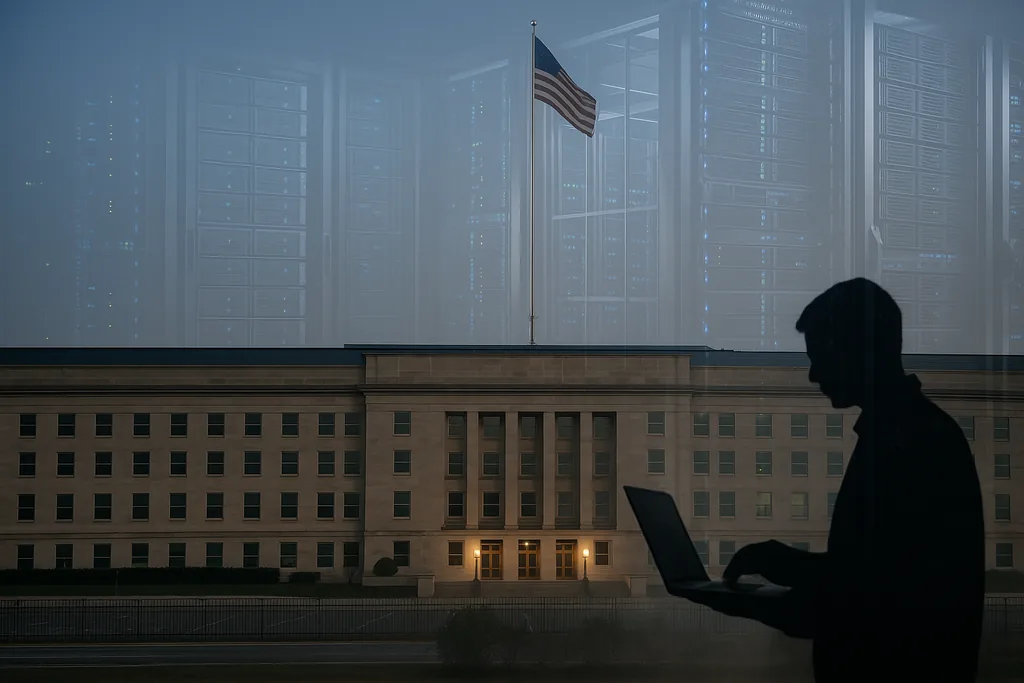
On Friday, Feb. 27, 2026, OpenAI CEO Sam Altman announced on X that "tonight, we reached an agreement with the Department of War to deploy our models in their classified network," a development that arrived hours after President Donald Trump directed U.S. agencies to cease using technology from Anthropic and the Pentagon moved to label Anthropic a supply-chain risk. The phrase openai strikes deal pentagon spread quickly across industry and political feeds; the short, terse public statements leave many technical and legal details open, but the immediate contours are clear: OpenAI says the Defense Department accepted its safety red lines and will run its models on classified systems, and Anthropic has been formally pushed out of some government channels. The sequence — a blacklist for one company and a lease for another — crystallises a new, fraught relationship between frontier AI labs and national security institutions.
openai strikes deal pentagon — what the agreement covers
According to OpenAI's post and subsequent company messaging, the deal permits the Defense Department to deploy OpenAI models inside classified networks while preserving company red lines that bar domestic mass surveillance and fully autonomous use of lethal force. Sam Altman said the DoD "displayed a deep respect for safety" and agreed to language reflecting those prohibitions; OpenAI also committed to building technical safeguards and embedding personnel to help operate and monitor models. Public reporting describes the arrangement as explicitly scoped to the department's classified environment rather than a blanket license for every commercial partner, but the DoD's exact technical conditions, audit access, and oversight mechanisms have not been fully disclosed.
From a technical perspective, the headline items are familiar but hard to operationalise: non-use for domestic mass surveillance, human responsibility for use of force, and tooling that enforces behavior constraints. Those standards can be implemented as contractual obligations, software guardrails, and onsite advisory teams, but they depend on verification mechanisms that the public cannot inspect. The DoD has historically required deep, sometimes invasive, inspection of vendors' tooling and supply chain; whether the Pentagon's appetite for control will match OpenAI's promises remains to be seen, and whether the technical safeguards will scale into operational settings is an open question.
openai strikes deal pentagon and the Anthropic fallout
The OpenAI announcement landed in the shadow of a high-profile standoff between Anthropic and the Defense Department that ended with a severe response from the White House and Pentagon. Defense Secretary Pete Hegseth gave Anthropic an ultimatum to allow military use of its models "for all lawful purposes," and after talks failed the department designated Anthropic a "supply-chain risk to national security." President Trump then directed federal agencies to stop using Anthropic technology. Anthropic said it would legally challenge the designation and that it had insisted on policies barring its models from being used for fully autonomous weapons and domestic mass surveillance.
Technical safeguards and operational limits
Both the Pentagon and AI companies talk about red lines and safeguards, but translating those principles into durable, testable constraints is difficult. Prohibiting domestic mass surveillance or autonomous use of force is legally meaningful, but it depends on day-to-day engineering controls, access policies, telemetry, logging, and an ability to demonstrate compliance under audit. OpenAI has said it will deploy personnel to support safe operations and build technical guardrails; in practice those measures require independent verification, continuous monitoring, and clear escalation paths when a model behaves unpredictably.
Further, many of the common defensive mechanisms — thorough model testing, robust provenance of training data, and software that enforces usage policies — become more complex on classified networks. The DoD's own January AI strategy emphasises rapid adoption of commercial capabilities while demanding visibility into dependencies and risks. That tension — rapid fielding versus in-depth assurance — is at the heart of why technical safeguards will be scrutinised closely by both program managers and external oversight actors.
Industry leverage, procurement and political risks
The episode exposes a shifting balance of power: commercial AI labs now hold capabilities the military wants, and governments must decide how to partner without surrendering strategic control. Experts say the short-term leverage sits with firms that own leading models and scarce talent, but sovereign governments retain procurement tools, regulatory levers, and legal authority. The DoD can compel compliance through contracting rules, denial of classified access, or other tools; companies can withhold cooperation to protect reputations or corporate values. Both sides can impose costs on the other, which creates a fragile public–private compact.
Politically, critics warned that the blacklist of Anthropic and the simultaneous embrace of OpenAI could be used to steer contracts toward preferred vendors or to punish companies that insist on safety constraints. Prominent politicians and security officials have already weighed in, with some Democrats accusing the administration of politicising national security decisions and some defense leaders arguing the military cannot allow vendors to unilaterally limit lawful uses. The broader market context — major funding rounds, cloud partnerships, and commercial consolidation — means procurement choices ripple through an ecosystem of suppliers, chipmakers, and cloud providers.
What this means for national security and the AI industry
For the Pentagon, integrating top-tier commercial models promises faster capability improvements but introduces dependencies and potential single-vendor risks. Analysts caution that over-reliance on a single provider could create fragility if access is disrupted, and vendor lock-in could become a long-term strategic liability. The DoD is also balancing near-term readiness against maintaining democratic norms and legal constraints; how it threads that needle will shape future collaboration with tech firms and the incentives companies face when they choose to prioritise safety over market access.
For the AI industry, the incident marks a practical test of whether safety commitments are sustainable when national security dollars are large and political pressure is intense. Anthropic's legal challenge and OpenAI's public assurances will play out in courts, agencies, and contract offices. Meanwhile, private investments and cloud partnerships — including large recent commitments between OpenAI and major cloud providers — will influence which architectures and deployment models the government accepts. The fight is therefore both legal and technical, and it will set precedents about how much control companies can preserve when their technologies are treated as strategic infrastructure.
Sources
- U.S. Department of Defense (Artificial Intelligence Strategy memorandum, Jan. 9, 2026)
- Georgetown University, Center for Security and Emerging Technology (analyst commentary)
- Aspen Policy Academy (policy analysis and commentary)




Comments
No comments yet. Be the first!