Pentagon gives anthropic days: a terse ultimatum
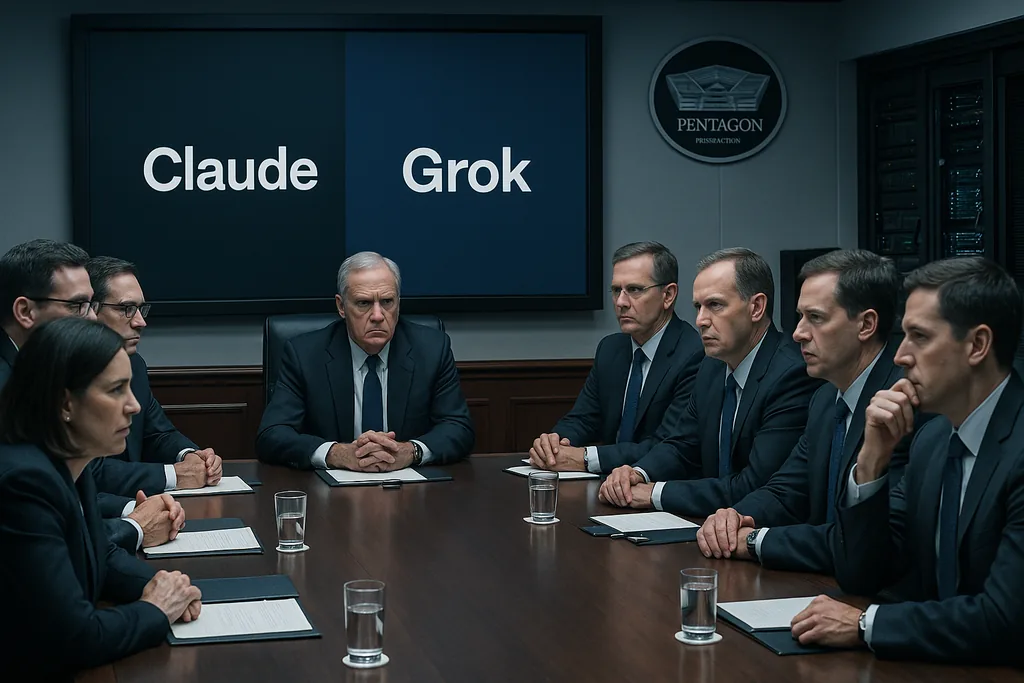
The phrase "pentagon gives anthropic days" is now more than an internet headline: this week the Pentagon pressed Anthropic with a three‑day deadline to lift safety guardrails on its Claude model or face being labelled a supply‑chain risk and cut off from U.S. defence work. The demand was delivered in a tense Tuesday morning meeting at the Pentagon that included Defense Secretary Pete Hegseth and senior department lawyers, according to reporting by participants and company statements. The choice presented to Anthropic was stark: accede to the Pentagon's conditions, or be blacklisted and potentially compelled under the Defense Production Act (DPA).
Pentagon gives anthropic days — what happened in the meeting
Officials at the meeting told reporters the tone was confrontational. One defense official described the session as "not warm and fuzzy," and another acknowledged the paradox that the Pentagon was simultaneously dependent on frontier models while unwilling to accept private companies setting conditions on military use. Anthropic CEO Dario Amodei attended the meeting and, after the conversation, the company released a statement saying it remained committed to supporting legitimate national‑security missions while also preserving safe, testable model behaviour.
The immediate trigger for the confrontation, as described in press reporting, was a set of revelations that the Claude model had been used—without advance notice to Anthropic—in a January military operation. That episode, and reporting about it, intensified pressure inside the Pentagon to insist on unfettered access. The Department of Defense has been explicit about a near‑term timetable for AI acceleration: an "AI‑first" warfighting strategy published in January laid out demonstrable projects this summer, and senior officials say they need the most capable models now to meet those timelines.
Alongside the ultimatum, the Pentagon announced a separate arrangement to deploy xAI's Grok model on classified military networks under an "all lawful purposes" rubric. Reported differences in contractual terms between the two companies — one company accepting broad usage language while the other resisted — underscored the administration's message that the state will not tolerate vendor restrictions it deems incompatible with operational needs.
Pentagon gives anthropic days — legal tools and the threat of blacklisting
The Pentagon framed its options in two legal buckets: blacklisting as a supply‑chain risk and invoking the Defense Production Act to compel specific behaviour. Blacklisting would mean voiding future Pentagon contracts and pressuring prime contractors to sever ties. Practically, that would exclude Anthropic from a large slice of government revenue and partnerships, and would signal other customers to reconsider commercial relationships. The warning is punitive: it is intended to force a company to choose between a filtered business model and the loss of lucrative government work.
The Defense Production Act occupies a different legal place. The DPA grants the president sweeping powers to require companies to prioritise and accept government contracts and to produce goods and services needed for national defence. For AI, that could be used to order a supplier to tailor or reconfigure models, remove particular safety features, or provide engineered access for classified tasks. Using the DPA against a software provider in this way would be novel and legally contested, but Pentagon officials reportedly raised it as a credible instrument to enforce compliance.
For outside observers and legal scholars, these options raise immediate questions about precedent and oversight. Blacklisting changes the supply landscape through administrative fiat; the DPA would effectuate a forced technical change to a product. Both measures have implications for corporate autonomy, civil liberties, and the international market for frontier AI.
Anthropic's safeguards and corporate positioning
Anthropic has described its safety regime in public documents and interviews as a mix of technical and policy guardrails. Those safeguards include content‑filtering, refusal modes for certain classes of requests, and explicit policy statements that bar applications such as "fully autonomous weapons" and "mass domestic surveillance of Americans." The company has also resisted signing broad contractual language committing to support "all lawful purposes," arguing that such wording would eliminate meaningful limits on how models are deployed.
That position, however, sits alongside a record of commercial and government engagement. Anthropic has pursued classified‑network deployments with infrastructure partners, launched a government‑oriented offering called Claude Gov, and won sizeable contracts with defence customers. The company also counts major cloud and chip investors among its backers, and has commercial relationships that intertwine it with the military‑intelligence ecosystem. Those entanglements complicate claims that the company stands entirely apart from defence priorities.
When asked why the Pentagon gave Anthropic three days to drop AI safeguards, observers point to a mix of strategic pressure and immediate operational demand. The department wants a tested, explainable path to integrate large models into mission planning, logistics, and weapon systems at speed. Any vendor restriction that could prevent rapid, unconstrained use—especially under the legal standard of "all lawful purposes"—is being framed by the Pentagon as an unacceptable risk to readiness.
What blacklisting and a safeguards rollback would mean in practice
If Anthropic were blacklisted, the company would lose direct access to many defence opportunities; contractors might be ordered to cut ties, and government procurement channels would close. If Anthropic instead removed safeguards under pressure or compulsion, the immediate technical consequence would be models that accept a wider range of prompts and operational instructions, including those touching on targeting, surveillance, or other sensitive missions.
The downstream effects would be both technical and societal. Removing guardrails increases the risk that models will be repurposed for mass surveillance, enabling automated monitoring systems to scale faster. It could accelerate integration into weapon‑support systems where human oversight may be limited. From a safety perspective, loosening constraints can degrade the ability to test and audit models for bias, hallucination, and adversarial vulnerability—issues that already make deploying models into life‑critical systems risky.
For civil liberties and international norms, the stakes are high: models stripped of restrictions could be used for large‑scale domestic surveillance programs, targeted disinformation at scale, or foreign operations with lower evidentiary thresholds. Those are the exact trade‑offs the company has publicly said it seeks to avoid, which helps explain why the dispute has become a flashpoint.
Wider implications: markets, politics and the future of military AI
This confrontation illustrates a broader tension in the AI ecosystem. Governments want predictable, auditable access to the most capable models to accelerate wartime applications. Many companies, on the other hand, fear reputational and ethical blowback from unrestricted military use. The split is sharpened by politics: firms willing to accept broad contractual language gain fast access to government networks, while those that try to maintain conditional limits risk exclusion or coercion.
It also underlines a chilling operational reality: when a technological capability is judged strategically necessary, the state may resort to extraordinary legal and economic pressure to secure it. That dynamic will force private AI vendors to weigh commercial imperatives, investor expectations, legal exposure, and public scrutiny when negotiating with governments. For policymakers, the episode raises questions about transparency, oversight, and international norms governing AI in military contexts.
For researchers, engineers and the public, the outcome will matter because it shapes how the most advanced models are governed and tested. If the industry accepts wholesale removal of safeguards in the name of national security, the space for independent safety research, public audit, and civil‑liberties protections will shrink. Conversely, if firms successfully defend some limits, the contest may push the government to develop its own in‑house capabilities or to create procurement rules that balance operational need with safety requirements.
The immediate timeline remains short: the Pentagon's three‑day demand has put Anthropic under enormous pressure to choose a path. Whatever the decision, the episode will be a test case for whether private AI companies can set effective limits on the military use of frontier models, or whether the state will compel broader access in the name of defence readiness.
Sources
- U.S. Department of Defense press materials
- Anthropic press materials and public policy documents
- xAI (Grok) press materials
- Defense Production Act (text and legal guidance)



Comments
No comments yet. Be the first!