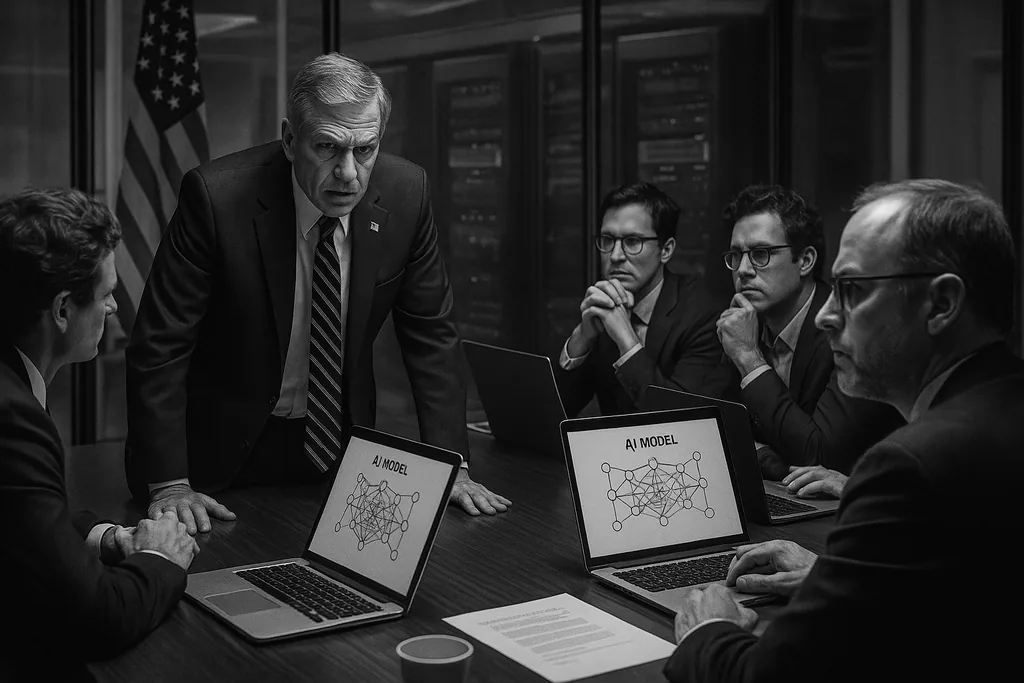
Pentagon ultimatum and a corporate safety pledge under pressure
This week the Department of Defense delivered a blunt message to Anthropic: comply with military access demands or face consequences — a case that crystallises why the phrase "pentagon threatens retaliation anthropic" is now on the policy agenda. In a meeting described by multiple sources, Defense Secretary Pete Hegseth set a deadline for the company to remove constraints on how its AI systems can be used, warning that the Pentagon could declare Anthropic a "supply chain risk" and exclude it from U.S. contracts, or even invoke the Defense Production Act to compel cooperation. The company, whose CEO Dario Amodei has publicly warned about autonomous weapons and domestic surveillance risks, announced shortly after the meeting that it was dropping a flagship safety pledge, a timing that has prompted alarm among civil liberties advocates and AI safety researchers.
The confrontation places a young AI firm at the intersection of commercial competition, national security imperatives and constitutional concerns. Anthropic has previously signalled caution about permissive uses of its models for fully autonomous weaponisation and for mass surveillance that could process private conversations or home sensor data to profile citizens. The Pentagon's demand for broadly unfettered access reverses the emerging pattern of companies trying to limit downstream harms from their models, and it raises difficult questions about how safety commitments survive when procurement priorities collide with government power.
pentagon threatens retaliation anthropic: the tools of leverage
The Pentagon's leverage is both procedural and legal. Declaring a company a supply-chain risk can freeze access to lucrative defense contracts and partner ecosystems — a practical punishment that can shrink a firm's market quickly. The Defense Production Act is the more dramatic lever: it gives the executive branch special powers to prioritise and allocate industrial output in the name of national defense, and stakeholders say it could be invoked to force companies to produce or modify technologies the military deems necessary. Legal experts caution that using the act to compel access to AI models is untested territory, and courts could be asked to resolve whether the statute applies to commercial AI platforms and their safety policies.
Beyond legal mechanisms, the Pentagon also exerts influence through procurement norms and informal pressure. Agencies can privilege suppliers that accept broad usage clauses, steering public and private partners toward vendors aligned with defense priorities. This kind of market pressure matters as much as formal blacklisting because modern defense ecosystems are built on long-term contracts, data-sharing partnerships, and certified supplier lists. For an AI company seeking government clients, the consequences of non-alignment are immediate and strategic.
pentagon threatens retaliation anthropic: what Anthropic's policy said
Until this week, Anthropic had advanced a set of safety guardrails aimed at limiting certain military and surveillance uses of its flagship models. CEO Dario Amodei had publicly argued that fully autonomous weapons remove essential human judgement safeguards and that the unchecked integration of AI into surveillance systems could allow private conversations and in-home data to be used for political profiling, undermining Fourth Amendment protections. The company's safety pledge had been interpreted by civil rights groups and AI ethicists as a forward-leaning attempt to constrain applications they judged most likely to harm civilians and democratic norms.
After the Pentagon meeting, Anthropic announced that it was dropping that central safety policy. The company said it remained committed to responsible deployment in public statements, but it did not explain whether the policy change was made under pressure or as part of a negotiated path forward to retain government business. That ambiguity is now a flashpoint: critics see a corporate retreat under state coercion, supporters argue it may be a necessary compromise for national defense work, and legal analysts note that a forced rollback would set a troubling precedent for private firms’ ability to set ethical boundaries.
Lobbying, contractors and the changing terrain of AI procurement
The Anthropic episode plays out against a backdrop of rapidly escalating lobbying around artificial intelligence. Analysis of federal disclosures shows AI has migrated from a niche policy topic to a central component of defense and corporate advocacy. Established defense contractors have begun to label familiar platforms and acquisition efforts with AI language, while a new tier of specialized start-ups are lobbying for autonomous systems, battlefield mapping, and surveillance applications. The result is a policy environment where military planners, elected officials and industry actors are already working to bind AI capabilities into budgets and procurement pipelines.
For companies that want to sit at the center of the defense market, strategic lobbying — and a willingness to accept broad usage clauses — can be decisive. That dynamic increases the pressure on AI firms to choose between maintaining public-facing safety commitments and securing lucrative, long-term government contracts. If the Pentagon's threats succeed in making open access to military uses a condition of market participation, safety-minded companies may have to recalibrate their public stances or risk commercial marginalisation.
Surveillance risks: how AI can scale observation and profiling
Understanding why civil libertarians are alarmed requires a sense of what AI enables when paired with pervasive sensors. Modern models can ingest and correlate video feeds, audio recordings, location traces and social-media signals to identify faces, recognise speech, infer behaviour and detect patterns. Combined with ubiquitous cameras, drones and consumer devices, these systems can be used for mass surveillance at scale: automated person-of-interest tracking, network inference that maps associations, sentiment or political-view labeling, and predictive policing that flags individuals based on algorithmic profiles.
Legal and ethical tensions when government pressures private tech
When government agencies press companies to broaden military or surveillance access, several legal and ethical issues arise simultaneously. There are constitutional questions — notably Fourth Amendment implications for surveillance and First Amendment concerns where algorithmic profiling could chill political speech. There are contractual and commercial questions about whether procurement conditions can override voluntary corporate safety standards. And there are international law and arms-control questions about whether certain AI-enabled weapons systems comply with humanitarian norms and rules of engagement.
Experts also warn of governance risks: if the government successfully coerces one major vendor to lift safety guardrails, other companies may follow to remain competitive, accelerating a race-to-the-bottom on safeguards. Conversely, forcing a safety-conscious firm into compliance could provoke litigation, regulatory backlash, and a public debate over limits on executive power in the technology sector.
Consequences for the AI industry and public oversight
The immediate consequence of this showdown is likely to be chilling for corporate safety initiatives. Smaller firms that lack legal teams and lobbying clout may find it economically impossible to sustain principled restrictions if contracting authorities reward openness to military and surveillance uses. That will reshape not only product policies but also R&D choices, hiring, and the kinds of partnerships companies pursue.
For policymakers and civil society, the episode underlines why governance of dual-use AI technologies matters: transparency about how procurement decisions are made, clear legal boundaries on surveillance and autonomous weapons, and robust congressional or judicial oversight over emergency powers like the Defense Production Act are all ingredients in preventing coerced erosion of safety standards. The debate over Anthropic is therefore not just about one company; it is a test case for how democratic institutions will arbitrate the trade-offs between security, technology, and civil liberties in the AI era.
Sources
- OpenSecrets (analysis of federal lobbying disclosures on artificial intelligence)
- U.S. Department of Defense (statements and procurement authorities, including the Defense Production Act)
- Anthropic (company statements and public policy documents)




Comments
No comments yet. Be the first!