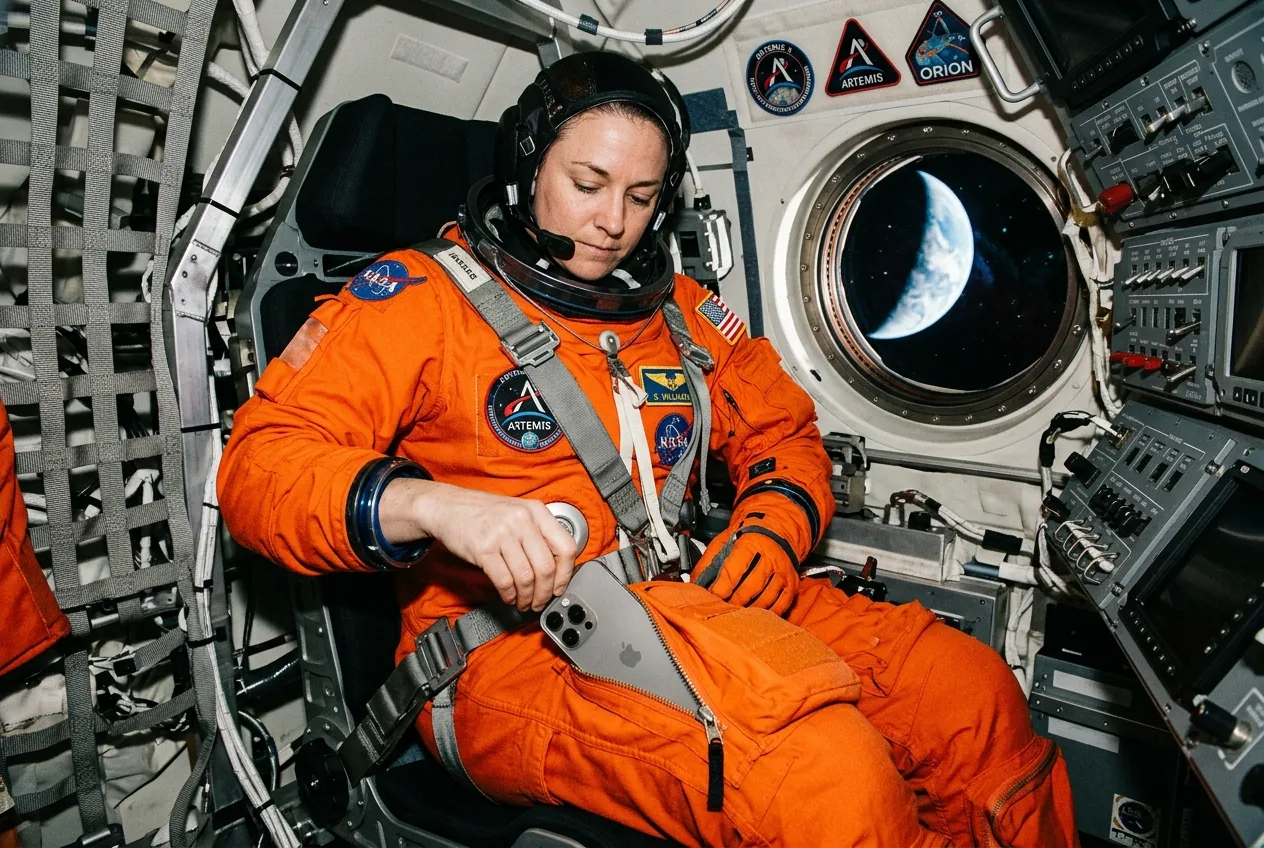
In microgravity, a dropped phone doesn’t just mean a cracked screen. Shattered glass becomes a cloud of microscopic daggers capable of abrading spacecraft seals, jamming physical mechanisms, or quietly destroying life-support systems.
That is the baseline paranoia NASA operates under when approving any new hardware for human spaceflight. It is exactly why the agency has subjected the iPhone 17 Pro Max to a gruelling, months-long safety gauntlet ahead of the Artemis II lunar flyby. Four crew members will carry Apple’s flagship device around the Moon, but the phones surviving the clearance process look very different to the ones sitting in a high street shop.
A Radio-Silent Flyby
To get the device aboard the Orion capsule, NASA had to neuter it. Every wireless radio—from Bluetooth to the LTE transceiver—has been permanently disabled for flight.
There will be no lunar FaceTime calls, no real-time social media updates, and no wireless AirPods floating through the cabin. Allowing a commercial device to actively transmit inside a densely instrumented capsule risks unexpected electromagnetic interference with the ship's own systems.
Rather than spend months testing every possible radio frequency against Orion's avionics, NASA took the simpler route. They effectively turned a high-end smartphone into an offline digital camera.
Ceramic Shields and Zero-G Debris
Apple played no part in this certification. NASA ran the device through its own independent four-stage safety review, examining the phone's 8x telephoto system and the structural limits of its 'Ceramic Shield' glass.
Tobias Niederwieser of BioServe Space Technologies called the required testing routine "pretty involved and lengthy." Assessors had to catalogue every moving part and breakable surface, then prove through lab testing that any catastrophic failure wouldn't compromise the crew.
Even daily charging has been heavily regulated. The phones are restricted to specific power loads and thermal control cycles to prevent overheating in a sealed environment, while Velcro mounts and zipped leg pockets will keep them from drifting into sensitive equipment.
The Nikon Safety Net
The payoff for this bureaucratic headache is a different kind of space photography. The crew are already using the phones for floating selfies and window-framed shots of Earth—intimate, human-scale moments that traditional space imagery often misses.
But these devices aren't replacing the heavy-duty gear. Artemis II is still flying with older Nikon D5 DSLRs and GoPro Heros strapped to the bulkheads.
NASA keeps the older kit on the manifest because it is a known quantity. The iPhone is there for storytelling and public relations; the Nikons are there because flight safety teams already know exactly how they operate and fail.
Approving consumer tech for spaceflight sets a tricky precedent. Every hour NASA spends proving a commercial smartphone won't blow up a thermal control cycle is an hour diverted from certifying mission-critical hardware.
Sources
- NASA
- BioServe Space Technologies




Comments
No comments yet. Be the first!