Dead and Missing Scientists Trigger National Security Panic

Space
Dead and Missing Scientists Trigger National Security Panic
A surge in disappearances and unexplained deaths among top-tier space and nuclear researchers has sent a chill through the international scientific community.

There is a growing list of names that don't make it to the podium at international symposiums anymore. Fox News correspondent Brooke Taylor recently reported on a wave of concern surrounding scientists tied to American space, defense, and nuclear programs who have either gone missing or turned up dead under circumstances that leave more questions than answers. These aren't hobbyists. These are the people responsible for the trajectory of hypersonic missiles and the stability of nuclear deterrents. When they vanish, people notice.

The tension isn't just a matter of bureaucratic friction. It is a fundamental shift in how the world views intelligence—the human kind. For decades, the global scientific community operated on a loosely held promise of collaboration. That promise is dead. Today, a PhD in high-energy physics or aerospace engineering isn't just a degree; it’s a liability. If you know how to make a rocket go faster or a reactor burn cleaner, you are no longer just a researcher. You are a strategic asset, and in a world where peace talks are collapsing, assets are often kept under lock and key.

The interrogation at Gate A10

The incident at Sea-Tac serves as a jarring case study in this new reality. These scholars were not covert operatives. They were attendees for an academic conference, the kind of event that has historically been the bedrock of scientific progress. Yet, the Chinese Ministry of Foreign Affairs took the rare step of issuing a targeted travel advisory, telling its citizens to avoid the Seattle airport entirely. They described the questioning as "unreasonable," a term that masks a deeper fear: that the U.S. is now treating every foreign intellectual as a potential spy.

The Port of Seattle, caught in the middle, tried to wash its hands of the mess. Officials pointed out that they have no authority over Customs and Border Protection, despite their own "Welcoming Port Policy." It is a classic case of local ideals meeting the iron wall of federal paranoia. While the port wants to be a gateway for global talent, the federal government sees that same talent as a possible leak in a bucket they are desperate to keep full.

When knowledge becomes a target

Why is this happening now? Look at the map. High-stakes negotiations between the U.S. and Iran have recently crumbled in Pakistan after more than 20 hours of fruitless talk. At the same time, tensions over Taiwan are flaring. We are living through a period where the traditional tools of diplomacy—treaties and trade—are failing. When the talking stops, the race for technical superiority accelerates. And that race is run by people.

In the Cold War, the struggle was over hardware. How many warheads do you have? How big are your boosters? In the 2020s, the struggle is over the brains that design the software and the materials. If a nation can’t out-build its rival, it might try to out-think them, or failing that, ensure the rival can’t think at all. This turns scientists into the front-line soldiers of a war that hasn't been declared yet. They are the ones holding the keys to hypersonic flight, quantum encryption, and next-generation nuclear propulsion.

The human cost of this is often buried in the fine print of national security briefings. We hear about the "brain drain," but we rarely talk about the psychological pressure on a scientist who knows they are being watched. Not just by the other side, but by their own. Every email, every international phone call, every holiday spent abroad is a potential red flag. For those in the space and nuclear programs, the lab is no longer a sanctuary of pure thought; it is a gilded cage.

The silence of the missing

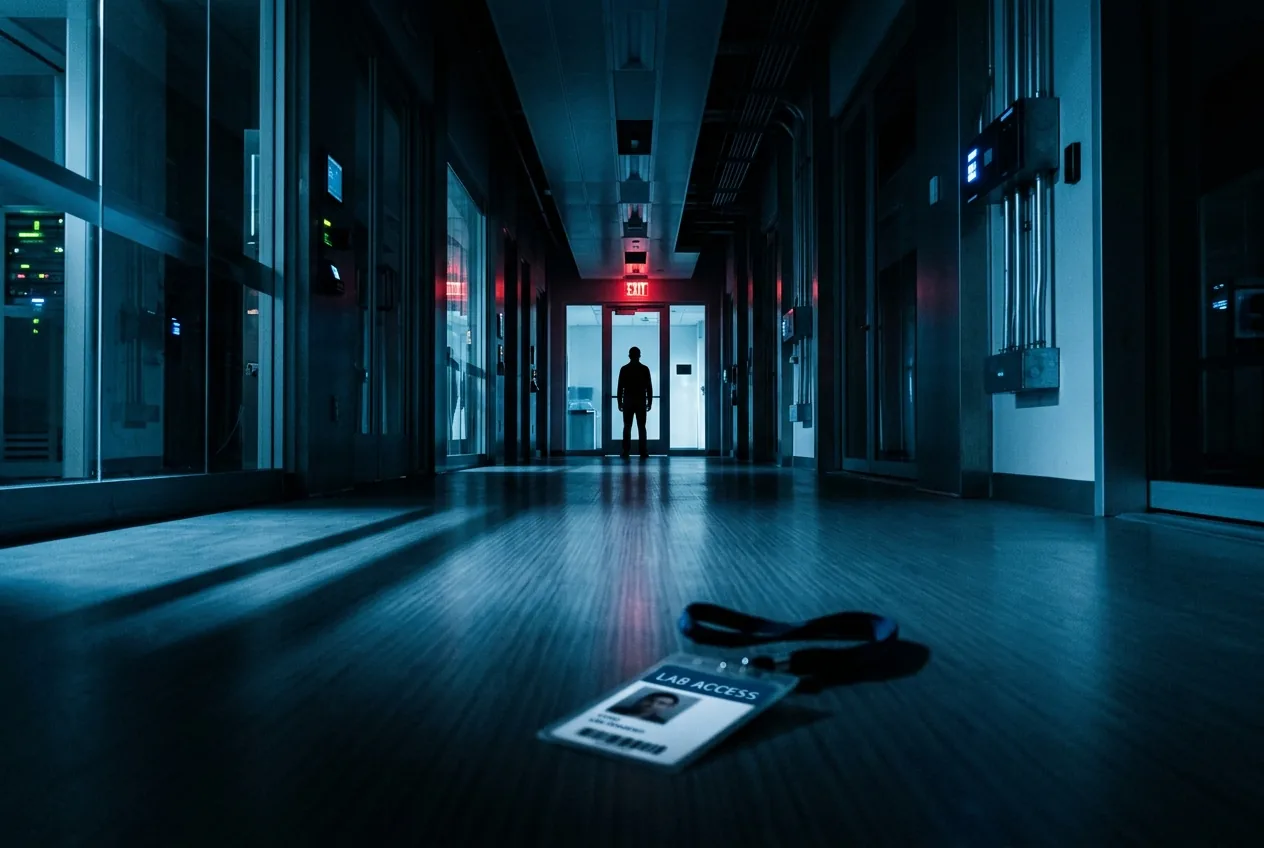
The most unsettling aspect of this trend is the silence that follows a disappearance. When a high-level defense researcher goes missing, there is rarely a public search party. There are no frantic social media posts from the employer. There is just a quiet removal of a profile from a staff directory and a redirection of their projects to other teams. This lack of transparency is what fuels the growing concern reported by news outlets.

Is it a case of forced defections? Industrial accidents hushed up to prevent embarrassment? Or perhaps something more calculated? While it's easy to veer into the territory of spy novels, the reality is likely more mundane and more terrifying: a systemic breakdown of trust. When a government decides that its most brilliant minds are too dangerous to be allowed to move freely, the line between "protecting an asset" and "imprisoning a person" disappears.

We saw hints of this during the "China Initiative," a Department of Justice program that aimed to root out economic espionage but ended up ruining the careers of many innocent researchers. Though the program was officially scrapped, the culture it created hasn't gone away. It has just gone underground. The questioning at Sea-Tac suggests that the scrutiny has only become more aggressive and less predictable.

The cost of a fractured world

This isn't a problem that can be fixed with a new policy or a better visa process. It is a fundamental conflict between the nature of science and the nature of the modern state. Science wants to be open. The state wants to be secure. Currently, security is winning by a landslide. The result is a world where the people who understand the universe best are the ones most afraid to live in it.

As the geopolitical climate grows more erratic, the safety of these researchers will continue to be a bellwether for the state of global peace. If we continue to treat scientists as pieces on a chessboard, we shouldn't be surprised when they start to disappear. The tragedy isn't just the loss of the individuals; it’s the death of the idea that knowledge should belong to everyone. For now, the lights are staying on in the labs, but the doors are being locked from the outside.

James Lawson

James Lawson

Investigative science and tech reporter focusing on AI, space industry and quantum breakthroughs

University College London (UCL) • United Kingdom

Readers

Readers Questions Answered

Q Why are space and nuclear researchers increasingly viewed as strategic assets by national governments?
A In the modern geopolitical landscape, technological superiority in areas like hypersonic missiles, quantum encryption, and nuclear propulsion is considered vital for national defense. Because this progress depends on the specialized knowledge of top-tier researchers, these individuals are treated as human intelligence assets. Governments prioritize securing this intellectual capital to prevent leaks to rivals, often leading to increased surveillance and restrictions on the professional and personal mobility of high-level scientists.
Q What prompted the recent travel advisory issued by the Chinese Ministry of Foreign Affairs regarding Seattle?
A The Chinese Ministry of Foreign Affairs issued a targeted travel advisory for Seattle-Tacoma International Airport following reports of unreasonable questioning and detention of Chinese scholars by federal authorities. These researchers were arriving for academic conferences, but they faced aggressive screening intended to root out potential espionage. This friction highlights a growing divide between local port policies and federal efforts to monitor foreign intellectuals with ties to sensitive technical fields.
Q How have recent diplomatic failures impacted the international scientific community?
A As traditional diplomacy fails, such as the breakdown of high-stakes negotiations and rising territorial tensions, global competition shifts toward technical and scientific dominance. This transition has effectively ended the era of open international collaboration, turning advanced degrees in aerospace engineering and physics into strategic liabilities. Researchers now face immense psychological pressure and potential disappearance as nations compete to either protect their own intellectual talent or disrupt the technological progress of rivals.
Q What is the primary concern regarding the disappearance of high-level defense researchers?
A The most unsettling aspect of these disappearances is the lack of public transparency and the quiet removal of experts from official directories without explanation. This silence fuels fears of forced defections, industrial accidents, or state-sanctioned isolation. When governments decide that brilliant minds are too dangerous to move freely, the line between protecting an asset and imprisoning a person vanishes, leading to a systemic breakdown of trust within the global scientific community.

Have a question about this article?

Questions are reviewed before publishing. We'll answer the best ones!

Comments

No comments yet. Be the first!