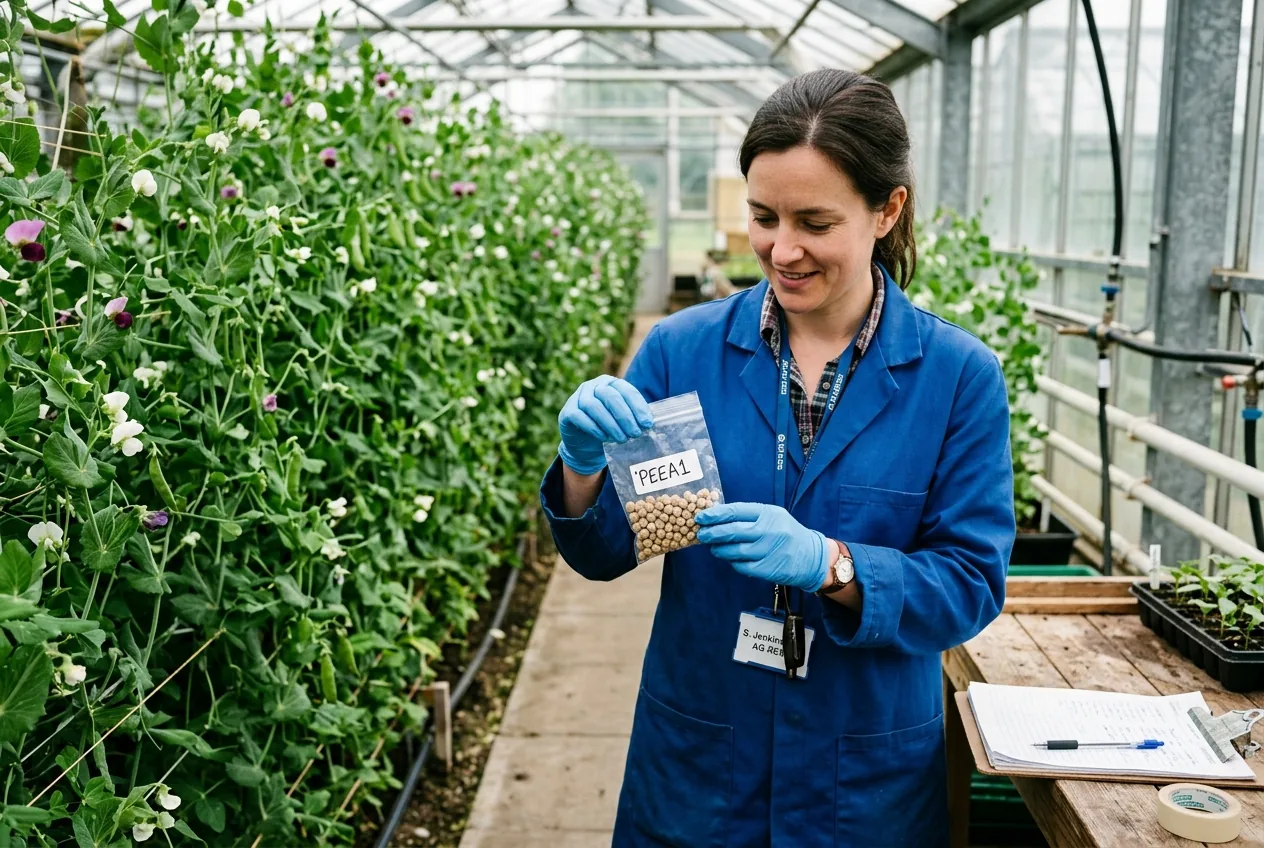
Sometime in the near future, the iron in your diet might come from a field of peas that bleed like beef. Molecular farming company Moolec Science has managed to engineer a pea plant that reliably produces bovine myoglobin inside its seeds, generation after generation.
It is a serious technical flex aimed at a massive public health issue: a 2021 Lancet review estimated that nearly a quarter of the global population suffers from anaemia. But moving a genetically engineered, animal-protein-bearing plant from a greenhouse to a grocery shelf is a brutal process. While the US Department of Agriculture has just cleared the crop for agricultural movement, the company is now staring down FDA safety reviews, international regulations, and its own severe financial turbulence.
The Agricultural Workaround
For years, the alternative protein industry has relied heavily on steel bioreactors and precision fermentation. Moolec is betting on dirt. By embedding the animal protein directly into the pea, the crop itself becomes the production vessel.
When harvest time comes, the company doesn't bother with expensive purification processes. They plan to sell the resulting pea meal or flour with the bovine protein baked right into the matrix. It is a pragmatic workaround designed to slash the per-gram production costs that usually strangle lab-grown meat companies.
The Regulatory Split
The strategy just cleared its first major bureaucratic hurdle. The USDA’s Animal and Plant Health Inspection Service (APHIS) recently concluded that Moolec’s modified plant, dubbed PEEA1, poses no increased plant pest risk. The company can legally move and grow it in the US.
But an agricultural pest assessment is not a food safety stamp. To hit its target commercial launch in 2028, Moolec must now convince the Food and Drug Administration that eating beef-laced pea flour is safe. The FDA will dig into everything from processing standards to highly complex novel allergen profiles. Outside the US, the paperwork gets even thicker, with European and Asian markets historically hostile to genetically engineered novel foods.
Nasdaq Warnings and Bankruptcy Fallout
Even if the science holds up, the corporate machinery is stalling. Moolec's recent financial history highlights the severe liquidity pressures facing the agri-biotech sector.
The company recently completed a merger into a larger group alongside Argentine firm Bioceres. Months later, that relationship fractured when Bioceres entered bankruptcy proceedings. Moolec has since had to secure an extension from Nasdaq just to regain compliance with basic stockholder equity requirements. Carrying debt and facing governance pressure, executives are now having to pitch the broader potential of their technological platform rather than banking entirely on one successful pea trait.
The Labelling Nightmare
Assuming Moolec survives the financial squeeze, it still has to actually sell the stuff. Competitors are watching closely, with other molecular farming startups already attempting to grow casein in soybeans and egg proteins in potatoes. But a composite ingredient introduces massive formulation complexity for food manufacturers.
Then there is the unavoidable labelling issue. Will a pea carrying bovine myoglobin be acceptable to vegetarians, or to populations avoiding beef for religious reasons? Moolec has also referenced the pet food market—specifically taurine needs for cats—as a potential application. It is the ultimate market pressure test for molecular farming: brilliant biology rarely makes for a simple sale.
Sources
- US Department of Agriculture (APHIS)
- Moolec Science corporate filings
- The Lancet




Comments
No comments yet. Be the first!