In the clinic: a single injection, big questions
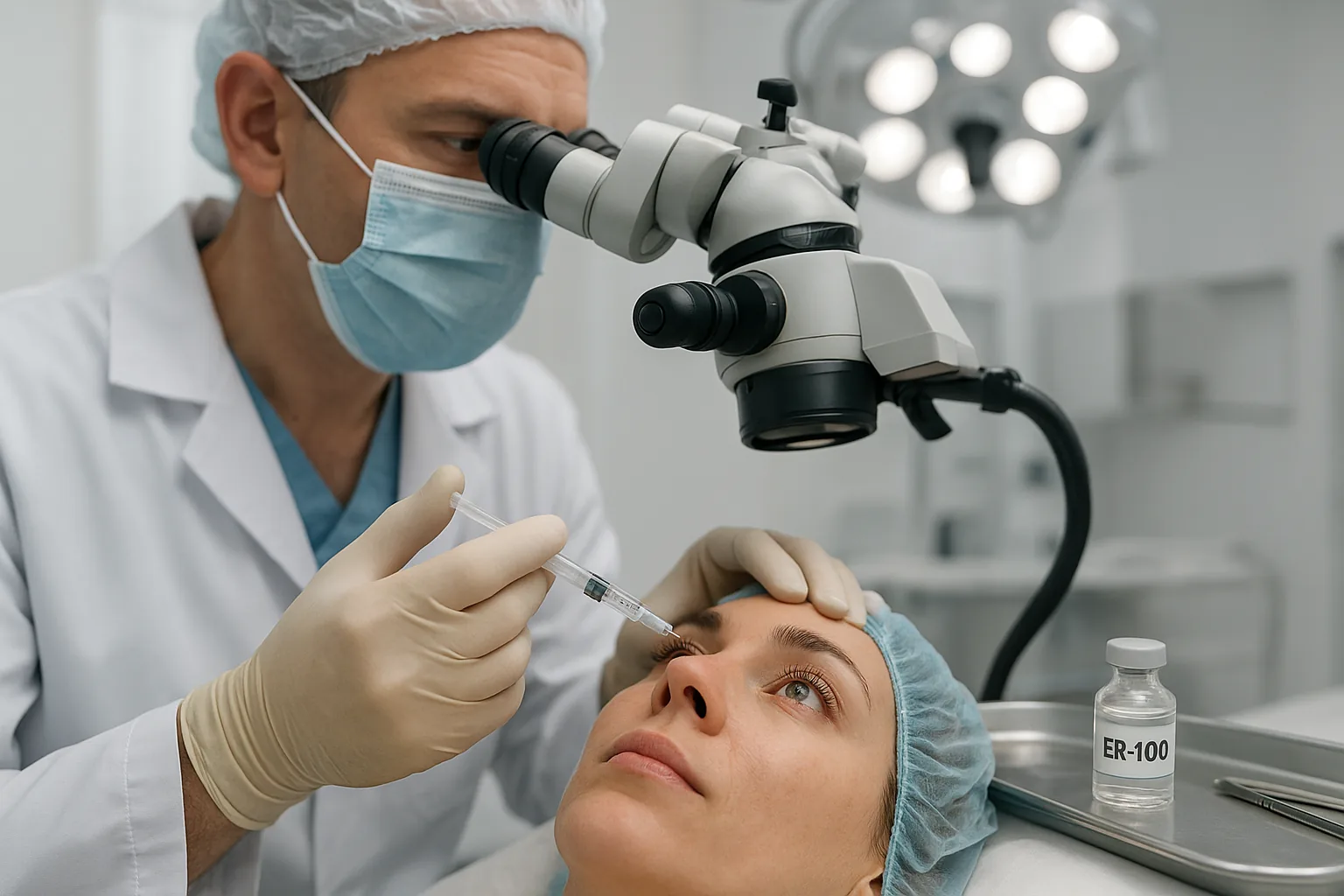
This week, on 10 June 2026, Boston-based Life Biosciences announced it had dosed the first patient in what their filing and press materials call the first human trial reverse-aging. The drug, labelled ER‑100 in company disclosures, was injected into the eye of a patient with glaucoma as part of an early, safety‑focused study. The immediate goal is narrow and concrete: test whether a surgical‑scale, local delivery of a cellular reprogramming agent can rejuvenate optic‑nerve cells without triggering the well-known safety problems seen in animal work.
The detail matters. This is not a pill sold at a wellness clinic and it is not a population study of slow ageing biomarkers. It is a regulated, FDA‑cleared, first‑in‑human experiment that aims to show whether techniques that reversed cell age in mice can be moved into a human organ that is both accessible and clinically measurable. The stakes are practical: if an eye injection safely restores nerve function, it would be a far easier clinical path than systemic infusions that would require solving whole‑body safety and dosing problems first.
first human trial reverse-aging: what ER‑100 is and how it claims to work
Life Biosciences describes ER‑100 as a cellular reprogramming therapy. In plain terms, the approach borrows from a class of experiments that briefly nudge adult cells toward a younger epigenetic state — effectively resetting chemical marks on DNA and chromatin that correlate with biological age — without erasing cell identity. In mice, transient expression of these factors has restored function to aged tissues by turning back molecular clocks and improving repair processes.
That shorthand hides substantial technical nuance. The trick is to reverse epigenetic ageing signatures while avoiding full dedifferentiation into stem‑cell like states that can spawn tumours. In prior animal work, aggressive or uncontrolled reprogramming produced cancerous growths. ER‑100’s ocular delivery sidesteps one complication by targeting a confined compartment with rigorous imaging and functional endpoints — an understandable, conservative first test of a risky mechanism.
How regulators and clinicians measure success in a trial like this
First‑in‑human trials are about safety more than miracles. For ER‑100 the primary endpoints will almost certainly be ocular safety outcomes — inflammation, intraocular pressure, retinal damage, and any local proliferative lesions. Secondary outcomes will measure function: visual acuity, visual field testing, optical coherence tomography of the retinal nerve fiber layer and optic nerve, and other ophthalmic imaging that can detect structural changes.
Because this is also pitched as a reverse‑ageing intervention, researchers will track molecular and systemic biomarkers where possible: epigenetic clocks based on DNA methylation, circulating inflammatory markers, and assays of senescent cell burden. Those measures are the same tools ageing researchers use to compress decades of biology into months of measurable change — but they are proxies, not proof of long‑term benefit. A gain in an epigenetic clock needs to be coupled to durable clinical improvement before anyone calls it rejuvenation.
Safety scoreboard: why early results must be read with restraint
The reason for caution is visible in the preclinical literature and in the public record around cellular reprogramming. Mouse experiments have shown striking tissue‑level rejuvenation but also a real risk of tumours when reprogramming is not tightly controlled. That specific hazard is the headline danger; there are also immune reactions, unintended changes to neighbouring cells, and organ‑specific side effects that do not show up in rodent models.
Because the eye is small and clinically observable, investigators can watch closely for abnormal cell growth and inflammatory complications that would be harder to spot in systemic studies. Still, early success would only mean the technique can be safely and briefly applied to an accessible tissue. It does not answer whether systemic treatments would ever be tolerable — which remains the much larger technical and regulatory barrier.
first human trial reverse-aging: who is eligible and what the protocol looks like
Life Biosciences opened the study this week in patients with glaucoma — a pragmatic choice because the optic nerve is both the target tissue and a condition with measurable decline. The trial is an early‑phase safety study: small cohorts, sequential dosing, and intensive monitoring. That design is typical for first‑in‑human trials where the biological novelty carries known risks.
Eligibility criteria for such trials are conservative. Investigators prioritise patients for whom standard care has limited benefit and for whom the risk‑benefit balance can justify experimental treatment. That means the first cohort will not be a queue of healthy volunteers chasing eternal youth; it will be people with a significant unmet clinical need and clinicians willing to accept experimental risk in return for a chance at meaningful restoration of vision.
Biomarkers, endpoints and the blunt truth about measuring 'reverse‑aging'
One of the persistent methodological problems in longevity science is timescale. Humans age over decades; trials cannot. So researchers use biomarkers — DNA methylation or “epigenetic clocks,” inflammatory cytokines, telomere‑related signals, and measures of senescent‑cell burden — to report biological age over months. Those biomarkers are useful but imperfect surrogates.
For ER‑100 the most persuasive evidence would combine local functional gain (improved visual field, thicker nerve‑fiber layer on imaging) with favourable movement in validated epigenetic clocks and reduced markers of senescence and inflammation. Even then, the community will want replication and follow‑up: transient changes can look encouraging without translating into durable healthspan benefit.
A European and industrial lens: funding, regulation and the hype problem
From Brussels to Berlin, regulators and funders are watching ageing trials with mixed feelings. The US FDA has shown flexibility in allowing pilot trials that target organ function; regulators in Europe face the same dilemma about whether ageing itself is an indication that can be approved. That debate shapes trial design and commercial strategy: companies aim for definable clinical indications (glaucoma, wound healing) that regulators accept, rather than the more awkward label of ‘treating ageing’.
There is also an industrial reality. Public agencies are cautious about underwriting long, expensive ageing trials; private capital flows to companies that can sell proprietary therapies rather than cheap generics. The result is a field where high‑visibility, well‑funded start‑ups drive the headlines and small academic projects trying to validate basic biology struggle for money. Europe has the engineers and clinicians to test these ideas rigorously; whether Brussels funds the long slog is a different question.
What to watch for next
Expect a slow, tightly staged readout. The first publication you will see is a safety report: adverse events, ocular inflammation, any proliferative lesions. Only after that will the trial report functional changes and biomarker movement. If ER‑100 clears safety hurdles and shows consistent, reproducible functional gains in the optic nerve, it will justify larger trials and push cellular reprogramming out of the purely preclinical realm.
Remember the practical limits: even an eye‑targeted success won’t hand anyone a fountain of youth. It will, however, be an important proof that reprogramming biology can be constrained and measured in a human organ. That is the particular kind of progress that matters to clinicians and regulators — and the kind that is hard to capture on a venture‑capital pitch deck.
Progress. The kind that doesn't fit on a slide deck.
Sources
- Life Biosciences (company press and FDA clinical‑trial materials)
- Nature (coverage of cellular reprogramming and ER‑100 context)
- Stanford University (Alkahest / young‑plasma human trial materials)
- Albert Einstein College of Medicine (Nir Barzilai, TAME metformin trial background)
- University of Copenhagen (clinical ageing and biomarker research)




Comments
No comments yet. Be the first!