

What is ASTERIS and how does it work?
ASTERIS is a self-supervised AI framework designed to enhance astronomical imaging by filtering out spatiotemporal noise that obscures the faintest signals in deep space. Developed by researchers including Hao Zhang, Xiaojing Lin, and Xinyang Li at Tsinghua University, it utilizes a transformer-based architecture to identify and correct correlated noise patterns across multiple exposures without requiring pre-labeled training data.
Astronomers have long struggled against the noise floor of deep-space imaging, which often obscures the faintest signals from the early universe. This noise is not merely random; it is frequently correlated between neighboring image pixels and across sequential exposures. Traditional denoising techniques often struggle to preserve photometric accuracy or the point spread function (PSF), potentially creating artifacts that look like celestial objects. By treating image sequences as a 3D spatiotemporal volume, ASTERIS learns the underlying noise structure of the telescope itself, allowing it to "see" through the interference that limits current observatories.
The architecture of ASTERIS represents a significant shift toward specialized machine intelligence, mirroring the efficiency and adaptability found in AGI research. By employing a self-supervised learning approach, the algorithm does not need a "clean" ground-truth image to learn from. Instead, it uses the internal consistency of the astronomical data itself to distinguish between physical signals—like distant stars and galaxies—and the systematic noise of the sensor. This capability makes it an ideal tool for processing the vast, unlabeled datasets currently being generated by the James Webb Space Telescope (JWST).
How many more distant galaxies can ASTERIS detect?
The ASTERIS algorithm has demonstrated the ability to triple the number of detectable high-redshift galaxy candidates in existing James Webb Space Telescope datasets. Specifically, when applied to deep JWST images, the tool identified three times more galaxy candidates at redshift > 9, representing the universe just a few hundred million years after the Big Bang.
This massive surge in detections is possible because ASTERIS recovers low-surface-brightness structures that were previously buried beneath the noise floor. In the study, researchers found that the newly identified galaxies were approximately 1.0 magnitude fainter in their rest-frame ultraviolet luminosity than those found using previous processing methods. This leap in sensitivity effectively pushes the boundaries of the "observable" universe, allowing cosmologists to fill in the gaps of the Cosmic Dawn.
The impact of this increased detection rate includes:
- Enhanced Sample Sizes: Larger populations of early galaxies allow for more robust statistical analysis of early galaxy formation.
- Fainter Signal Recovery: Detection of dwarf galaxies in the early universe that were previously invisible.
- Improved Purity: Maintaining 90% completeness and purity ensures that the "new" galaxies are real physical objects rather than noise artifacts.
What is a 1.0 magnitude improvement in detection depth?
In astronomical terms, a 1.0 magnitude improvement signifies that a telescope can detect objects approximately 2.5 times fainter than its previous technical limit. Because the astronomical magnitude scale is logarithmic, a single-step improvement represents a massive leap in light collection efficiency, effectively extending the "reach" of a telescope without requiring longer exposure times.
This 1.0 magnitude boost achieved by ASTERIS is a transformative metric for observational cosmology. Usually, reaching such a depth would require a significant increase in the total observation time—often doubling or tripling the required hours on a competitive instrument like the JWST. By achieving this depth through self-supervised spatiotemporal denoising, researchers can essentially extract "free" data from existing observations, making every second of telescope time more productive.
The preservation of photometric accuracy during this process is critical. If an algorithm reduces noise but changes the brightness or shape of the galaxy, the data becomes useless for scientific measurement. Benchmarking on mock data confirmed that ASTERIS maintains the integrity of the point spread function, ensuring that the light profiles of stars and galaxies remain undistorted. This precision is what separates this AI-driven approach from common image-smoothing filters, positioning it as a foundational tool for the next generation of AGI-assisted scientific instruments.
The Noise Floor Challenge in Modern Astronomy
The primary barrier to deeper space exploration is no longer just the size of the mirror, but the correlated noise inherent in modern digital sensors. These noise sources—ranging from thermal fluctuations to electronic interference—often mimic the appearance of faint, distant galaxies. When astronomers attempt to look further back in time to the early universe, the signals they seek are so dim that they are frequently indistinguishable from these background fluctuations.
Traditional imaging pipelines rely on stacking multiple exposures to average out random noise, but this does not account for noise that is correlated across time and space. Reaching deeper magnitudes is essential for studying how the first stars and black holes formed. Without new methods to break through this noise floor, telescopes like the Subaru Telescope and JWST would eventually hit a point of diminishing returns, where additional observation time no longer yields new discoveries.
Introducing the ASTERIS Spatiotemporal Transformer
ASTERIS leverages the power of transformer-based models, which excel at identifying long-range dependencies in data. In the context of astronomical imaging, the "dependencies" are the noise patterns that repeat across different parts of the sensor or at different times during an observation. By integrating spatiotemporal information, the algorithm builds a complex model of what the noise looks like, allowing it to subtract that noise while leaving the unique, non-repeating signals of celestial objects intact.
This approach represents a major evolution in computational optics. Unlike previous AI models that were trained on specific types of galaxies, the self-supervised nature of ASTERIS means it learns from the specific dataset it is currently processing. This flexibility is a hallmark of advanced intelligence, showing how AGI principles can be applied to create highly specialized tools that don't suffer from the biases of pre-existing training sets. The result is a robust, adaptable system that works across different telescopes and filter sets.
Real-World Validation: From Subaru to JWST
The researchers validated ASTERIS using both synthetic "mock" data and real-world observations from premier ground and space-based observatories. In data from the Subaru Telescope, ASTERIS successfully identified low-surface-brightness galaxy structures and gravitationally-lensed arcs that were completely invisible in the original processed images. These features are vital for mapping the distribution of dark matter, which provides the gravitational scaffolding for galaxies.
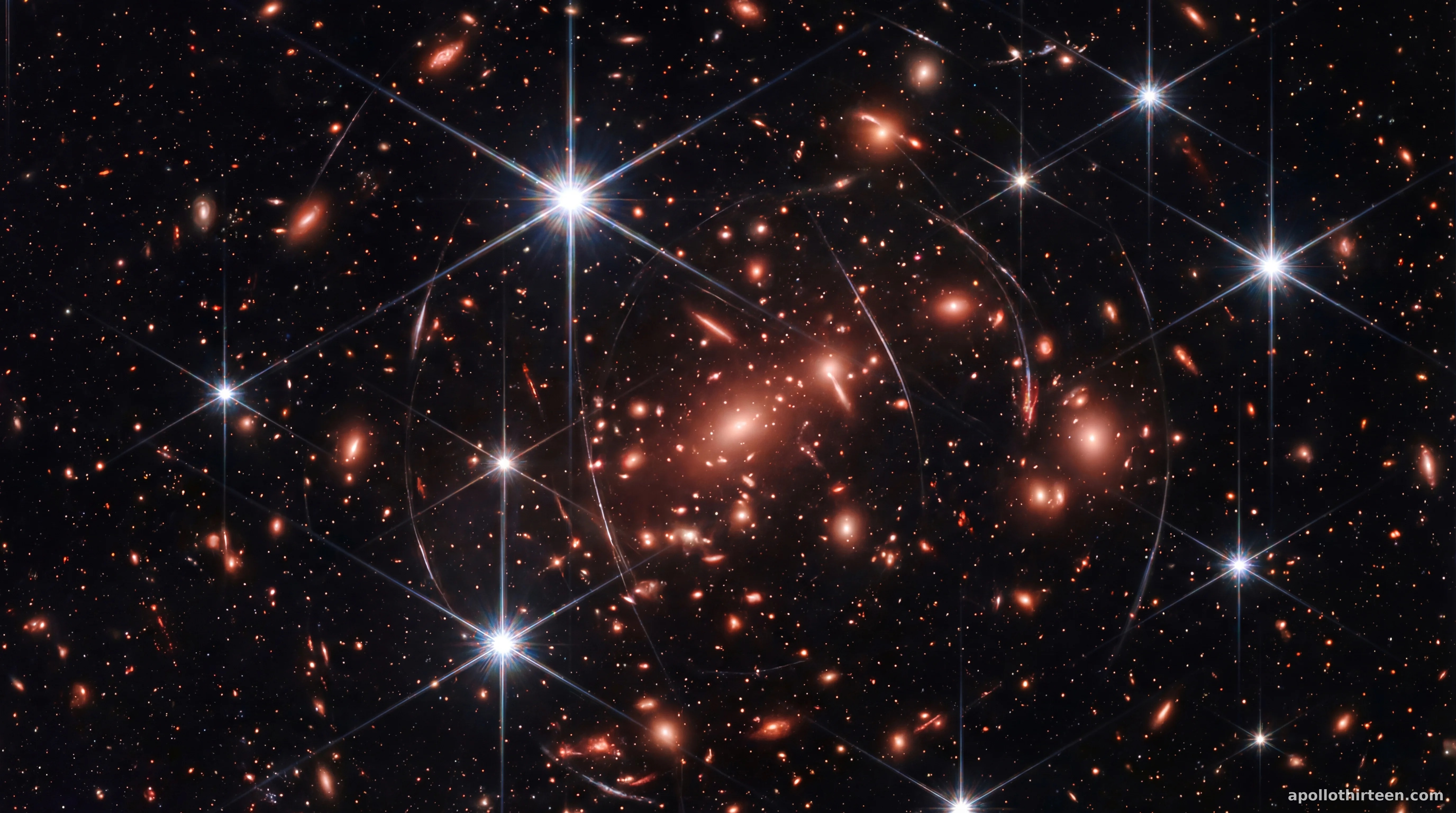
When applied to the James Webb Space Telescope deep field images, the results were even more profound. The algorithm identified a population of redshift > 9 galaxies that previous state-of-the-art pipelines had missed. This validation proves that the algorithm is not just a theoretical improvement but a practical tool that can be applied to current archival data to yield new scientific breakthroughs immediately.
Future Implications for Cosmology
The ability of ASTERIS to push detection limits by a full magnitude could fundamentally rewrite the timeline of early galaxy formation. If the universe was more populated with faint galaxies shortly after the Big Bang than previously thought, our models of cosmic evolution will need to be adjusted. This AI-driven denoising method could also be applied to "legacy data" from older missions like Hubble or Spitzer, potentially revealing new discoveries in data that astronomers thought they had already fully exhausted.
As the field of artificial intelligence continues to evolve, the line between data collection and data processing is blurring. The success of ASTERIS signals a future where AI is not just a secondary step in analysis, but a primary component of the telescope's vision system. In this new era of AGI-augmented science, the limiting factor in our understanding of the universe will no longer be the physical hardware we launch into space, but the sophistication of the algorithms we use to interpret the light it catches.




Comments
No comments yet. Be the first!