When NASA labels Starliner danger as Type A, what changed
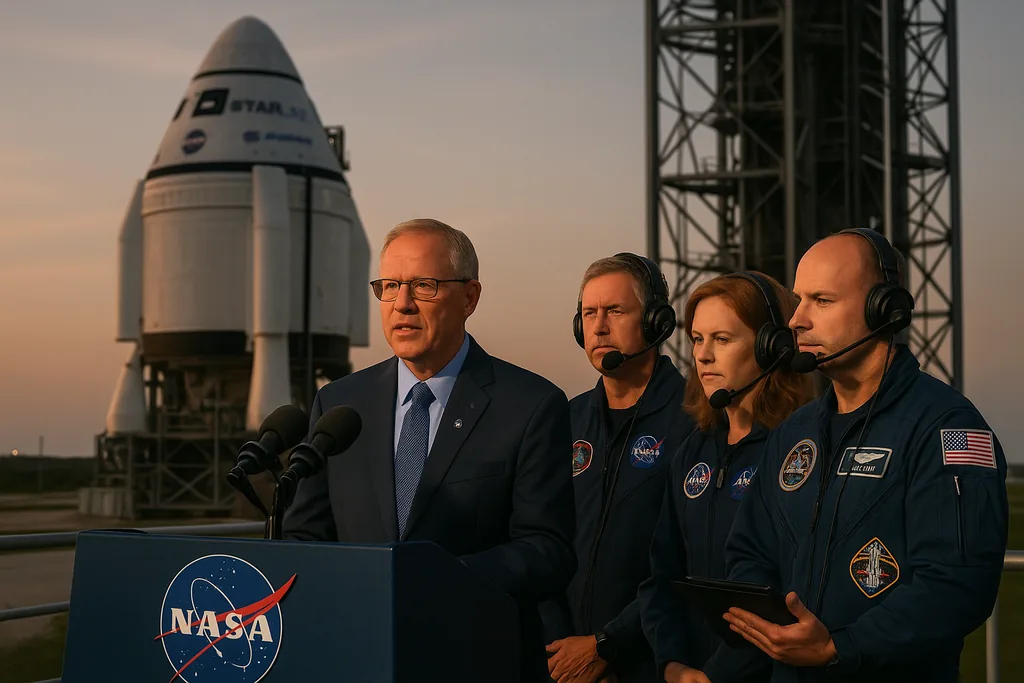
At a tense teleconference from Kennedy Space Center this week, agency leaders announced that nasa labels starliner danger officially as a Type A mishap, the agency's highest severity classification. The decision follows a 311-page investigation report and months of troubleshooting after a 2024 flight that suffered liquid helium leaks and a cascade of thruster anomalies. Two Boeing Crew Flight Test astronauts, Cmdr. Barry "Butch" Wilmore and pilot Sunita "Suni" Williams, were forced to remain on the International Space Station while the Starliner capsule returned to Earth empty; NASA later used a SpaceX Dragon capsule to bring the crew home safely.
The Type A label elevates the Starliner episode into the same severity bracket as the 1986 Challenger and 2003 Columbia accidents because it met the policy thresholds for potential loss of crew, major damage to the vehicle or multi‑million‑dollar financial loss. Senior officials described the classification as an acknowledgement that, although the astronauts survived, the mission contained failure modes that could have produced far worse outcomes under slightly different circumstances.
Type A mishap: what nasa labels starliner danger means
NASA's mishap categories are formal definitions in agency policy that are applied after technical and organizational investigation. A Type A mishap is the worst category and covers events that cause—or have the potential to cause—loss of life, significant damage to a spacecraft or $2 million or more in losses. By declaring Starliner a Type A mishap, NASA is not just describing what happened; it is triggering a different investigatory posture, expanded reporting, and broader corrective actions across contractors and internal programs.
Historically, the Type A label has been used in the wake of catastrophic losses, most notably for the shuttle Challenger and Columbia accidents, which involved fatalities and destruction of hardware. NASA officials explicitly compared the Starliner case to those earlier tragedies only to indicate the classification level, not to equate the actual outcome. In this instance, the label reflects what could have happened: a combination of multiple failed thrusters, loss of critical attitude and control channels, and unresolved leaks that together created a very high‑risk flight regime.
Practically, the Type A designation produces two immediate effects. First, it focuses higher levels of agency leadership and resources on root‑cause analysis and remediation, including broader oversight of the contractor — in this case Boeing. Second, it imposes formal procedural steps before the vehicle can fly again: fixes must be proven, causal chains documented, and independent assessments completed. NASA has said Starliner will not return to flight until those steps are satisfied.
Technical and human factors behind the Starliner saga
The hardware story, as summarized in the agency's report, reads like a sequence of interlocking failures. During approach to the space station in 2024, five service‑module and crew‑module thrusters became inoperative and, when some recovered, controllers used to provide full six‑degree‑of‑freedom (6DOF) attitude control were lost. Liquid helium leaks were also documented across multiple prelaunch and in‑flight phases. After decisions by flight controllers to maneuver the spacecraft to a safe haven—the ISS—the capsule nevertheless suffered further thruster anomalies on its post‑undocking return attempt.
NASA Administrator Jared Isaacman (reading from an internal letter during the press conference) stressed that while proximate technical causes remain under detailed forensic work, investigators have already identified organizational root causes: a breakdown in day‑to‑day engineering discipline and a culture that prioritized program schedules over immediate technical clarity. NASA Associate Administrator Amit Shastri used blunt language, saying the agency "failed" the astronauts—an admission aimed at accountability and restoring trust with flight crews and the public.
Flight controllers received praise for taking operational initiative during the episode. Agency officials said those teams challenged standard rules to place the crew in the safest available location—bringing them to the space station rather than attempting a risky return with degraded control. That decision, they acknowledged, is likely what prevented the incident from becoming a true catastrophe.
Operational consequences after nasa labels starliner danger as Type A
Labeling the incident Type A has near‑term program impacts. NASA announced Starliner will not fly again until the investigation identifies proximate causes and demonstrates fixes. That delays any planned uncrewed verification launches and shifts crew rotation and contingency plans for the International Space Station. For the Commercial Crew architecture, it reinforces an operational reality: NASA cannot assume a single provider will always be available. SpaceX's Crew Dragon, which rescued the two astronauts in this case, has become the fallback for crew returns while Starliner is grounded.
The broader consequence is reputational and contractual. Boeing's role in completing corrective work will be subject to increased agency oversight and possibly independent verification. The incident will also likely influence NASA's contracting language, acceptance criteria, and the cadence of scheduled flight tests. For civil and commercial stakeholders who plan long‑lead missions or depend on crew transportation, the downtime for Starliner increases the premium on redundancy and on-the‑ground reliability measures across suppliers.
Officials signaled that some milestones already scheduled—such as an uncrewed orbital test slated for April—may slip until the agency is satisfied. The 311‑page report released with redactions makes clear that NASA intends to use the Type A classification to widen the aperture of corrective steps, not merely to relegate the problem to a single engineering team.
What the CST‑100 Starliner is and how this designation shapes its future
The Starliner, formally Boeing's CST‑100, was developed under NASA's Commercial Crew Program to provide crew transportation to low Earth orbit and the International Space Station. Its purpose is to provide competition and redundancy to partner vehicles like SpaceX's Crew Dragon. The spacecraft family is designed for repeated crewed missions, reusability of the crew module, and compatibility with multiple launch providers.
Being labeled a Type A mishap does not cancel the program; rather it reframes the roadmap. Before Starliner flies again, Boeing and NASA will need to demonstrate through tests and reviews that the specific failure modes are understood and eliminated. That could mean hardware redesign, software changes to thruster control logic, new leak‑detection protocols for helium systems, and changes to decision‑making processes between contractor and agency teams to reduce cultural risk factors.
How NASA classifies risk and why it matters beyond Starliner
NASA uses documented categories and thresholds to classify mishaps so that responses are consistent and proportionate. The policy sets out what constitutes Type A through Type D mishaps and the corresponding reporting, resource allocation and independent review requirements. A Type A classification, as applied to Starliner, activates a level of review and mitigation that aims to prevent recurrence and to reassure crews and international partners that the agency treats crew safety as paramount.
Beyond this single case, the label matters because it signals to Congress, international partners, and industry that NASA is prepared to exercise forceful oversight, even when doing so imposes schedule and political costs. For astronauts and mission managers, the transparent admission of a high‑severity classification—and the accompanying promise of fix‑and‑validate work—forms the basis of restoring operational confidence in a reusable crew vehicle.
The Starliner episode will now enter a slower, more forensic phase. Investigators will pursue proximate technical causes, Boeing will implement corrective measures under closer NASA supervision, and the agency will publish additional findings and acceptance criteria before returning the spacecraft to flight status. In the meantime, the two astronauts who lived through the extended mission have retired from NASA; the agency's leaders have called for cultural and procedural changes to reduce the chance that a similar near‑miss ever occurs again.
Sources
- NASA (311‑page report on the CST‑100 Starliner mishap, February 2026)
- NASA (mishap classification policy N_PR_8621_001D)
- NASA Commercial Crew Program and International Space Station program materials




Comments
No comments yet. Be the first!