Artemis haters, can have a moment: a short scene
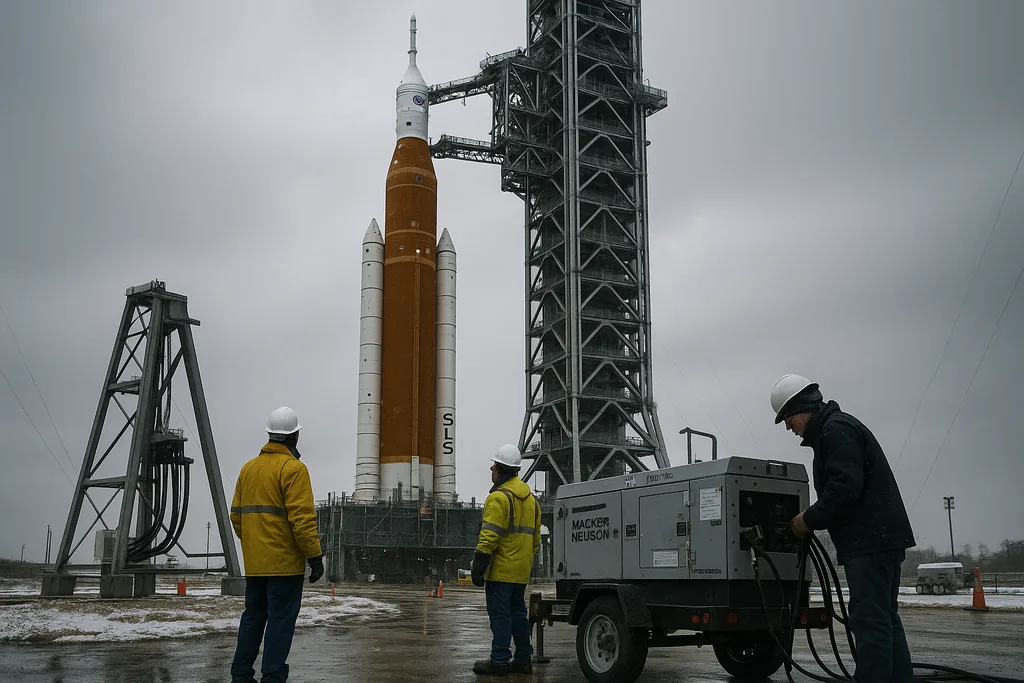
On the pad in early February, the Space Launch System and Orion capsule sat under winter light during a wet dress rehearsal that exposed the very technical problems critics love to cite. Online, the chorus of commentators — the artemis haters, can have their say loudly — calling the program too slow, too costly and insufficiently historic. Those criticisms deserve attention, but the rehearsal, the crews named for Artemis II and the broader architecture under construction also deserve a clear-eyed account: Artemis is imperfect, politically entangled and expensive, yet it is also a renewed civil-space effort to take humans beyond low Earth orbit for the first time in more than half a century.
artemis haters, can have: strategic importance of Artemis
At its simplest, Artemis is a return to human deep-space exploration. Unlike many commercial activities focused on low Earth orbit, Artemis is explicitly designed to put people into cislunar space and to build the logistics, hardware and partnerships needed for sustained operations on and around the Moon. That matters for science — ice deposits at the poles offer both a climate and geologic archive — and for the longer-term goal of learning how to live off-Earth in ways that could translate into technologies and practices on Earth.
Critics frequently ask whether Artemis is worth the cost and effort. Fiscal comparisons are telling: policy analysts at The Planetary Society have estimated NASA spending on Artemis and related SLS and Orion work at about $105 billion to date, while Apollo’s tab, adjusted for inflation, reached roughly $309 billion over its 13-year run. Those are big numbers, but they reflect different political choices and program goals; Artemis is a slower, more incremental path intended to maintain capabilities and international partnerships rather than race for a one-time national headline.
Finally, Artemis is less about replicating Apollo than about creating an architecture — rockets, crew capsules, habitats, and international agreements — that could sustain a presence on the Moon and eventually support missions to Mars. That scale and ambition explains why some leaders in industry and other space agencies have recommitted resources and why commercial firms are quietly pivoting to the Moon as well.
artemis haters, can have: technical hurdles and the safety record
No program worth its salt would escape engineering headaches. The public criticism aimed at Artemis often centers on two related threads: hardware fragility and schedule slips. Recent tanking problems — specifically hydrogen leaks in umbilical and tanking systems revealed during pre-launch integrated testing — forced NASA and contractors to slow the cadence and redesign some ground interfaces. Those issues are not trivial. Cryogenic hydrogen is notoriously difficult to handle, and the program has spent months troubleshooting seals and plumbing that have bedeviled past heavy-lift efforts.
Safety criticism is also a political lever. Some observers label SLS a "Frankenrocket" because it blends Shuttle-era components and new designs and because Congress steered work toward legacy suppliers. NASA answers that it is delivering a validated, government-owned capability that flew an uncrewed Orion around the Moon on Artemis I and returned it successfully on the first try. For Artemis II, program managers adopted a conservative, free-return flyby trajectory for the first crewed mission — a choice intended to minimise risk while still extending human distance from Earth. That trade-off — slower, safer progress — is at the heart of many debates over what level of acceptable risk the public and crews should tolerate.
Apollo comparison and political context
When people ask how Artemis compares to Apollo, they are asking two different questions at once: technical parity and political meaning. Technically, modern engineering, computing and materials make Artemis hardware far different from 1960s designs; program management, supply chains and mission rules have also changed. Politically, Apollo was a compressed, high-cost demonstration driven by Cold War exigency and the will to win a national prestige competition. Artemis is a coalition effort: European, Canadian and other partners provide critical hardware and political buy-in. That makes Artemis less of a single-country sprint and more of an international, distributed program — slower, messier, but arguably more durable.
That comparative longevity addresses an important criticism: Apollo burned hot and short — spectacular, but unsustainable. Artemis’s critics complain about pace and price; supporters argue that slower cadence paired with distributed responsibility could sustain lunar activities over decades rather than years. Whether that trade-off is preferable depends on democratic choices: budgets, congressional priorities and public appetite for human spaceflight.
Schedule, status and what Artemis II will do
Artemis II is the program’s first crewed sortie beyond low Earth orbit in this new era. The combined SLS–Orion stack completed a wet dress rehearsal in early February that spotlighted the program’s current status: significant progress on systems integration, accompanied by work to remedy propellant-tanking leaks and heat-shield scrutiny after the uncrewed flight. NASA’s immediate objective is to get those issues fixed, validate the thermal protection and ground interfaces, and preserve safe launch windows for the crew.
Channels for change: Congress, advocacy and commercial options
Many of the program’s most effective levers are political. Budget allocations, procurement rules and oversight all flow through Congress, and several observers quoted in program analyses say constituents who want a different Artemis should lobby legislators. Grassroots advocacy has shown impact; in recent years, organised civic efforts helped shore up funding and policy for NASA. Designing a different trajectory for Artemis — for example, an accelerated commercial off-ramp from SLS to private heavy-lift services — would likely require sustained legislative work and clear cost-benefit analysis.
Commercial partners matter too. The space industry is not monolithic: some private companies are aligning with lunar objectives, while others continue to prioritise Earth-orbit services. If policy and procurement change to prioritise competition for lunar landers, cargo delivery and orbital logistics, the program’s cadence and cost profile will change. For critics who say "it’s taking too long" or "it costs too much," one pragmatic route forward is to press for procurement reforms and clearer windows for commercial competition rather than only denouncing the current architecture.
Look up tonight at the crescent Moon and remember why people once risked everything for a shot at its surface. Artemis is trying, fitfully and with many hands, to make that risk manageable and repeatable rather than singular and unsustainable. Whether you cheer or grumble, the program will proceed by engineering fixes, budget fights and public choices; the question for civic-minded critics is whether they want to shape those choices actively.
Sources
- NASA (Artemis program and SLS/Orion mission materials)
- European Space Agency (international contributions to Artemis)
- The Planetary Society (policy analysis and program cost estimates)




Comments
No comments yet. Be the first!