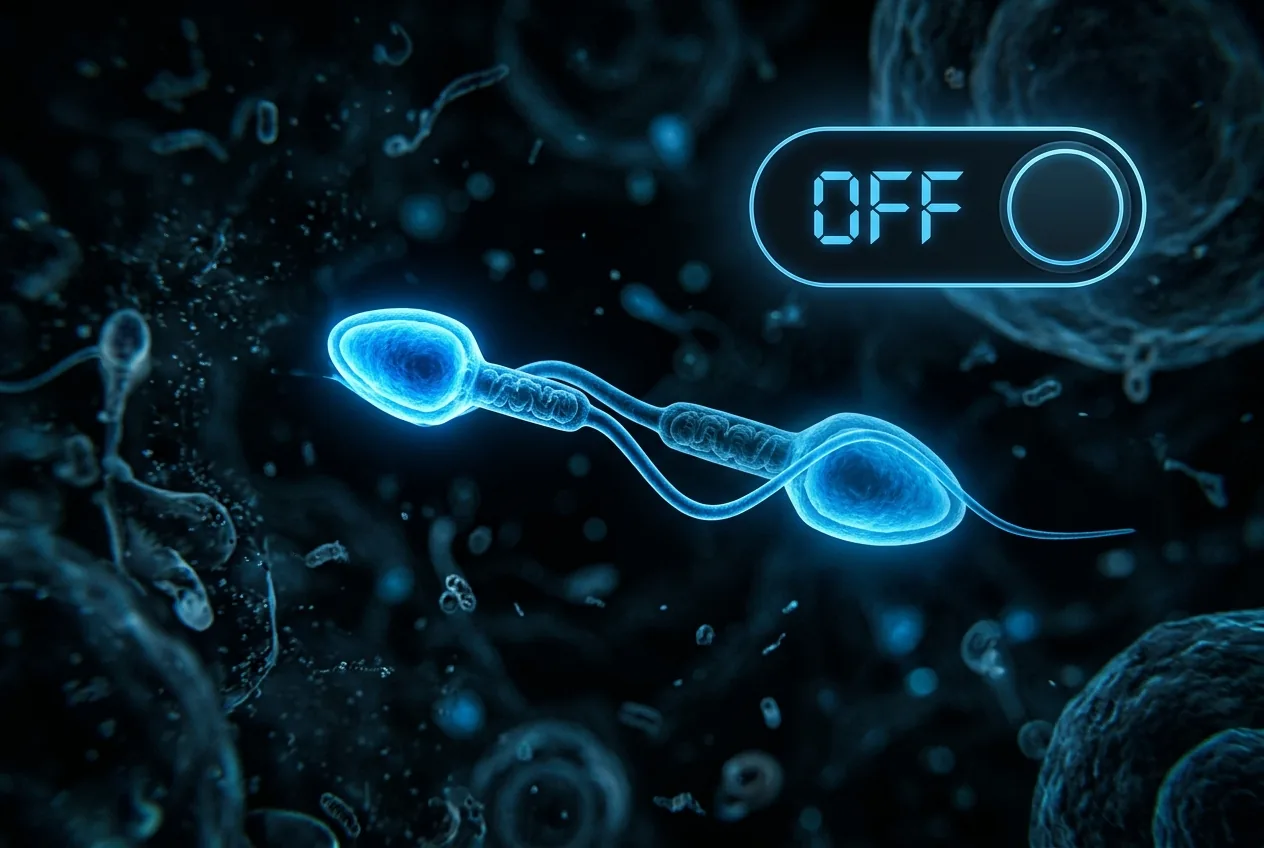
Three weeks on a small molecule called JQ1 and the lab mice were, for all intents and purposes, shooting blanks. There were no side effects, no mood swings, and no permanent changes to their plumbing. Then, the scientists stopped the dosage. Within a few months, the same mice were fathering litters of perfectly healthy pups as if nothing had happened. This isn’t just another incremental step in reproductive science; it is the first time researchers have successfully demonstrated a biological ‘off switch’ for male fertility that is as effective as it is reversible.
The Meiosis Trap
The breakthrough hinges on a process every schoolchild learns about but few remember: meiosis. This is the specialized cell division that creates sperm and eggs. In the testes, this is a continuous, high-speed assembly line. The Cornell team, led by Professor Paula Cohen, identified a specific checkpoint in this process known as the pachytene stage. By introducing JQ1, a small-molecule inhibitor, they were able to selectively disrupt the genetic program that tells a cell to finish becoming a sperm. It is the biological equivalent of hitting the emergency stop button on a conveyor belt.
What makes JQ1 different from previous attempts is its precision. Most previous male contraceptives tried to tank testosterone levels to stop sperm production. The problem is that testosterone does a lot more than just make sperm; it regulates bone density, muscle mass, and mental health. When you kill the testosterone, you kill the man’s drive and physical well-being. JQ1 ignores the hormones entirely. It waits until the cells are already in the ‘sperm factory’ and simply prevents them from graduating. Because it doesn't mess with the body's primary signaling system, the mice in the study didn’t experience the lethargy or physical decline that killed previous drug trials.
The timeline for reversibility is the other half of the success story. In the Cornell study, sperm production returned to normal anywhere from six to thirty weeks after the drug was withdrawn. That variability is something human trials will need to pin down. If a man wants to start a family, he needs to know if he’s looking at a two-month wait or a six-month wait. But the fact that it returns at all, with no damage to the resulting offspring, is the hurdle that has defeated almost every other non-surgical male contraceptive in history.
The Vitamin A Gamble
While JQ1 is the headline-grabber for its “on-off” simplicity, it isn’t the only horse in the race. Another candidate, YCT-529, has already moved into Phase 1 human safety trials. This version takes a slightly different approach by targeting the body’s use of Vitamin A. It turns out that the testes are incredibly hungry for a Vitamin A derivative called retinoic acid. Without it, sperm production simply grinds to a halt. YCT-529 blocks the receptors that allow the testes to ‘see’ this Vitamin A, effectively starving the sperm-making process of its fuel.
In mouse trials, YCT-529 was 99% effective at preventing pregnancy. That is a number that rivals the female pill and blows condoms out of the water. When you factor in human error—the reality of being tired, drunk, or just careless—condom effectiveness can drop as low as 82%. A daily pill that targets Vitamin A receptors would remove that margin for error. The tension now lies in whether the human body is as forgiving as a mouse’s. Vitamin A is used all over the body, from your retinas to your immune system. If YCT-529 starts blocking receptors in the eyes instead of just the groin, the trial will be dead in the water.
This is where the skepticism of the medical community usually kicks in. We have seen “breakthrough” male pills before that vanished the moment they hit human lungs. However, the move toward non-hormonal targets like JQ1 and YCT-529 suggests that scientists have finally learned the lesson of the last fifty years: if you want men to take birth control, you cannot ask them to sacrifice their baseline physiology. You have to find a way to stop the sperm without stopping the man.
Sixty Years of Excuses
There is a cynical but fair question at the heart of this: why now? The technology to inhibit meiosis or block Vitamin A receptors hasn’t suddenly appeared out of thin air. The delay has been as much about sociology and profit margins as it has been about biology. Major pharmaceutical companies have long been hesitant to invest the billions required for human trials because they weren't convinced the market existed. They assumed men wouldn't take a pill, and women wouldn't trust men to take a pill.
That assumption is rotting away. Recent surveys suggest that the majority of men in younger demographics are more than willing to take a lead role in contraception. They see it as a matter of autonomy and shared responsibility. More importantly, the rise of reproductive tech—like the AI-driven sperm-injecting robots used in recent IVF breakthroughs—has shifted the conversation. If we can use artificial intelligence to pick the perfect sperm for a robot to inject into an egg, the idea that we can’t figure out how to pause a cell division in the testes seems increasingly absurd.
There is also a regulatory tension to consider. The FDA and other global bodies have historically set a much higher bar for safety for male contraceptives than they did for the original female pill. When the female pill was approved, the risk of pregnancy was considered a significant health threat to women, which justified a higher tolerance for side effects. For men, pregnancy is not a direct health risk, meaning a male pill must be almost perfectly side-effect-free to pass muster. JQ1's ability to selectively target the pachytene stage is the first time a drug has looked “clean” enough to satisfy that regulatory double standard.
The Reversibility Window
The phrase “turning sperm on and off” sounds like a light switch, but the reality is more like a slow-moving dimmer. Even if JQ1 or YCT-529 passes every human trial, the transition won’t be instant. It takes roughly 74 days for a human sperm cell to be created from start to finish. This means that a man starting the pill would likely need to wait two to three months before he is actually infertile. Similarly, when he stops, there will be a “lag time” while the factory restarts and the old stock is cleared out.
This lag time is a feature, not a bug, of the biological system, but it presents a logistical challenge for the “lad-on-the-bus” who wants a solution for a weekend away. This isn’t a “day-of” pill; it’s a lifestyle change. It requires a level of planning that men have historically been able to ignore. The success of these drugs will depend as much on the user's discipline as the molecule's efficacy. If you miss a week of JQ1, does the meiosis process resume immediately, or do you have a grace period? These are the questions that will define the next decade of research.
But the human angle is what will ultimately drive this forward. For the first time, we are looking at a future where a vasectomy isn’t the only “set and forget” option for men. A reversible, non-hormonal pill would reframe the entire conversation around reproductive rights and responsibilities. It moves the needle from a defensive posture—trying not to get someone pregnant—to a proactive one. It gives men the one thing they’ve never really had in the bedroom: total, reversible control over their own biological output.
The road from mouse trials at Cornell to the local pharmacy is still long, likely five to ten years if everything goes perfectly. But the discovery of the meiosis off-switch means the hardest part is over. We aren’t looking for the switch anymore; we’re just figuring out how to press it safely. For a science that has been stuck in the 1960s for half a century, that is a hell of a leap forward.




Comments
No comments yet. Be the first!