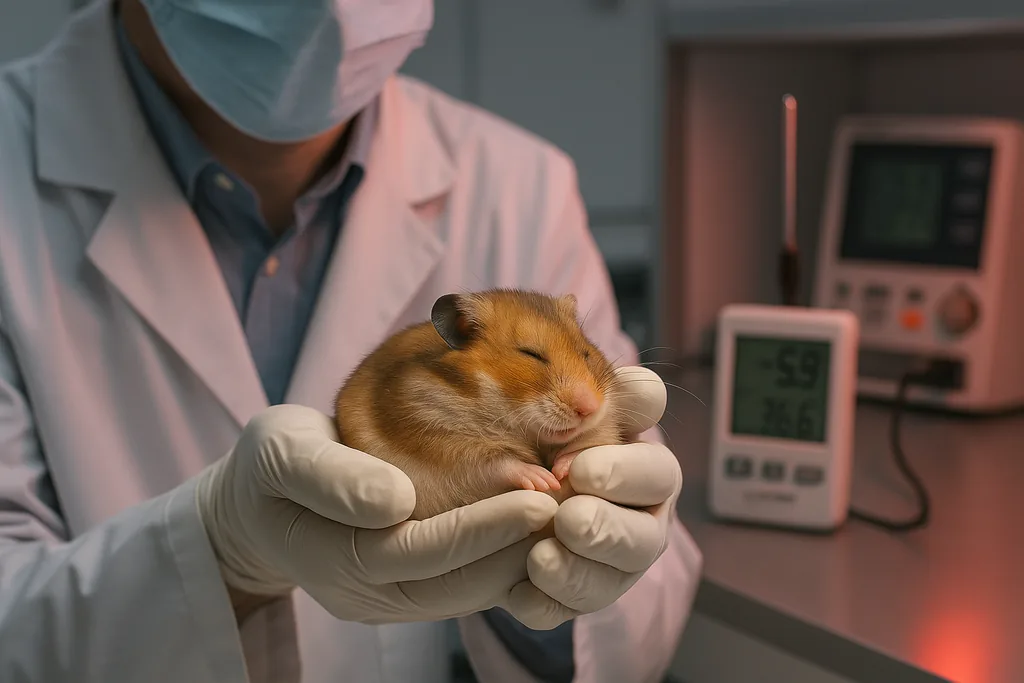
Hibernating hamsters could help astronauts survive long missions
In a small refrigerated room and in petri dishes around the world, researchers are quietly testing why some animals can shut down much of their biology for months and come back whole. The shorthand for that capability is torpor or hibernation, and this week a team working with Syrian hamsters and other hibernators reported cellular mechanisms that preserve muscle-repair cells during long cold spells. Hibernating hamsters could help astronauts, researchers say, by pointing to drug targets or protective molecules that reduce muscle loss, lower metabolic needs and increase tolerance to stresses such as radiation — all problems that threaten multi-month trips beyond low Earth orbit.
How hibernating hamsters could help astronauts' cells
Muscle wasting is one of the most immediate hazards of prolonged microgravity and immobility. In normal human physiology, muscle stem cells (often called satellite cells) are active: they repair and rebuild tissue, but at a cost of energy and of vulnerability during stress. A recent study published in The FASEB Journal and reported by Popular Science found that in hibernating species those muscle stem cells do not die during long dormancy; instead they enter a low‑activity, reversible state that preserves their viability.
That cellular pause is not just about energy. It protects against the cascade of biochemical damage that accompanies low oxygen, radiation hits, or repeated cycles of use and disuse. Learning how to switch human muscle progenitors into a safe, reversible idling state is a central goal if synthetic torpor is ever to be applied to people.
Why hibernating hamsters could help protect muscle and mitochondria
Complementary evidence comes from other hibernators. Ground squirrels and bears display coordinated genetic and metabolic shifts in winter: pathways linked to protein synthesis and the mTOR signalling dial behave differently than in starving non‑hibernators, and some hibernators recycle nitrogen and metabolites during dormancy, possibly with help from gut microbes. Together these mechanisms explain how animals can keep lean tissue and organ function despite months without food or movement — the very outcomes engineers and medics hope to reproduce for long voyages or emergency medicine.
Torpor, the torpor switch, and translating animal findings to people
Torpor is not ordinary sleep; it is a controlled reduction in body temperature, heart rate and metabolic rate. Researchers have made two kinds of progress. One is pharmacological: activating adenosine receptors in certain animals can trigger torpor‑like states. Kelly Drew's and other teams found that a drug that mimics adenosine induces deep torpor in seasonal hibernators, and related compounds can push non‑hibernators into hypometabolism in lab settings when combined with other interventions.
Human trials are nascent but informative. Teams at the University of Pittsburgh have safely lowered volunteers' body temperature and metabolic rate with sedatives such as dexmedetomidine in tightly monitored settings, producing a ‘‘twilight sleep’’ in which metabolism dropped by order of 20 percent while volunteers remained rousable. Those experiments show some features of clinically useful hypothermia are achievable without ventilators, but they also reveal limits: drug tolerance develops, cardiovascular effects can be large, and long‑term safety is not yet established.
Benefits for missions and medicine
The potential upsides of controlled torpor are easy to list and hard to overstate. Reduced metabolic demand would cut food, water and oxygen requirements on long missions, shrinking payload mass and simplifying life‑support systems. Slower metabolism may also limit radiation injury by reducing the rate of cell division and DNA replication — the windows during which ionising particles cause the most harm. Psychologically, a partly torpid crew would face less boredom and interpersonal friction on multi‑year voyages.
On Earth, controlled hypometabolism has immediate clinical value. Therapeutic hypothermia is already used to protect brains after cardiac arrest and traumatic injury. Emergency preservation protocols under study aim to extend the surgeon's "golden hour" by rapidly cooling and stabilising patients with catastrophic bleeding so surgeons can fix injuries before reperfusion damage sets in. If hibernation biology can be safely harnessed, those techniques could be made simpler and more widely deployable.
Technical, biological and ethical challenges
Despite rapid progress, the path to human torpor is littered with risks. The human body fights cold: shivering, blood‑pressure drops and dangerous arrhythmias are common responses that in experiments have required ventilation, fluid support and invasive monitoring. Cold also suppresses clotting and immune responses; hibernators accept that tradeoff but face infections and fungal threats that non‑hibernators do not. Translating a brain‑localized torpor trigger into an IV drug that is specific enough to avoid cardiac arrest or seizures is a chemical and delivery challenge.
Space adds complications: long‑term effects of torpor on bone density, cognition, microbiomes and reproductive function are unknown. There are also ethical and operational hurdles for emergency use — many potential patients cannot consent — and for crewed missions, where informed long‑term risk calculations are complex. Engineering issues remain: stasis pods, robotic limb movement to maintain tone, nutrient delivery, and reliable rewarming protocols all need mature, redundant solutions before humans can be routinely placed in torpor for months.
Next steps and where research is headed
Researchers are pursuing multiple parallel tracks: molecular screens to find cryoprotective metabolites and proteins discovered in hamsters and other hibernators; neural mapping to identify human‑accessible circuit targets; and controlled human studies that extend and refine safe hypothermia protocols. Agencies and institutions from space agencies to university labs are funding and coordinating work, recognising that progress could spin into both space engineering and everyday medicine.
For engineers designing missions, the immediate takeaway is pragmatic: partial or intermittent torpor that halves metabolic demand for periods may be far easier to achieve and still hugely beneficial. For biologists, the next few years will test whether the protective tricks seen in Syrian hamsters, ground squirrels and bears can be reduced to molecules or pathways that doctors can activate without brain surgery. The science is still preclinical in many respects, but the convergence of lab biology, neuroscience and space medicine means the idea that "hibernating hamsters could help" is now a concrete research programme rather than pure science fiction.
Sources
- The FASEB Journal (research on muscle stem cell preservation in hibernation)
- Hiroshima University (Mitsunori Miyazaki and collaborators)
- Yale School of Medicine, Gracheva Lab (ground squirrel hibernation research)
- University of Pittsburgh Applied Physiology Lab (induced hypothermia / human trials)
- Oregon Health & Science University (torpor switch neurocircuit research)
- University of Alaska Fairbanks and Washington State University Bear Research Center (hibernation physiology)
- European Space Agency and NASA (funding and advisory programmes on synthetic torpor)
- University Medical Centre Groningen (UMCG) and Safar Center for Resuscitation Research (hypothermia and emergency preservation)




Comments
No comments yet. Be the first!