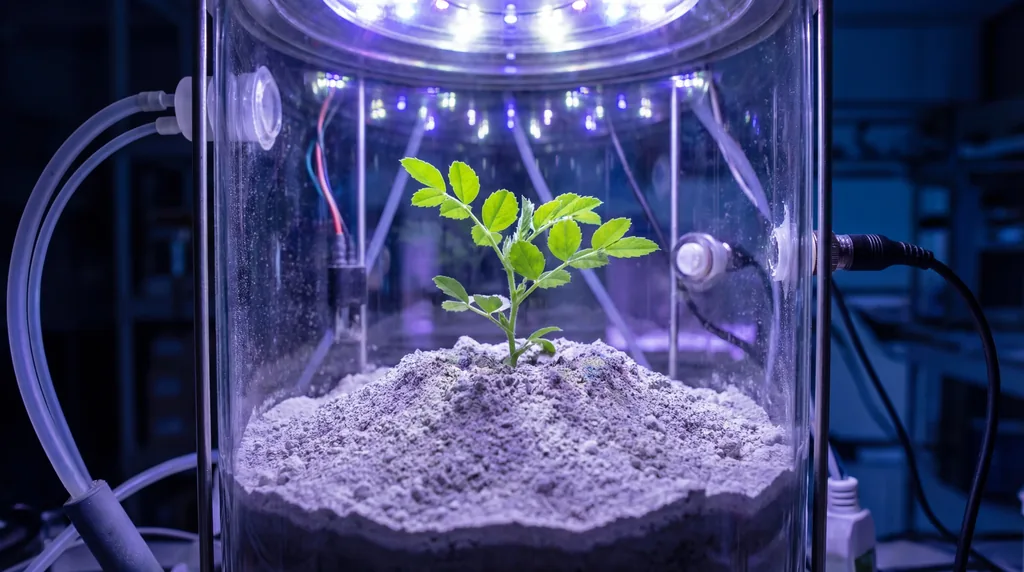

Lunar Harvest: Scientists Successfully Grow High-Protein Chickpeas in Simulated Moon Soil
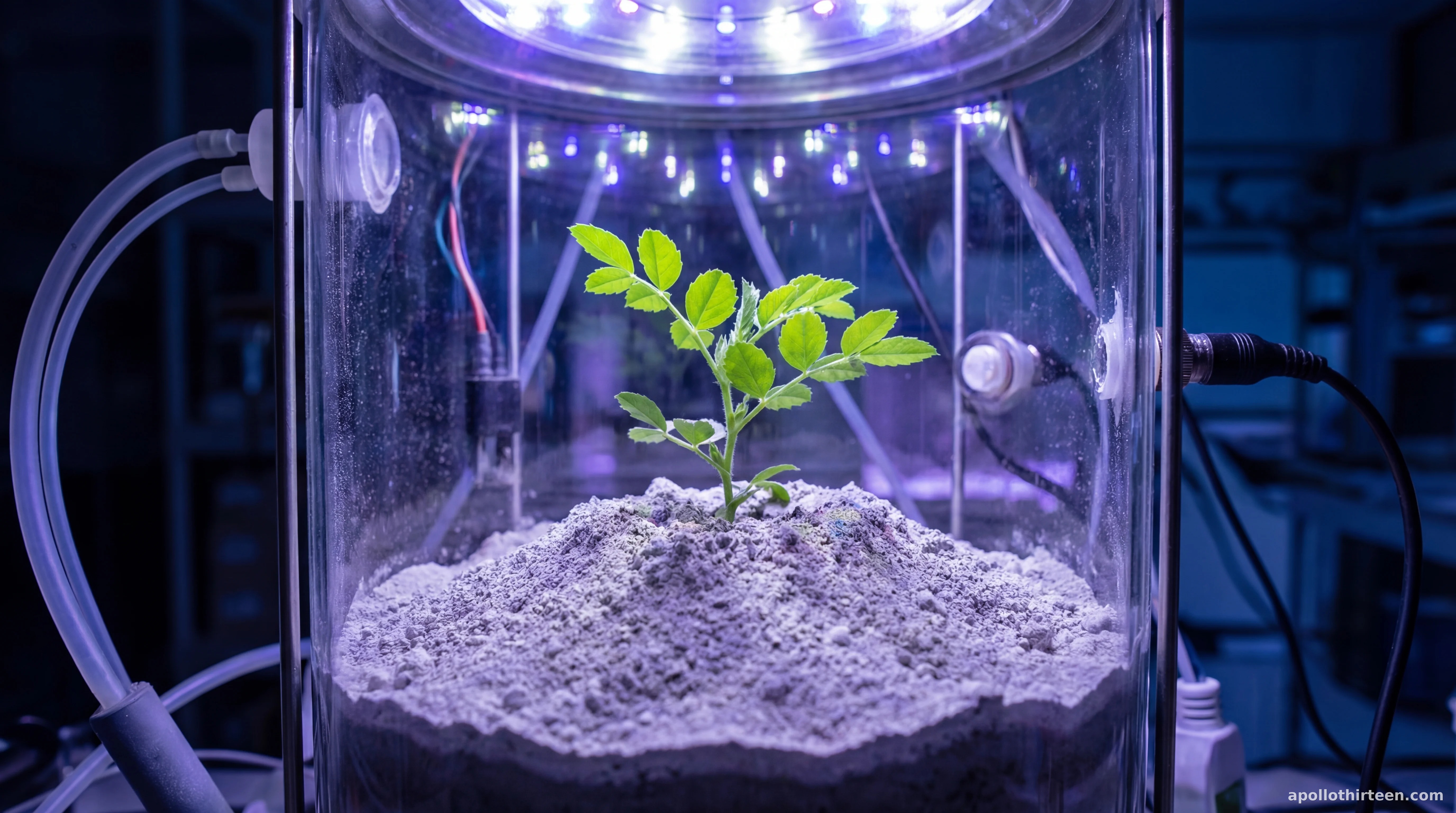
Researchers from The University of Texas at Austin and Texas A&M University have successfully grown and harvested chickpeas in simulated lunar regolith, marking the first time this high-protein crop has been produced in a moon-like medium. This breakthrough, published in the journal Scientific Reports on March 5, 2026, demonstrates that biological amendments can transform sterile moon dirt into fertile soil. Led by principal investigator Sara Santos and lead author Jessica Atkin, the study proves that sustainable extraterrestrial agriculture is possible by leveraging symbiotic relationships between plants, fungi, and recycled organic waste. This discovery is a critical milestone for the Artemis Program, which aims to establish a long-term human presence on the lunar surface.
The challenge of farming on the moon begins with the nature of lunar regolith, a jagged, nutrient-poor material that covers the lunar surface. Unlike Earth’s soil, which is a complex mixture of minerals and organic matter, lunar regolith is essentially crushed rock formed by eons of meteorite impacts. It lacks the essential microorganisms required for plant life and contains heavy metals that can be toxic to vegetation. Previous experiments with Apollo-era samples confirmed that while some plants could germinate in raw regolith, they often succumbed to extreme physiological stress. To overcome these barriers, the Texas research team focused on "bioremediation"—the use of biological agents to neutralize toxins and enrich the growing medium.
Why are chickpeas suitable for growing on the moon?
Chickpeas are suitable for growing on the moon because of their compact size, high protein content, and extreme resilience to environmental stressors. Researchers selected the ‘Myles’ variety for its ability to thrive in space-limited mission environments while providing a nutrient-dense food source. Compared to other legumes, chickpeas require less water and nitrogen, making them an ideal candidate for sustainable space agriculture.
Jessica Atkin, a doctoral candidate at Texas A&M University, emphasized that the choice of the ‘Myles’ variety was strategic. This specific chickpea is known for its hardiness and ability to produce high yields in suboptimal conditions. For astronauts, every gram of weight on a spacecraft is costly; therefore, crops must offer a high protein-to-weight ratio to be viable. Chickpeas not only meet these nutritional requirements but also offer culinary versatility, which is essential for the psychological well-being of crews on long-duration missions. The study found that even when grown in 75% lunar regolith, these plants could complete their life cycle and produce harvestable seeds.
What amendments were used to make moondust fertile for chickpeas?
Researchers amended simulated lunar regolith with a combination of vermicompost and arbuscular mycorrhizal fungi to create a viable growing medium. This specific mixture addressed the total absence of organic matter and microbes in the moon dirt. By integrating recycled waste products and beneficial fungi, the team successfully transformed sterile, toxic regolith into a functional soil capable of supporting complex plant life.
The vermicompost used in the study was produced by red wiggler earthworms consuming organic material such as food scraps and cotton-based hygiene products. In a lunar colony, these materials would otherwise be considered waste, but the research shows they can be repurposed into a nutrient-rich fertilizer. This vermicompost provides the lunar regolith with a diverse microbiome and essential minerals. The team tested various ratios of regolith to compost, discovering that while pure regolith was too toxic for the plants, a mixture containing up to 75% moon dirt allowed the chickpeas to thrive and reach harvest.
What role do fungi and worm manure play in lunar farming?
Fungi and worm manure act as biological catalysts that neutralize heavy metal toxicity and improve the physical structure of lunar regolith. The arbuscular mycorrhizal fungi form a symbiotic relationship with the chickpea roots, sequestering toxic metals while facilitating the uptake of essential nutrients. Meanwhile, the worm manure, or vermicompost, prevents the fine regolith particles from crusting, ensuring better water retention and aeration.
- Bioremediation: Fungi reduce the plant's uptake of heavy metals found in the moon dirt.
- Soil Structure: Vermicompost increases the surface area of the soil, preventing the "clumping" typical of fine lunar dust.
- Nutrient Cycling: Earthworms transform mission waste into bioavailable nitrogen and phosphorus.
- Sustainability: Fungal colonies were found to survive and persist in the simulant, meaning they may only need to be introduced to the lunar greenhouse once.
Sara Santos, a postdoctoral fellow at the University of Texas Institute for Geophysics (UTIG), noted that the fungi played a protective role. Even when the plants showed signs of stress due to the high mineral content of the regolith, those inoculated with fungi survived significantly longer than those without. This suggests that the "microbial shield" provided by the fungi is a prerequisite for any future lunar farming efforts. The ability of these fungi to colonize the simulant and remain active over time indicates that a self-sustaining ecosystem could be established within a lunar habitat.
How does this research relate to NASA's Artemis program?
This research supports NASA’s Artemis program by advancing In-Situ Resource Utilization (ISRU), which is the practice of using local materials to sustain human life on other worlds. By proving that food can be grown in lunar regolith, the study reduces the need for expensive resupply missions from Earth. This capability is essential for the success of the Artemis Base Camp and future missions to Mars.
The logistical cost of transporting food from Earth to the moon is one of the greatest hurdles for long-term habitation. NASA's Lunar Surface Innovation Initiative seeks technologies that allow astronauts to "live off the land." Growing chickpeas on-site not only provides fresh nutrition but also contributes to oxygen production and carbon dioxide scrubbing within the habitat. Initially funded by the researchers themselves, the project has since received a NASA FINESST grant, signaling the space agency’s interest in integrating vermiculture and fungal symbiosis into its future mission architectures.
Despite the successful harvest, the researchers caution that several questions remains before these chickpeas can appear on an astronaut's menu. The next phase of the research, as outlined in the Scientific Reports paper (DOI: 10.1038/s41598-026-35759-0), involves testing the nutritional quality of the seeds. Scientists need to ensure that the heavy metals present in the lunar regolith did not accumulate in the edible portion of the plant. "We want to understand their feasibility as a food source," Jessica Atkin explained, noting that the health and safety of the astronauts is the ultimate priority.
Future studies will also need to account for the unique environmental factors of the moon that cannot be perfectly replicated on Earth, such as reduced gravity and high radiation levels. The current experiment utilized LHS-1 lunar simulant from Exolith Labs, which accurately models the mineralogy of the moon but does not account for the vacuum of space. As the Artemis II mission approaches, this Texas-led research provides a promising blueprint for how humans might one day sit down to a meal of lunar-grown hummus, millions of miles away from home.




Comments
No comments yet. Be the first!