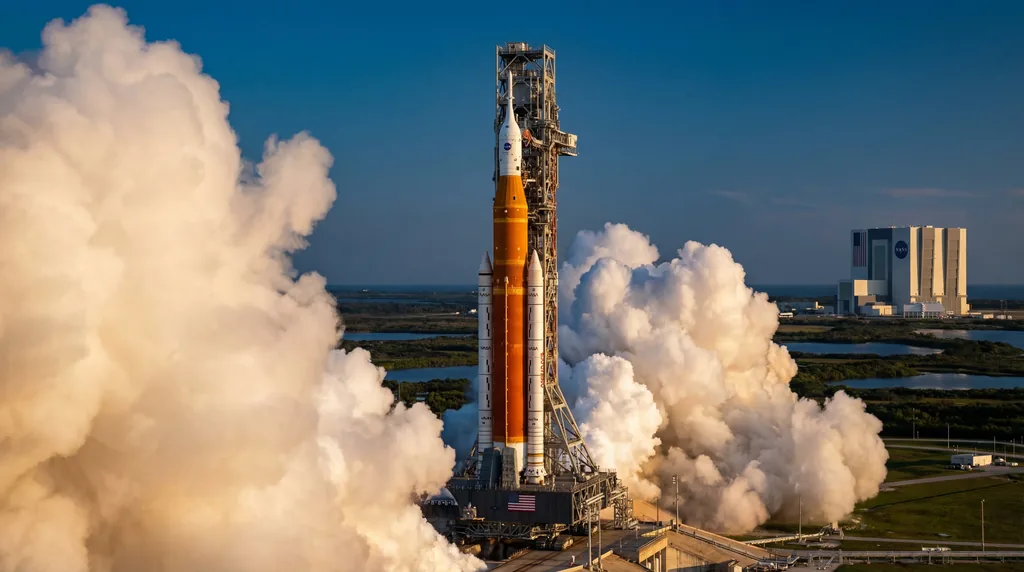

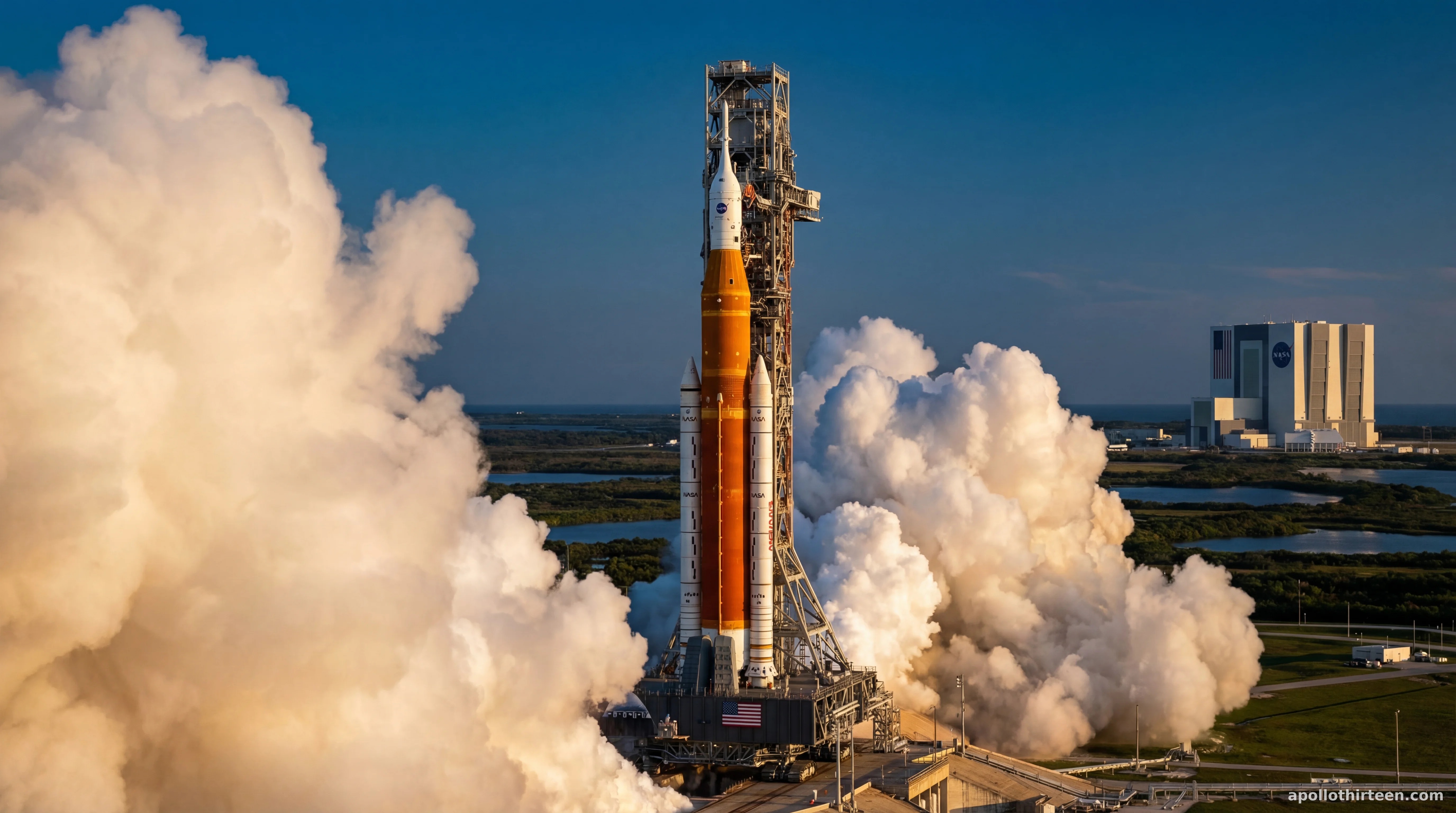
The Artemis II wet dress rehearsal is a comprehensive, non-launch test where NASA teams fuel the Space Launch System (SLS) rocket with 700,000 gallons of cryogenic propellant to simulate a full countdown. This critical milestone, conducted at Kennedy Space Center’s Launch Pad 39B, validates the performance of the rocket and the Orion spacecraft under flight-like conditions to ensure all systems are ready for human passengers. By practicing these procedures, the agency mitigates risks and verifies the integrity of the ground systems and flight hardware before the historic mission around the Moon.
What is a Wet Dress Rehearsal for Artemis II?
A Wet Dress Rehearsal (WDR) is the final major technical evaluation of the Artemis II mission’s launch hardware, involving the loading of liquid oxygen and liquid hydrogen into the SLS rocket. This procedure allows engineers to practice the exact timelines and safety protocols required for a successful crewed mission to the Moon. The "wet" portion refers to the use of actual super-chilled propellants, which provide the most accurate representation of the thermal and structural stresses the vehicle will face during an actual launch.
Cryogenic loading for the SLS core stage is a delicate operation that requires precise coordination between the Exploration Ground Systems program and mission controllers. During the rehearsal, which began with a "call to stations" on January 31, 2026, teams monitor the flow of propellant to ensure the Orion spacecraft and the rocket’s internal plumbing remain within specified pressure and temperature limits. This simulation is the only opportunity to test the integration of the vehicle and the mobile launcher at Launch Pad 39B before the four-person crew arrives for flight.
The evaluation focuses on the performance of the umbilical lines, the leak-tightness of the seals, and the software logic that governs the final ten minutes of the countdown. NASA leadership, including Associate Administrator Amit Kshatriya and John Honeycutt, chair of the Artemis II Mission Management Team, are currently analyzing these technical metrics to certify that the system can safely support the upcoming lunar flyby. A successful rehearsal confirms that the ground infrastructure can handle the massive energy requirements of the most powerful rocket ever built.
What happens after the SLS fueling test results?
Following the completion of the fueling test, NASA leadership evaluates the data to determine if the SLS and Orion stack can proceed toward launch or requires a rollback to the Vehicle Assembly Building (VAB). These results, discussed in a scheduled briefing on February 3, 2026, dictate whether the four Artemis II astronauts—Commander Reid Wiseman, Pilot Victor Glover, and Mission Specialists Christina Koch and Jeremy Hansen—will be deployed to the launch site.
Technical evaluation following the WDR involves a deep dive into performance metrics such as the structural response of the tanks and the reliability of the hazardous gas detection systems. If the data shows that the fueling process met all safety benchmarks, the agency will transition into final flight preparations. However, if anomalies are detected, the rocket may be rolled back to the Vehicle Assembly Building for further hardware adjustments. This iterative testing process is a cornerstone of NASA’s safety culture for deep-space exploration.
Once the results are verified, the Artemis II crew, who have been in quarantine in Houston since January 21, will be cleared to fly their T-38 jets to Florida. Their arrival at Kennedy Space Center signals the final phase of the mission sequence, moving from engineering validation to operational execution. The transition from testing to launch preparation is a high-stakes period where the focus shifts from hardware performance to the human-machine interface required for deep-space navigation.
When is the Artemis II mission scheduled to launch?
The Artemis II mission is currently targeting a 2026 launch window, with the final date contingent upon the successful verification of the wet dress rehearsal data and the subsequent flight readiness review. This mission will carry four astronauts on a high-altitude flyby around the Moon, marking the first crewed lunar mission since 1972. NASA remains focused on hardware safety and crew health as the primary drivers of the launch schedule.
The human element of this mission cannot be overstated, as Artemis II serves as the first crewed flight of the Space Launch System. The safety data gathered during this fueling test directly impacts the survival and success of the astronauts as they venture 230,000 miles from Earth. By ensuring the Orion spacecraft and SLS can endure the rigors of propellant loading and launch pressures, NASA builds the necessary confidence to return humans to the lunar environment and eventually to Mars.
Looking ahead, the success of this milestone paves the way for the Artemis III mission, which aims to land the first woman and person of color on the lunar surface. As part of a larger "Golden Age" of innovation, the Artemis program is establishing a sustainable presence on the Moon to serve as a laboratory for future interplanetary travel. This upcoming mission is not just a flight around the Moon; it is a critical validation of the US-led coalition’s ability to operate safely and effectively in deep space for the benefit of all humanity.
- Primary Vehicle: Space Launch System (SLS) Block 1
- Spacecraft: Orion Multi-Purpose Crew Vehicle
- Fuel Capacity: 700,000 gallons of liquid oxygen and hydrogen
- Crew: Reid Wiseman, Victor Glover, Christina Koch, Jeremy Hansen
- Location: Launch Pad 39B, Kennedy Space Center, Florida




Comments
No comments yet. Be the first!