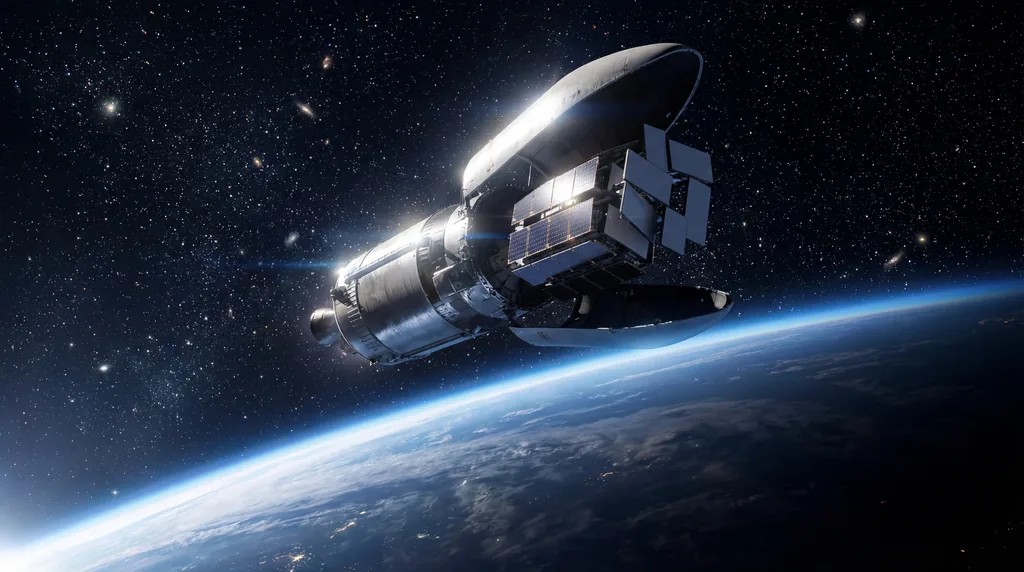

In the early hours of January 30, 2026, SpaceX is scheduled to conclude an unprecedented operational month with the launch of the Starlink 6-101 mission from Cape Canaveral Space Force Station. This flight, the 13th for the company in January alone, represents more than just a logistical milestone in high-cadence aerospace operations; it serves as the public debut for "Stargaze," a sophisticated Space Situational Awareness (SSA) system. By leveraging its vast orbital infrastructure, the private aerospace firm aims to address the escalating complexities of low Earth orbit (LEO) traffic management, transitioning from a satellite operator to a primary provider of orbital safety data.
Mission Overview: The Objectives of Starlink 6-101
The Starlink 6-101 mission is slated for liftoff at 2:22 a.m. EST (0722 UTC) from Space Launch Complex 40 (SLC-40). The primary objective of this flight is the deployment of 29 Starlink v2-mini satellites into a south-easterly trajectory toward a 43-degree inclination orbit. These satellites are designed to bolster SpaceX’s global broadband megaconstellation, which, according to data maintained by orbital tracker Dr. Jonathan McDowell, already exceeds 9,500 active units. This launch marks a significant expansion of the fleet, aiming to enhance high-speed internet capacity across the globe.
The mission also underscores the maturity of SpaceX’s reusability program. The Falcon 9 first-stage booster assigned to this flight, tail number B1095, is embarking on its fifth journey into the upper atmosphere. Approximately 8.5 minutes after liftoff, the booster is expected to execute a precision landing on the autonomous drone ship "Just Read the Instructions," stationed in the Atlantic Ocean. If successful, this will mark the 149th landing for this specific vessel and the 566th successful booster recovery in the company’s history, reflecting an era of routine, reliable access to space that was once considered impossible.
Establishing a New Monthly Launch Benchmark
The 13th launch in a single month signifies a historic operational tempo for SpaceX. Throughout January 2026, the company has maintained a cadence of nearly one launch every 57 hours, including high-profile missions such as the 11,000th Starlink satellite deployment and the launch of a GPS 3 satellite for the U.S. Space Force. This rapid-fire succession of flights requires a level of organizational efficiency and ground support coordination that rivals major commercial airline operations. The 45th Weather Squadron has facilitated this pace by providing narrow windows of opportunity, citing a 95 percent chance of favorable conditions for the 6-101 flight.
This relentless schedule is driven by the need to populate the Starlink constellation rapidly to meet global demand, but it also provides a unique testing ground for new software integrations. As the number of active satellites in LEO continues to climb, the risks associated with orbital congestion have become a primary concern for the international space community. It is within this context of record-breaking growth that the company has unveiled its most significant safety tool to date: the Stargaze system.
The Stargaze System: SpaceX’s Leap in Orbital Safety
Stargaze is a proprietary Space Situational Awareness (SSA) platform developed to provide a near-real-time map of the orbital environment. Unlike conventional ground-based radar systems that are often limited by geographic location and atmospheric interference, Stargaze utilizes the hardware already present on the Starlink fleet. Each satellite is equipped with "star trackers"—highly sensitive cameras used for orientation by mapping stellar positions. Stargaze repurposes these sensors to detect and track nearby human-made objects, effectively turning the Starlink constellation into a massive, distributed sensor array.
The scale of this data collection is staggering. With nearly 30,000 star trackers across the fleet, Stargaze detects approximately 30 million transits of nearby objects every day. According to official company statements, this results in a several-order-of-magnitude increase in detection capability compared to legacy ground-based systems. By aggregating these observations, the system can generate highly accurate orbital predictions and identify potential conjunctions—or close approaches—within minutes, a significant improvement over the several-hour delay inherent in current industry standards.
Addressing the Space Traffic Crisis Through Private Innovation
The necessity for such a system arises from a growing "traffic crisis" in low Earth orbit. SpaceX has identified several high-risk practices currently plaguing the orbital environment, including the abandonment of rocket bodies in LEO, uncoordinated maneuvers by satellite operators who do not share trajectory data (ephemeris), and the debris clouds created by anti-satellite (ASAT) tests. These factors, combined with volatile space weather that can alter satellite altitudes, have made traditional tracking methods increasingly unreliable.
By developing Stargaze, SpaceX is effectively building an autonomous space traffic control system. While government entities like the Department of Commerce’s TraCSS and NASA’s various tracking initiatives remain vital, the sheer volume of Starlink satellites allows the private sector to fill critical gaps in coverage. Stargaze is designed to operate with a high degree of autonomy, generating Conjunction Data Messages (CDMs) that can be distributed to relevant operators almost immediately after a potential threat is identified. This proactive approach aims to move the industry toward a standard of "cooperative transparency" in orbital dynamics.
Case Study: A High-Stakes Avoidance Maneuver
To demonstrate the efficacy of the new system, SpaceX detailed a recent real-world scenario from late 2025. A Starlink satellite was on a path that initially appeared safe, with an estimated miss distance of 9,000 meters from a third-party satellite. However, the third-party operator performed an unannounced maneuver just five hours before the closest approach. This sudden change in trajectory collapsed the anticipated miss distance from a safe nine kilometers to a perilous 60 meters.
Traditional ground-based tracking might have missed the implications of this maneuver until it was too late. However, Stargaze’s continuous observation capabilities detected the change in the third-party satellite's path almost instantly. The system published an updated trajectory and alerted the Starlink satellite, which was able to plan and execute an avoidance maneuver within one hour of the detection. This incident serves as a primary justification for the system's development, highlighting how rapid-response SSA can prevent catastrophic collisions that would otherwise generate thousands of pieces of long-lasting debris.
Future Implications for Global Satellite Operations
Perhaps the most significant aspect of the Stargaze announcement is the company’s commitment to making this data available "free of charge" to all satellite operators via its space-traffic management platform in the coming weeks. This move positions SpaceX as a central arbiter of space safety, potentially setting a new global standard for how orbital data is shared. The system has already undergone a "closed beta" phase with over a dozen participating satellite operators, though the specific companies involved have not been disclosed.
As the Starlink constellation continues to grow toward its authorized capacity of tens of thousands of satellites, the scalability of Stargaze will be critical. The more satellites SpaceX launches, the more "eyes" the system has in orbit, creating a virtuous cycle of increased safety and more precise tracking. For the broader aerospace industry, this shift suggests that the future of space traffic management may lie not in centralized government radar stations, but in the distributed intelligence of the very constellations that occupy the orbital highways. With the successful conclusion of the Starlink 6-101 mission, the era of autonomous, real-time space situational awareness has officially begun.




Comments
No comments yet. Be the first!