Iran war accelerates shift to clean technology — how China stands to gain

Technology
Iran war accelerates shift to clean technology — how China stands to gain
Energy disruptions from the Iran war are pushing countries toward renewables and storage, boosting demand for Chinese-made solar panels, batteries and EVs. Europe and Germany face policy and supply-chain decisions as Beijing's industrial strategy pays off.

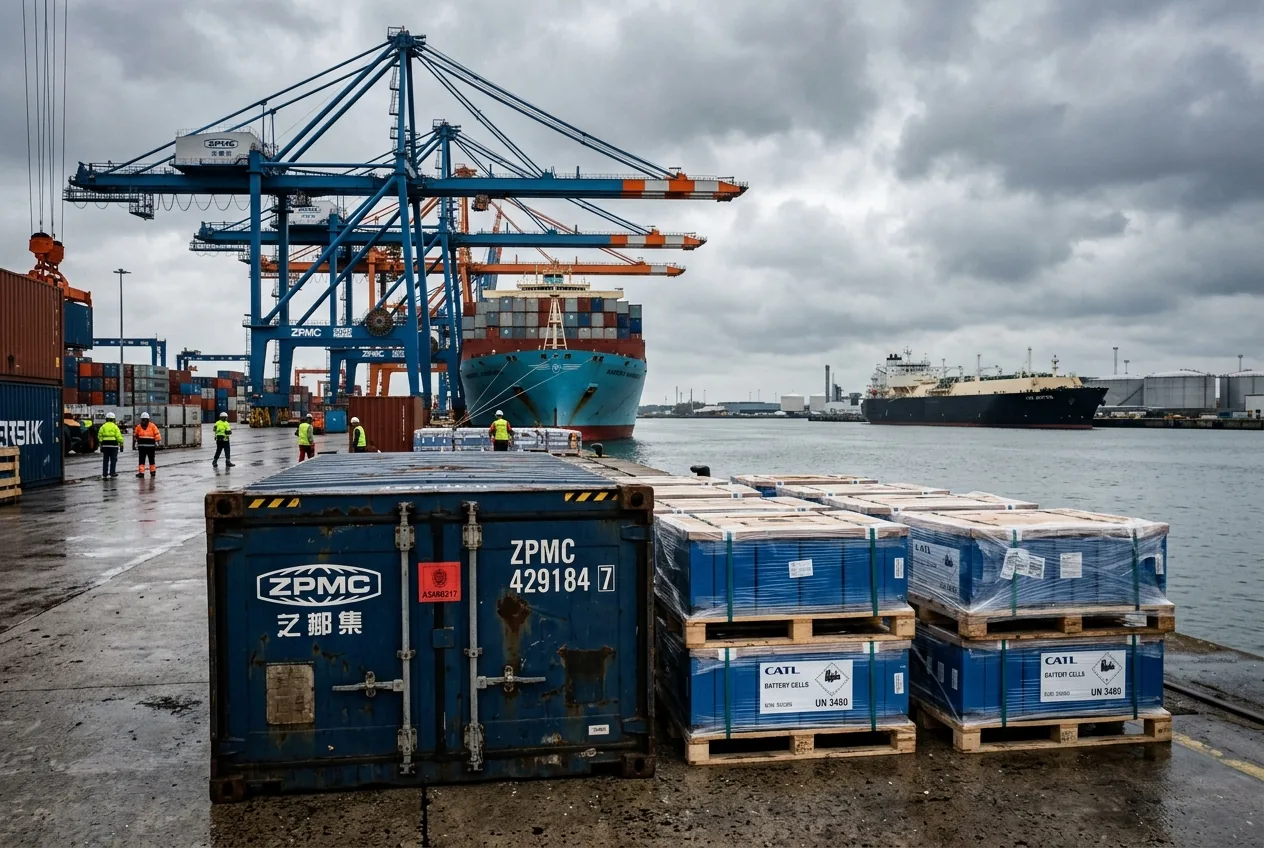
On a rain-slick morning in a Hamburg port yard, a container of Chinese-made battery cells waited for a German firm that had ordered them months earlier. The supplier called to say the shipment could be rerouted, delayed, or supplemented with extra components — depending on which insurers and ports would accept the cargo as tensions around the Strait of Hormuz spiked. It is a small, awkward moment that captures a much bigger one: the iran war accelerates shift away from fossil fuels and into technologies whose supply chains China already controls.

The Associated Press and industry trackers have been cataloguing the effect in blunt terms: disruptions to oil and gas flows are prompting a global run on renewables, batteries and electric vehicles, and China is in pole position to supply much of it. For governments and utilities that suddenly face eye-watering fuel bills and fraught logistics, the choice to accelerate clean-power projects is both practical and political — but not neutral.

Why the iran war accelerates shift to clean technology now

The immediate shock is market psychology. A blockade, repeated naval incidents and threats to the Strait of Hormuz have pushed crude and petrol prices higher in a matter of weeks, making the operating costs of fossil-fuel-based economies painfully visible. Faced with that volatility, utilities and policymakers are looking at solar, wind and battery storage not as climate symbolism but as shock absorbers for energy security. That is the central reason the iran war accelerates shift — it reframes renewables as a strategic buffer, not just an emissions policy.

How the iran war accelerates shift is helping Chinese exporters

China’s industrial strategy anticipated this pivot. State-led investment and aggressive capacity building have given Chinese firms scale in solar panels, battery cells and electric vehicle manufacturing. International Energy Agency estimates and other industry trackers put China’s share of global battery cell production and EV manufacturing well into the majority, and export data show record shipments of cleantech to regions now scrambling for supplies. The result: when demand spikes, the world often turns to Chinese factories first.

This is not just about cheap modules. Chinese companies dominate multiple nodes of the value chain — polysilicon, wafering, cell assembly, pack integration, and battery chemistry R&D — which lowers procurement friction for buyers used to integrated offers. Car companies and utilities that want to move quickly find fewer bureaucratic and logistical hurdles with Chinese suppliers than building a local supply chain from scratch overnight.

Which clean-tech sectors will grow fastest as regional risk rises

The most immediate winners are obvious: solar panels, lithium-ion battery cells, and electric vehicles. Rooftop solar sales typically spike first because homeowners and small businesses can react fast; grid-scale procurement and permitting take longer but have the biggest fiscal payoff. Energy storage — both behind-the-meter batteries and utility-scale systems — becomes indispensable when intermittent renewables are meant to cover import shortfalls.

That pattern explains the regional examples we've already seen. Countries in Southeast Asia and parts of South Asia have rapidly increased imports of Chinese panels in recent months. Utilities are also tendering battery storage projects because they smooth out intraday price spikes and reduce reliance on imported LNG and diesel for peaker plants. Over the medium term, charging infrastructure and power-electronics supply chains will expand as transport electrifies in response to fuel-price shocks.

Sanctions, geopolitics and the risk that partnerships tilt toward China

Geopolitical pressure on Iran has also reshaped trade relationships and currency arrangements; some states consider alternate settlement systems and bilateral energy deals that circumvent Western institutions. Where western firms face export controls, tariffs, or political risk, Chinese companies often move in with fewer perceived political costs. That dynamic creates a two-way effect: as nations hedge against Middle East volatility they also hedge their procurement risk by deepening ties with Beijing.

That does not mean Western technology disappears. Tariffs and regulatory barriers — including US controls that restrict Chinese EVs from American markets — remain significant. But in markets where customers want rapid deployment and low capex, Chinese offers are the path of least resistance. The net effect is a reorientation of supply chains toward Asia and China in particular, especially for countries with urgent energy-security motives.

European and German stakes: industry, policy and awkward dependences

For Europe — and Germany in particular — the situation is double-edged. European firms supply high-end power electronics, turbines and industrial know-how, and German engineering remains world-class. Yet Europe lacks the mass manufacturing scale for panels and battery cells that China built with a decade of industrial policy. That leaves Brussels and Berlin with a policy choice: accelerate funding to bootstrap domestic cell production and solar manufacturing, or accept continued dependence on Chinese supply for rapid decarbonisation.

Brussels has instruments — IPCEIs, Horizon grants, and public procurement rules — but industrial mobilisation takes time. German companies can supply the machinery for battery plants, but financing, permitting and raw-material access remain bottlenecks. The political irony is that Europe can assemble a sovereign supply chain in principle; in practice, the paperwork and co-ordination slow down deployment at exactly the moment politicians want speed.

Economic trade-offs and who pays the short-term bill

The short-term fiscal picture is plain: higher fossil prices create immediate redistributional pressure — households feel higher pump and heating bills; businesses face higher operating costs. That pressure can sharpen political support for subsidised rooftop solar and incentives for storage, but those measures cost public money. Credit agencies and investors weigh whether to frontload renewables deployment or accept a period of expensive imports while trying to rebuild domestic manufacturing capacity.

From an industrial-policy perspective, China benefits from scale, which translates to lower unit costs and faster delivery. Policymakers in Europe and the US must decide whether to match that with domestic subsidies and state-backed finance or to lean on allies and strategic stockpiles. Neither option is painless; both require political capital.

An unsettled future and a wry, practical lesson

The iran war accelerates shift in practical, measurable ways: it makes renewables an insurance policy and hands market advantage to the firms that already mass-produce the hardware that insurers and utilities want to deploy. That validation of China’s industrial model is uncomfortable for those who favoured market-led transitions and for governments that did not prioritise industrial scale.

Germany has the factories and engineers; Brussels has the rulebooks; someone else has the panels. Expect policy fights in the months ahead over subsidies, export controls and whether Europe can turn urgency into industrial capacity without stumbling over its own procurement rules. The good news is the shift reduces exposure to an unstable chokepoint; the awkward truth is that strategic independence will cost more — and take longer — than the public imagines.

Sources

Sources

  • International Energy Agency (IEA)
  • Ember (think tank on energy and climate)
  • Fitch Ratings
  • Institute for Energy Economics and Financial Analysis (IEEFA)
  • Renewables First and Centre for Research on Energy and Clean Air (think-tank studies referenced)
  • Aurora Research and Omdia (industry consultancy reports)
Mattias Risberg

Mattias Risberg

Cologne-based science & technology reporter tracking semiconductors, space policy and data-driven investigations.

University of Cologne (Universität zu Köln) • Cologne, Germany

Readers

Readers Questions Answered

Q How does the Iran war accelerate adoption of clean technology globally?
A
Q Why might China benefit from geopolitical tensions in the Middle East for clean energy tech?
A
Q What impact will geopolitical tensions in Iran have on renewable energy investments and supply chains?
A
Q Could sanctions on Iran shift clean-tech partnerships toward China?
A
Q Which clean energy sectors are most likely to grow as regional risk rises in the Middle East?
A

Have a question about this article?

Questions are reviewed before publishing. We'll answer the best ones!

Comments

No comments yet. Be the first!