An experiment and a headline
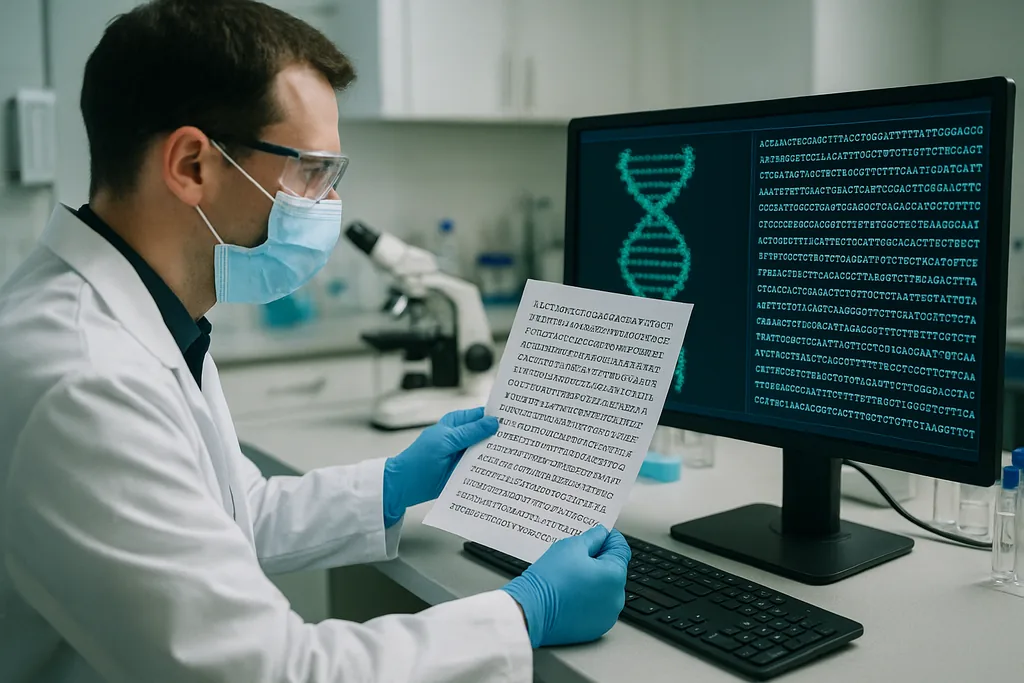
This week a dramatic account landed at the intersection of two fast-moving fields: artificial intelligence and synthetic biology. Reported on 5 February 2026 and traced to activity described as occurring on 26 January 2026, researchers working with an AI system called Evo2 are said to have prompted the model to "design a virus," printed the resulting DNA and observed a viable biological construct in the lab. The episode — summarized in press reports and a related preprint — is a clear example of what ai-designed virus highlights pace— and why that speed matters for both innovation and safety.
How the work was reported and what is verified
The public narrative combines three kinds of material: a media account of the Stanford/Genyro team’s work, a bioRxiv preprint on generative phage design, and the longstanding scientific literature on AI tools for protein and genome design. Taken together they indicate that groups are now using large biological datasets and generative models to propose sequences that have not previously existed in databases. But there are important caveats. The press summary is not a peer-reviewed validation; the preprint is preliminary; and independent replication and full methodological disclosure are needed before the community can confirm claims about how the sequence was created, whether it was truly de novo, and what measures proved its "viability."
ai-designed virus highlights pace—Speed, scale and dual‑use risks
What distinguishes this episode from earlier milestones is compression of the design timeline. AI tools that read large collections of genomes and learn sequence–function relationships can propose candidate sequences within hours. Researchers point to examples where AI shortened vaccine or drug lead timelines from months to days; generative models can now explore sequence space at scales no human team could scan by hand. That capacity underlies legitimate hopes — faster countermeasures, bespoke bacteriophages to treat antibiotic-resistant infections, and more efficient industrial enzymes — but it also shrinks the window in which governance, oversight and technical safeguards can act.
Dual‑use issues are central: the same algorithms that propose a phage that better kills a bacterial strain could be misdirected toward producing designs that enhance host range, pathogenicity or environmental stability. The speed of computation amplifies the classic dual‑use dilemma because digital designs are portable and often reproducible with off‑the‑shelf DNA synthesis, automated cloning and bench robotics.
What does an "AI‑designed virus" actually mean?
"AI‑designed virus" is shorthand for a computational pipeline that proposes a nucleic‑acid sequence predicted to fold, express, and interact in specified ways. Modern models — from protein structure predictors to DNA language models — learn statistical relationships from millions to trillions of sequence fragments. A generative model can then sample sequences that maximize desired properties in silico. But design is only the first step. Turning a string of letters into an infectious or functional biological particle requires assembly (synthesizing and joining DNA), the right host or packaging system, regulatory elements (promoters, terminators, packaging signals) and careful phenotypic tests. In short: a plausible sequence is not the same as an automatically functioning pathogen; many technical barriers remain between bytes and biology, yet those barriers are falling as synthesis, automation and AI co‑evolve.
How AI is accelerating synthetic biology
AI accelerates synthetic biology at multiple steps. Discriminative models predict structure from sequence (AlphaFold and successors have dramatically improved protein folding predictions), while generative models propose novel amino‑acid sequences or whole genomes. Coupled with robotic labs that automate build‑test cycles, these models can drive design‑build‑test‑learn loops with far fewer human hours. Language‑model approaches trained on genomes can identify regulatory motifs, design promoters, or suggest whole viral genomes with tailored properties. The Nature review of the AI–synthetic biology convergence makes the point that this is not hypothetical: autonomous or semi‑autonomous pipelines already optimize metabolic pathways, enzyme activities and therapeutic constructs, and the trajectory points toward ever more capable systems.
Risks, limits and why context matters
Technical limits moderate, but do not eliminate, the risk. Creating an agent that replicates, spreads or causes disease in humans involves biological constraints that are not trivially bypassed with a better sequence: host specificity, immune responses, and ecological dynamics matter. That said, the lowered barrier to plausible design — combined with global access to synthesis, cheaper sequencing and remote lab services — increases opportunities for accidental or deliberate misuse.
Model failures are another risk. AI systems can hallucinate biologically impossible motifs or overfit to training biases. Opaque models make it hard to predict failure modes. Those weaknesses matter most when a model’s outputs are acted upon without thorough experimental validation and human judgment.
ai-designed virus highlights pace—What safeguards exist and what’s missing
Some safeguards are already in place: commercial DNA providers generally screen orders against curated lists of hazardous sequences and maintain customer vetting. The United States Office of Science and Technology Policy and other agencies have issued frameworks and guidance for nucleic acid screening and provider best practices. Professional norms, institutional biosafety committees, and grant conditions also create checkpoints.
But these protections have gaps. Sequence‑based screening struggles with novel designs that lack homology to known threats; automated pipelines can bypass human oversight; and many suppliers and users operate outside regulated environments. The Nature analysis argues for a mix of technical, policy and cultural measures: stronger, standardized screening (including function‑aware tools), mandatory logging and auditing for automated wet labs, human‑in‑the‑loop checkpoints, model explainability and red‑teaming of AI systems. International coordination is crucial because information and materials cross borders faster than regulations can.
Balancing innovation and safety
The potential upside is substantial. Generative design could deliver tailored bacteriophages for drug‑resistant infections, accelerate vaccine design in an outbreak, and speed deployment of enzymes for sustainable manufacturing. The challenge is to preserve those benefits while reducing risk. Reasonable steps include requiring provenance and screening of DNA orders for federally funded labs, funding independent verification and replication of high‑impact claims, mandating model and training‑data documentation where safety is at stake, and investing in explainable AI approaches that surface the variables driving designs.
Equally important are social measures: workforce training in dual‑use awareness, transparent reporting channels, and multi‑stakeholder governance that includes scientists, ethicists, industry, and civil society. These mechanisms can help ensure human judgment remains an active part of critical decisions, rather than delegating them entirely to opaque systems.
What to watch next
Follow‑up reports from the research teams, independent laboratory replication and peer‑reviewed publications will be the most important near‑term signals. Regulators and synthesis providers will also be key actors: changes to screening rules, procurement policies, or mandatory logging would indicate a serious policy response. Finally, the field’s trajectory will hinge on how quickly autonomous labs and fully generative design pipelines mature — and whether governance evolves at a similar pace.
The Evo2 episode is a timely reminder that computational power has changed the tempo of biology. The question now is not whether AI will write biological code, but how society will govern a world in which it can do so faster than before.
Sources
- npj Biomed. Innov. (Nature manuscript: "The convergence of AI and synthetic biology: the looming deluge")
- Stanford University / Genyro (research reports and preprints on generative bacteriophage design)
- bioRxiv preprint repository (preprint on generative design of novel bacteriophages)
- United States Office of Science and Technology Policy — Framework for Nucleic Acid Synthesis Screening
- National Academies of Sciences, Engineering, and Medicine (reports on biodefense and synthetic biology)




Comments
No comments yet. Be the first!