Salt Lake City announces a tiny but potentially transformative advance
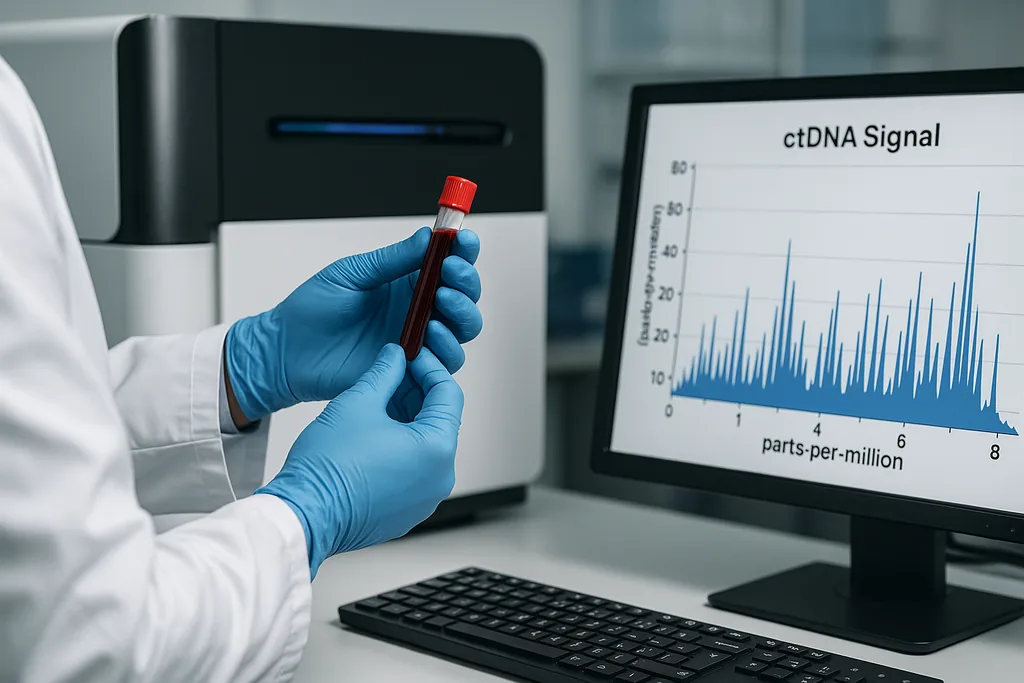
Myriad Genetics said today that it will begin a limited clinical launch of Precise MRD in March 2026, bringing to clinics a tumor‑informed, whole‑genome sequencing blood test that the company says can detect circulating tumor DNA at levels as low as one part per million. The timing and scope are deliberate: an initial rollout with select community clinicians focused on breast cancer, followed by plans to add colorectal and renal cancer later in the year and to consider additional cancer types in 2027. The claim of one‑in‑a‑million sensitivity underpins a set of interim study results presented at major meetings and published in peer‑reviewed outlets that together argue the assay reaches a lower detection floor than many earlier tests.
What Precise MRD measures and how
Precise MRD is built around two principles: first, it is tumor‑informed, meaning the assay is personalized using genetic information from a patient’s tumor to look for that tumor’s unique DNA fragments in blood; second, it relies on whole‑genome sequencing (WGS) to search broadly across the genome rather than targeting a narrow panel of known mutations. Those design choices let the test aggregate signals from many tumor‑specific markers and push sensitivity down to the parts‑per‑million range Myriad reports.
In plain terms, circulating tumor DNA (ctDNA) are short fragments of the tumor’s genome that leak into the bloodstream as cancer cells die or shed. Detecting ctDNA is conceptually like listening for a faint radio station in a crowded band: the more features the receiver is tuned to, and the better you know the station’s exact signature, the more likely you are to pull it out of noise. Tumor‑informed WGS increases the number of possible tumor fingerprints the laboratory can search for, while computational approaches filter technical errors and background mutations that would otherwise masquerade as cancer signals.
Key trial signals supporting the launch
Myriad’s commercialization timeline rests on interim analyses from two multicenter studies described at major oncology meetings and in peer‑reviewed venues. MONITOR‑Breast is a prospective observational study of stage I–III breast cancer in which patients had a median of roughly 10 ctDNA sampling timepoints during neoadjuvant therapy. In that dataset, Precise MRD showed 93% baseline sensitivity for detecting tumor‑derived DNA and identified sizable fractions of samples at concentrations below thresholds typical of first‑generation assays: 21% of baseline samples and 73% of post‑neoadjuvant samples were below 100 parts per million. Importantly, early clearance of ctDNA—by about day 50—followed by sustained negativity was strongly associated with pathological complete response at surgery, while persistent or intermittent ctDNA, even below 20 ppm, predicted residual disease.
The MONSTAR‑SCREEN‑3 colorectal dataset produced striking numbers: Myriad reports universal baseline ctDNA detection across enrolled colorectal patients and 100% sensitivity for predicting recurrence when the test was applied one month after surgery. In that cohort, a one‑month postoperative ctDNA‑positive result correlated with significantly shorter disease‑free survival over a median six‑month follow‑up (p < 0.001). The study also found a quantitative relationship between ctDNA burden and prognosis—patients whose ctDNA exceeded 100 ppm fared worse than those with lower levels, supporting the idea that ultra‑sensitive quantification can stratify risk, not merely provide a binary yes/no signal.
Why the tiny signal matters clinically
Detecting ctDNA at extremely low concentrations opens two practical clinical possibilities. First, ultra‑sensitive MRD testing can identify minimal residual disease after surgery or chemotherapy before conventional imaging or symptoms appear; that could permit earlier salvage therapy when tumor burden is still low and potentially more treatable. Second, the dynamics of ctDNA—how quickly it clears or rebounds—can be a real‑time biomarker of treatment response in neoadjuvant and adjuvant settings, informing decisions about whether to intensify, de‑escalate or change therapy.
For patients, the promise is fewer unnecessary toxic treatments and timelier interventions for those at high risk. For drug developers and clinical trials, sensitive MRD assays can accelerate endpoint readouts, enable adaptive trial designs, and enrich study populations with patients most likely to benefit from additional therapy. That is why a commercially available, validated ultra‑sensitive assay is of interest to oncologists, hospitals and industry partners.
Limits, caveats and the evidence still needed
The results supporting Precise MRD are compelling but preliminary. Many of the reported figures come from interim analyses with relatively short follow‑up—the colorectal recurrence association had a median follow‑up of about six months—so long‑term outcome data such as overall survival or durable recurrence‑free survival are not yet mature. Correlation between ctDNA and outcomes does not, on its own, prove that acting on ctDNA improves survival; that requires prospective trials in which treatment decisions are randomized based on MRD status.
There are also technical and biological complicating factors. Tumor‑informed assays require access to tumor tissue and successful sequencing of that tissue to create personalized assays, which adds time and logistical complexity. Background mutations from clonal hematopoiesis, which arise in aging blood cells, can confound ctDNA interpretation and demand careful bioinformatic filtering. Finally, pushing sensitivity to one part per million makes the test more vulnerable to false positive noise unless assay specificity and laboratory quality controls are impeccable.
Rollout, access and real‑world considerations
Myriad is starting with a limited clinical launch focused on selected community clinicians. That staged approach helps the company and early adopting providers iron out logistics—sample collection and shipping, tumor tissue processing, test turnaround and result interpretation—before scaling. It also reflects a common commercial pathway for complex diagnostics that must integrate with oncology workflows and payers.
Cost and reimbursement will be decisive in determining how widely and quickly MRD testing is adopted. Whole‑genome, tumor‑informed assays are more expensive and operationally demanding than narrow mutation panels, and payers will want evidence that using the test changes management in ways that improve outcomes or lower net costs. Equity is another issue: ensuring that rural and under‑resourced clinics have access will require deliberate planning if MRD testing is to avoid widening disparities in cancer care.
A milestone for the field, not the last word
Myriad’s March 2026 limited launch marks a practical milestone—moving an ultrasensitive, tumor‑informed WGS MRD test from research presentations and publications into controlled clinical use. It builds on presentations at major conferences and a peer‑reviewed manuscript, and represents the kind of translational step the field has awaited: moving sensitive molecular tools out of specialty centers and toward broader clinical practice.
Sources
- The Lancet Oncology (research paper on Precise MRD)
- San Antonio Breast Cancer Symposium (SABCS 2025 presentations)
- American Society of Clinical Oncology Gastrointestinal Cancers Symposium (ASCO GI 2026)
- Myriad Genetics press materials and corporate disclosure
- National Cancer Center Hospital East (collaborative clinical research)




Comments
No comments yet. Be the first!