What was discovered?
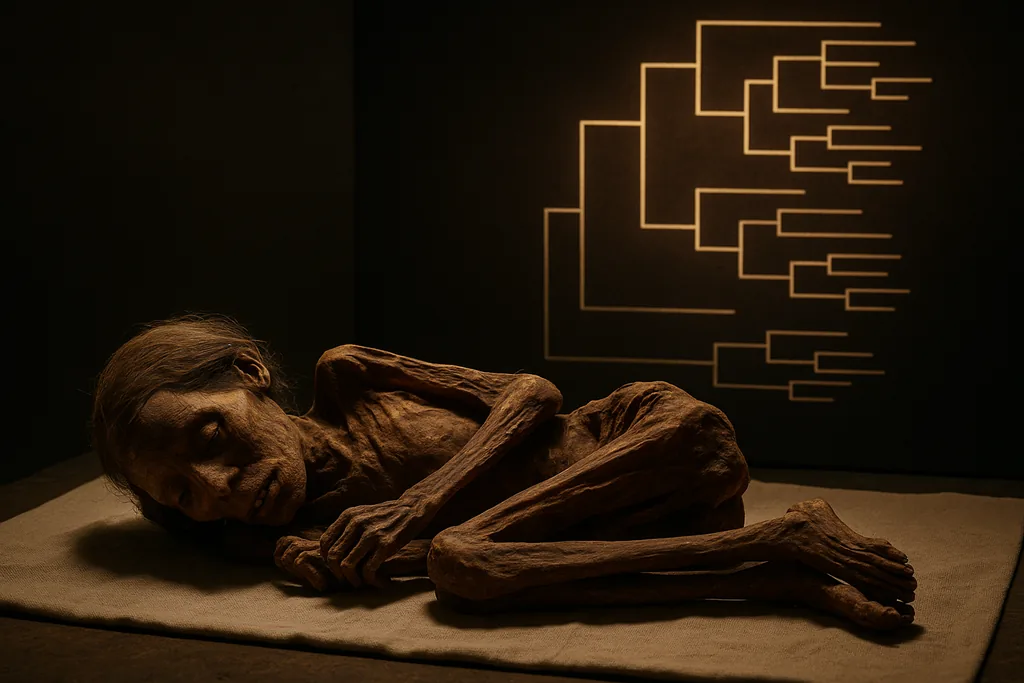
When archaeologists opened a shallow rock shelter high on the rim of what is now the central Sahara, they found not only pottery and rock art but the remarkably preserved bodies of two women who died roughly 7,000 years ago. The announcement that followed — widely condensed into headlines that suggested "nonhuman" DNA — obscured the real, more intriguing result: detailed genomic sequencing shows these women belonged to a previously uncharacterized branch of humanity. The phrase scientists uncover 7,000-year-old desert appeared in reporting because the finds come from a time when the Sahara was a green, lake‑rich landscape and the remains were retrieved from the Takarkori rock shelter in southwest Libya, but the biology beneath the sensational headlines tells a subtler, scientifically important story.
Genomes from the Green Sahara — scientists uncover 7,000-year-old desert lineage
Researchers succeeded in sequencing full nuclear genomes and mitochondrial DNA from two naturally mummified women found among 15 individuals excavated decades earlier at Takarkori. Rather than confirming contact with known modern populations in northern Africa, the Near East, or sub‑Saharan corridors, the genomes place these women on a deeply divergent branch: their ancestors appear to have split from the lineage that leads to many modern sub‑Saharan populations tens of thousands of years earlier — on the order of 40,000–60,000 years ago — and then persisted with limited detectable gene flow until their deaths around 5,000 BCE.
That pattern is why scientists describe the Takarkori genomes as revealing a "distinct" or "previously unknown" human lineage. It is not evidence that the remains are nonhuman. Instead, the genomes are human but genetically distant from present‑day reference populations, which both complicates simple narratives about human migration across a greener Sahara and highlights how little is known about population structure in ancient Africa.
Site and artifacts — scientists uncover 7,000-year-old desert mummies at Takarkori
Archaeologists first reported 15 skeletons, ceramics and rock art from Takarkori in the early 2000s. Two of the individuals were so well preserved that their soft tissues remained intact: a rare circumstance in North African archaeology. Contextual data — burial position, associated tools, and faunal remains — indicate a subsistence mix of hunting, fishing and early herding. Radiocarbon dates place the two women near 7,000 years before present, a time when the Sahara supported lakes and grasslands often called the "Green Sahara." Those environmental conditions shaped human lifeways and the movement of ideas such as pastoralism, which this genomic work suggests may have spread in part by cultural transmission rather than large‑scale population replacement.
Why some reports said "nonhuman" DNA
Headlines claiming nonhuman DNA likely arose from misunderstanding two separate facts: (1) the genomes from Takarkori are highly divergent compared with modern references, and (2) ancient DNA work must always consider environmental and microbial DNA mixed into ancient samples. Divergence from modern populations does not equal nonhuman. In genomic terms, it is analogous to discovering a deep branch in a family tree: the people are human, but their genomes preserve an ancient structure not well represented in living populations.
How scientists check ancient DNA and rule out contamination
Ancient‑DNA laboratories use several well‑established lines of evidence to authenticate sequences and exclude modern or environmental contamination. Key checks include:
- Damage patterns: genuine ancient DNA shows predictable chemical damage, such as elevated cytosine → thymine substitutions near fragment ends; technicians model these patterns and expect them for endogenous ancient molecules.
- Endogenous fraction and read mapping: sequences that map to the human reference and cluster in expected ways are evaluated alongside the fraction of reads that are endogenous human versus bacterial, fungal or other environmental sequences.
- Independent replication and negative controls: extractions, library preps and sequencing runs in separate clean rooms or different laboratories reduce the risk that modern handlers or reagents explain the result.
- Targeted assays and capture: researchers often enrich samples for human mitochondrial DNA or specific nuclear regions to increase signal and verify that the human sequences show the authentic ancient signature.
- Direct radiocarbon dating and archaeological context: dating the bones or associated material ties the genetic data to a secure time frame and helps exclude recent intrusion.
When these checks converge — strong ancient‑type damage profiles, high proportion of human reads in appropriate skeletal tissues, low estimated contamination, and concordant radiocarbon dates — researchers have high confidence the genomes are authentic and human.
Could the surprising DNA come from animals or microbes?
Yes — and that is exactly why modern ancient‑DNA studies actively discriminate taxonomic sources. Soil, animal remains, gut contents and microorganisms all leave DNA in burial contexts. Bioinformatic pipelines map raw sequencing reads against many reference genomes, enabling scientists to separate bacterial metagenomes, plant or animal traces, and genuine human sequences. If a high fraction of reads maps to known animal genomes, or if damage patterns are inconsistent with ancient human DNA, researchers will treat the human assignment skeptically. In the Takarkori case, the analyses reported human nuclear genomes consistent with human damage patterns and low contamination estimates, strengthening the conclusion these were ancient human genomes rather than animal or microbial bycatch.
What the genomes reveal about ancient populations and environments
Even with only two high‑quality genomes, the study reshapes how scientists think about population structure in Holocene Africa. First, it demonstrates that deep genetic diversity persisted in the Green Sahara region long after many other lineages mixed and reorganized elsewhere. Second, it suggests pastoralism — the practice of herding domestic livestock — may have moved through networks of cultural contact, with local people adopting animals and techniques without substantial incoming gene flow. Third, the data emphasize that present‑day population sampling underrepresents past diversity: lineages that were common or regionally important in prehistory may be rare or absent in living groups.
Techniques that made this possible
Sequencing full genomes from warm‑region, multi‑millennial remains is technically challenging. Success relied on a combination of excavation care, choice of well‑preserved tissue (often dense petrous bone or soft tissue when available), contamination‑minimizing lab protocols, shotgun sequencing combined with targeted capture, and rigorous bioinformatic authentication. Mitochondrial DNA often provides the first glimpses of ancestry because it is abundant, but nuclear genomes — which the Takarkori team recovered — are essential to place individuals on the broader human tree and estimate split times and gene flow.
Limitations, unanswered questions and next steps
What began in some headlines as an easy claim of "nonhuman" DNA instead becomes a clearer, richer discovery: two 7,000‑year‑old women who preserve a genetic echo of ancient population structure in a landscape that was then green and inhabited. The finding is a reminder that careful laboratory science and conservative interpretation are the best antidotes to sensational misreading, and that Africa still holds many genomic chapters waiting to be read.
Sources
- Nature (research paper on genomes from the Green Sahara)
- Max Planck Institute for Evolutionary Anthropology (research team and statements)
- Sapienza University of Rome (Archaeological Mission in the Sahara and Takarkori excavations)
- Archaeological field reports from the Takarkori rock shelter




Comments
No comments yet. Be the first!