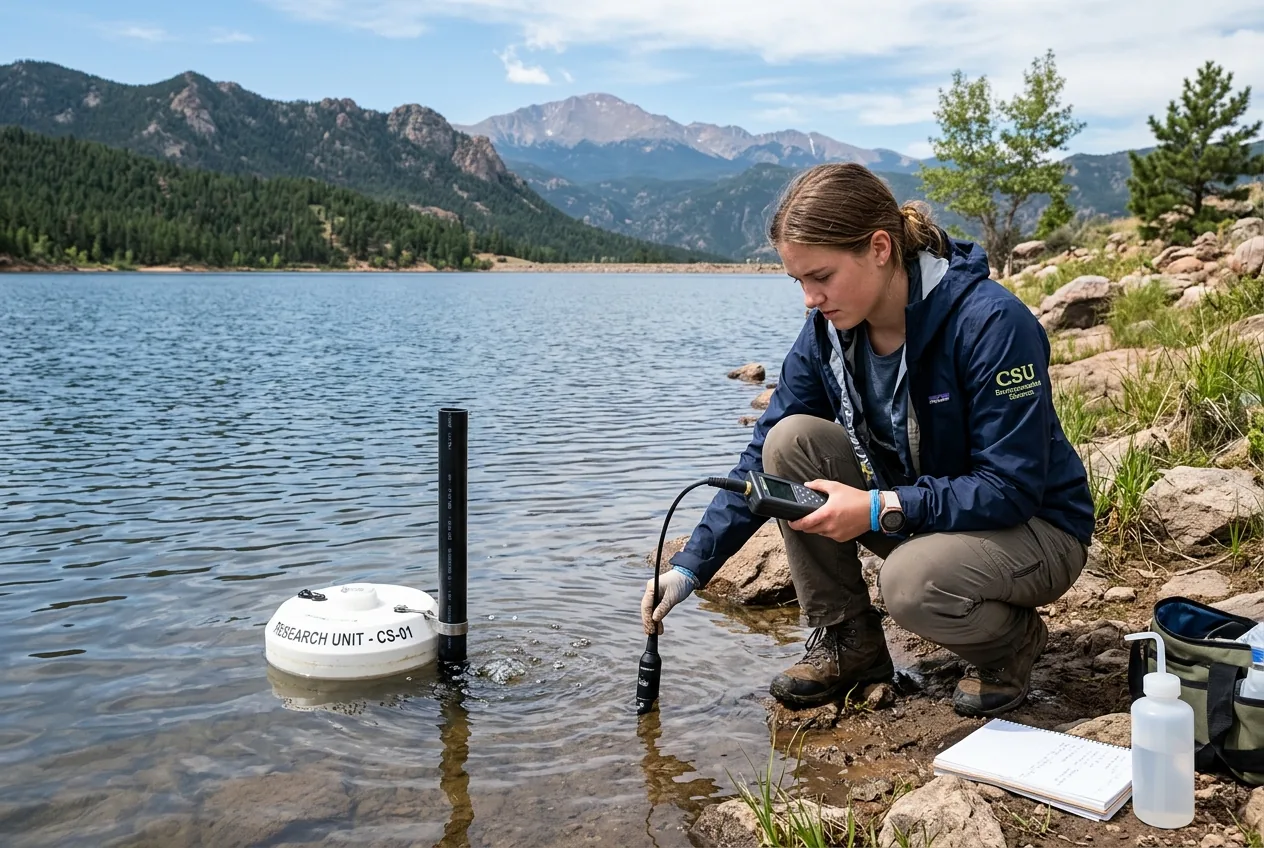
In a reservoir near Colorado Springs, a slow drip of hydrogen peroxide recently did something unusual: it cleared out toxic cyanobacteria without indiscriminately slaughtering everything else in the water. The device responsible wasn't deployed by a municipal water authority or a multinational chemical firm. It was built and field-tested by a teenager named Natalie Muro.
As agricultural runoff and warming waters turn lakes into toxic, neon-green algal slicks, water managers are increasingly desperate for ways to kill blooms without causing collateral damage. Traditional algicides like copper sulfate leave a heavy-metal legacy that accumulates in sediment and worries environmental regulators. Muro’s prototype takes a different route, utilizing a controlled peroxide drip that chemically decomposes into harmless water and oxygen. It’s a highly pragmatic piece of environmental engineering, but moving it from a successful student field test to a scalable public health tool requires navigating serious biological and bureaucratic hurdles.
Catching the chemical fallout
Water samples taken before and after Muro deployed the buoy showed a steep decline in cyanobacterial counts. Crucially, the peroxide spared the heterotrophic bacteria responsible for routine nutrient cycling. But killing cyanobacteria creates a secondary problem: dead algae are essentially floating fertilizer. When the toxic cells lyse and die, surviving bacteria feast on their biomass, returning nitrogen and phosphorus to the water column and potentially reigniting the bloom.
Muro solved this by integrating a column of biochar—a porous, charcoal-like material—into the buoy. The biochar physically traps the dead, aggregated microbial cells before they can be consumed by other organisms. By capturing this biological fallout, the biochar concentrates the organic material so it can be hauled out of the water manually, effectively breaking the toxic cycle rather than just hitting pause.
The microcystin problem
While Muro rigorously documented bacterial counts and verified that the peroxide residues broke down, the Colorado deployment was a short-term test with a limited footprint. Hydrogen peroxide treatments, even slow-release ones, are not biologically risk-free. Bursting cyanobacteria open can dump dissolved toxins, like liver-damaging microcystins, directly into the water supply. Furthermore, pushing the peroxide dose too high can generate reactive oxygen species that stress non-target organisms.
The field report lacked a formal toxicology battery on juvenile fish and macroinvertebrates, and there is no long-term seasonal data to show how the system reacts to fluctuating temperatures. Field waters vary wildly in organic load and sunlight, both of which dictate how long peroxide persists. A delivery system that works perfectly in a clear, cool reservoir may behave very differently in a warm, nutrient-choked pond.
Treating the symptoms
Treating an algal bloom is always a reaction to a failure happening upstream. Devices like Muro’s buoy answer an urgent need to protect public health during acute events, but they cannot replace the politically fraught work of source control. Communities still have to do the boring work: upgrading failing septic infrastructure, restricting livestock access to waterways, and reducing fertilizer runoff.
To find out if this prototype is a genuine municipal management option, researchers need replicated trials to determine exact concentration-time thresholds and to figure out if the captured biomass can be safely composted without reintroducing nutrients. That requires institutional funding and serious regulatory buy-in. Absent that capital, community-led solutions remain local curiosities.
The chemistry of Muro’s project exposes an obvious truth: the tools to manage our environmental messes are often already sitting in the cabinet. Hydrogen peroxide just required a bit of mechanical thinking to deploy safely. The biology is sound; the real test is whether the funding ecosystem will let it survive.




Comments
No comments yet. Be the first!