Физики зафиксировали новую временную фазу: кристалл времени «рондо»
Резюме
Исследователи сообщают об экспериментальной реализации временной фазы, которую они назвали кристаллом «рондо». Система демонстрирует стабильную, повторяющуюся структуру при фиксации один раз за цикл драйва, допуская при этом намеренно варьируемый кратковременный беспорядок между этими точками измерения. В эксперименте использовались ядерные спины углерода-13 в алмазе и специально разработанные последовательности микроволновых импульсов для стабилизации ритма.
Что такое кристалл времени?
Кристалл времени — это неравновесная фаза, в которой многочастичная система под внешним воздействием демонстрирует устойчивый временной порядок, нарушающий симметрию трансляции времени этого воздействия. В данном случае кристалл «рондо» сочетает в себе долгоживущую повторяемость от цикла к циклу с контролируемыми вариациями внутри цикла.
Экспериментальная платформа и методы
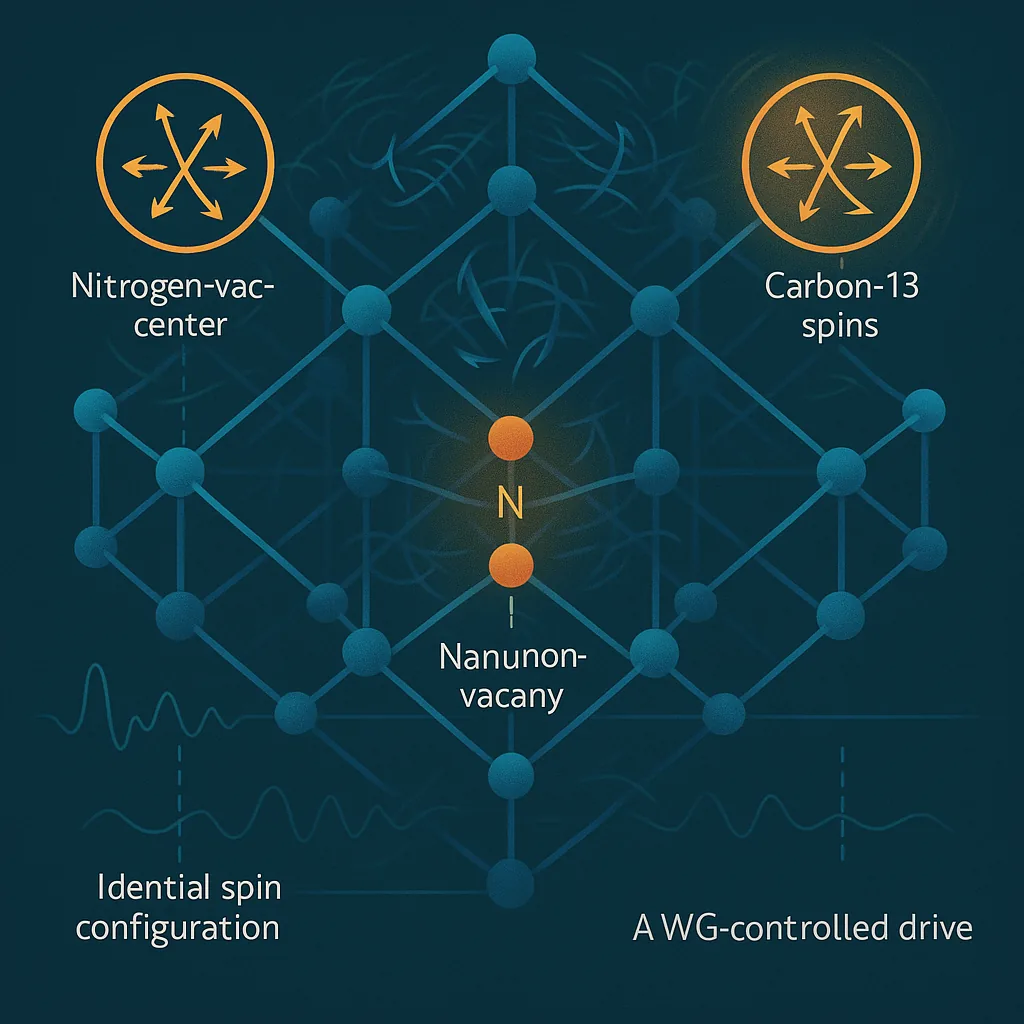
В эксперименте использовалась платформа квантового симулятора на основе алмаза, содержащего дефекты азот-вакансия (NV), связанные с естественными ядерными спинами углерода-13. Оптическое и микроволновое управление применялось для гиперполяризации ансамбля углерода-13 и считывания коллективной динамики спинов с высокой точностью.
Исследователи запрограммировали специально разработанные последовательности драйва — включая строго периодические, квазипериодические и намеренно рандомизированные внутрицикловые структуры — используя генератор сигналов произвольной формы для управления временем и формой микроволновых импульсов. Измеряя коллективный отклик спинов на протяжении многих циклов драйва, команда выявила долгоживущий стробоскопический порядок, несмотря на зашумленное микродвижение (micromotion) внутри отдельных циклов.
Ключевые наблюдения
- При наблюдении один раз за цикл драйва конфигурация коллективного спина повторялась с высокой точностью, демонстрируя стробоскопический порядок.
- Беспорядок, вносимый внутри каждого цикла, не разрушал долгоживущую повторяющуюся структуру при проведении стробоскопических измерений.
- Время жизни стробоскопического порядка превышало четыре секунды в некоторых запусках, что соответствует наблюдению в течение более ста периодов драйва и позволяет проводить спектральный анализ динамики.
Значимость и потенциальные области применения
Ограничения и будущие направления
Данная демонстрация является скорее доказательством концепции, чем готовой технологией. Она опиралась на тщательную гиперполяризацию, малошумящее микроволновое управление и точное считывание данных. Хотя времена когерентности были длительными для многочастичного твердотельного ансамбля при комнатной температуре, они остаются короткими по сравнению с инженерными кубитными ячейками памяти. Будущие работы могут быть сосредоточены на исследовании других материалов-носителей, альтернативных видов спинов и улучшенной электроники управления для увеличения времени жизни и повышения чувствительности.
Более широкие последствия
Концептуально кристалл «рондо» иллюстрирует, что нарушение временной симметрии может поддерживать многослойную структуру: стабильный порядок на грубых временных масштабах, сосуществующий с преднамеренным беспорядком на более тонких масштабах. Это отражает явления в пространственных материалах, где одни степени свободы упорядочены, а другие — нет, и предлагает новые способы организации информации и когерентного поведения в управляемых квантовых системах.
Перспективы
Наблюдение кристалла времени «рондо» открывает новую платформу для изучения неравновесных фаз и разработки методов управления, использующих временную структуру. Превращение этих результатов в практические инструменты для сенсорики или обработки информации потребует дальнейшего совершенствования материалов и систем управления для достижения более длительного времени когерентности и большей надежности.




Comments
No comments yet. Be the first!