Arm Creates Physical AI Division

Technology
Arm Creates Physical AI Division
Arm has reorganized around a new 'Physical AI' business unit to target robotics and automotive markets, a move announced at CES 2026 as major chip and car makers race to build real-world, edge-first AI systems.

Arm's CES gambit: a new 'Physical AI' unit

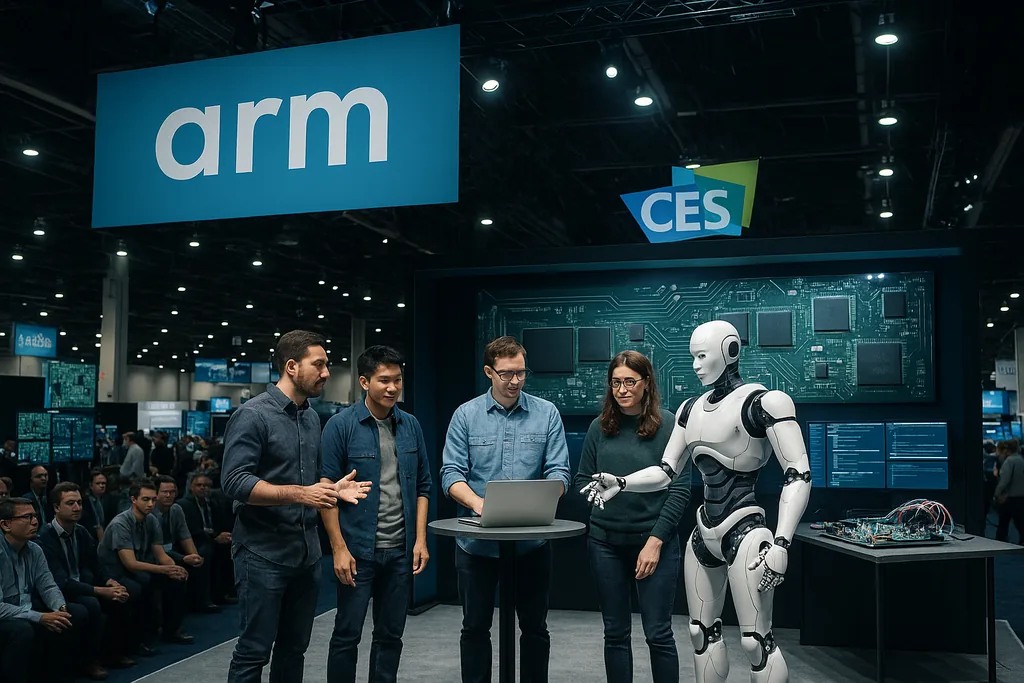
On the cavernous show floor of CES in Las Vegas this week, Arm quietly rewired its corporate map. The company announced a reorganisation that creates a third, stand-alone business line — "Physical AI" — alongside Cloud & AI and Edge, folding its automotive work together with a newly emphasised robotics focus. Executives framed the change as a structural move to let Arm focus engineers, sales and partner programs on machines that sense, plan and act in the physical world rather than purely on phones or data-centre racks.

What Arm said and who will run it

Arm clarified that Physical AI will consolidate effort and staff from existing automotive and robotics initiatives, and that the division will recruit specifically for robotics expertise. The company named Drew Henry as the executive leading the new unit and said the reorganisation reflects growing overlap between cars and robots — both require low‑latency sensing, predictable compute and hard safety constraints. Arm’s chief marketing officer highlighted plans to expand the headcount devoted to robotics partnerships. Those details were shared directly with reporters at CES and in Arm’s own newsroom commentary.

Why the timing matters

CES 2026 has been notable for an unusually strong robotics presence: humanoid demos and factory‑automation promises dominated several keynotes and booths. That surge matters because it sharpened an industry narrative that AI is moving from pattern recognition in the cloud to embodied systems that must reason and act under physical constraints. Arm’s announcement plugs the company into that narrative: its instruction-set designs and system IP already sit at the base of many edge and vehicle compute platforms, and the new unit promises to marshal that foothold into a coordinated push around robotics customers and standards.

Technical rationale: why 'Physical AI' needs Arm

The technical pitch underpinning the reorganisation is straightforward. Robotics and automotive workloads demand deterministic latency, power efficiency and stable long‑life platforms — characteristics that have guided Arm’s architecture for decades. Arm and its partners argue that moving intelligence to the edge, near sensors and actuators, reduces dependence on high‑latency cloud links, lowers energy budgets for battery‑powered machines, and makes safety certification more tractable. At CES, partners such as NVIDIA and Qualcomm showcased robotics stacks and silicon that explicitly build on Arm Neoverse cores, underlining the company’s role as a common compute foundation.

How this fits into the industry chessboard

Arm’s reorganisation arrives as a wider set of incumbents and challengers reposition for the physical‑AI market. NVIDIA pushed a suite of robot software, simulation tools and new chips at the event, while Qualcomm unveiled a robotics‑focused processor. Automakers and robotics specialists — from Boston Dynamics (now within Hyundai’s group) to new entrants like Tesla’s Optimus program — are increasingly talking about bodily AI as a core product or manufacturing strategy. The net effect: the hardware and software stacks that will run future robots are being designed today, and many of those stacks rely on Arm technology somewhere in the chain.

Business model and strategic implications

Arm is not a foundry or a chip manufacturer: it licenses processor designs and collects royalties when those designs appear inside products. That model gives it leverage across a wide partner ecosystem, but also limits the company’s direct control over how and when silicon is delivered. In recent years Arm’s leadership has explored price changes for advanced IP and even hinted at tighter involvement in full‑chip design. Creating a specialized Physical AI unit can be read as a way to deepen relationships with carmakers, robotics OEMs and critical middleware vendors — and to ensure Arm’s architecture remains central as those customers define the next generation of physical systems.

Promises, hype and realistic timelines

While CES floor demos generated headlines, the technology on display remains mixed in maturity. Reuters reporters described many humanoids moving at a "glacial pace," and industry insiders at the show warned of a hype cycle around humanoids even as quadruped and industrial robots reach profitable deployments. Arm executives themselves stressed the continuity between automotive and robotics — a signal that many robotic functions will be absorbed into sectors with established safety and lifecycle practices rather than appearing as standalone consumer robots overnight. One high‑profile example spotted in reporting was Boston Dynamics’ parent group indicating industrial deployments; other vendors suggested production uses for humanoid form factors could arrive over several years.

Risks and friction points

Bringing AI off the cloud and into physical systems amplifies regulatory, security and supply‑chain questions. Edge‑centric systems face a long tail of certification regimes (automotive safety standards, industrial certifications) and will need robust chains for sensors, actuators and specialised ASICs. For Arm, maintaining broad compatibility while serving safety‑critical customers is a balancing act: licensees want both long‑term platform stability and the flexibility to innovate at the silicon level. Meanwhile, competition between chip houses and cloud providers could create fragmentation in middleware and model formats unless standards coalesce quickly.

What to watch next

  • Hiring and partnerships: Arm said the Physical AI unit will add staff focused on robotics and deepen partner programs. Watch vendor partnerships and developer tool announcements for concrete commitments.
  • Chip roadmaps: Keep an eye on Arm‑based Neoverse lanes and whether major customers (NVIDIA, Qualcomm, automakers) commit to new system designs that require Arm licensing across whole product lines.
  • Standards and safety: Signals from regulators or from cross‑industry consortia on safety interfaces will determine how quickly robots move from demos to regulated production environments.
  • Real deployments: Timelines from manufacturers such as deployments in factories, warehouses or automotive plants will be the real test of whether Physical AI becomes commercially material. Several firms at CES suggested multi‑year rollouts rather than immediate mass adoption.

For observers tracking semiconductor supply chains and platform strategy, the announcement is worth noting not because it guarantees a robotics revolution tomorrow, but because it changes how a key architecture vendor will sell, staff and prioritise efforts across a sprawling ecosystem. Expect more partner tie‑ups and technical roadmaps in the months after CES — and a sharper competition among chip and software stacks for the emerging market of physical AI.

Sources

  • Arm Newsroom (Arm editorial blog and press materials, CES 2026)
  • Consumer Technology Association (CES 2026 presentations and keynotes)
  • NVIDIA developer keynote and press materials (CES 2026)
  • Qualcomm product briefings (robotics and automotive processors)
  • Arm executive statements reported from CES (company briefings)

Mattias Risberg

Mattias Risberg

Cologne-based science & technology reporter tracking semiconductors, space policy and data-driven investigations.

University of Cologne (Universität zu Köln) • Cologne, Germany

Readers

Readers Questions Answered

Q What is Arm's new unit and who leads it?
A Arm announced a reorganisation creating a stand-alone Physical AI unit alongside Cloud & AI and Edge, consolidating its automotive and robotics initiatives to focus on machines that sense, plan and act in the physical world, with Drew Henry named to lead the unit.
Q Why does Arm say Physical AI needs Arm?
A Arm argues that robotics and automotive workloads demand deterministic latency, power efficiency and stable long-life platforms, guiding Arm’s architecture for decades; by moving intelligence to the edge near sensors and actuators, it reduces reliance on cloud links, lowers energy use for battery-powered machines, and simplifies safety certification, a view reinforced by partners such as NVIDIA and Qualcomm showing stacks based on Arm Neoverse cores.
Q How does Arm's move fit with industry trends?
A Arm's reorganisation comes as incumbents and challengers reposition for physical AI; NVIDIA unveiled robot software and new chips, Qualcomm introduced a robotics-focused processor, and automakers and robotics players from Boston Dynamics (now within Hyundai’s group) to Tesla’s Optimus program are discussing embodied AI, underscoring Arm’s role as a common compute foundation for edge and vehicle compute.
Q What risks and what to watch next?
A Taking AI off the cloud raises regulatory, security and supply-chain questions; edge-centric systems must navigate automotive safety standards and industrial certifications and require robust sensor/actuator and ASIC chains; Arm will need to balance long-term platform stability with silicon-level innovation, and watch hiring/partnerships, Neoverse roadmaps, and commitments from major customers.

Have a question about this article?

Questions are reviewed before publishing. We'll answer the best ones!

Comments

No comments yet. Be the first!


