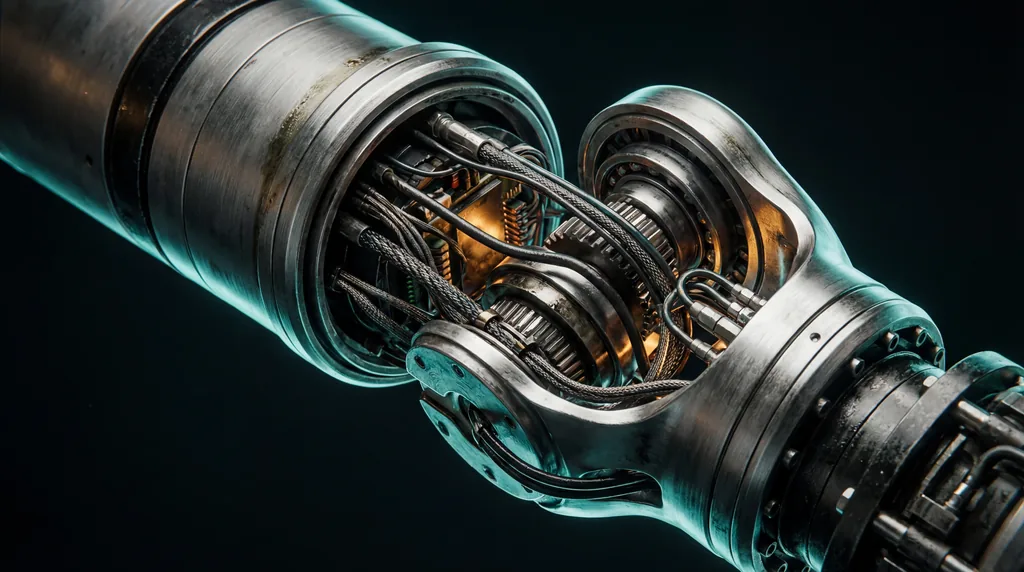

The gap between control theory and practical robot implementations arises from fundamental discrepancies between ideal mathematical safety guarantees and the realities of real-world software execution. While control theory provides a rigorous framework for stability in continuous-time models, the transition to discrete software execution often introduces unmodeled dynamics, approximation errors, and timing inconsistencies. In the pursuit of AGI (Artificial General Intelligence) and fully autonomous systems, these implementation flaws create a significant "reality gap" where theoretical safety fails to manifest in physical hardware.
A controller serves as the critical bridge between a robot's high-level logic and its physical hardware actions. Traditionally, these components are designed using continuous-space equations that assume perfect, instantaneous feedback loops. However, modern robot software operates in discrete time steps, restricted by processor speeds and communication latencies. This research, titled "Beyond the Control Equations: An Artifact Study of Implementation Quality in Robot Control Software," highlights that the leap from math to code is rarely a direct translation. Instead, it is a complex engineering challenge that frequently lacks standardized rigor.
What is the gap between control theory and practical robot implementations?
The gap between control theory and practical robot implementations stems from discrepancies between theoretical mathematical guarantees and real-world software execution, including modeling inaccuracies and actuation mismatches. This "reality gap" means that policies trained in ideal simulations often fail on physical hardware due to low-level controller errors and unmodeled environmental dynamics. Such inconsistencies are a primary hurdle in developing safe AGI systems for physical interaction.
To quantify this disparity, researchers Thorsten Berger, Einar Broch Johnsen, and Nils Chur conducted a large-scale artifact study. They examined 184 real-world controller implementations within open-source robotics projects, many of which utilize the Robot Operating System (ROS). The study sought to identify how developers translate continuous control laws into executable code and whether they maintain the safety guarantees established by the original mathematics. Their findings suggest that the majority of implementations prioritize functional "working" code over theoretical adherence.
The methodology involved a systematic review of application contexts and implementation characteristics. The researchers found that many developers use ad hoc methods for handling discretization, often ignoring the rigorous requirements of real-time systems. This lack of standardization means that two different developers might implement the same control law in ways that produce vastly different stability profiles, particularly when the system encounters edge cases or high-velocity maneuvers.
How does discrete-time implementation affect continuous control theory guarantees?
Discrete-time implementation affects continuous control theory guarantees by sampling continuous laws at finite intervals, which introduces approximation errors that can destabilize systems stable in continuous time. When a robot’s software fails to capture rapid physical changes due to low sampling rates or processing delays, the theoretical stability margins disappear. This leads to performance degradation and potential hardware failure in high-speed or precision-dependent tasks.
One of the most significant issues identified in the study is the presence of timing inconsistencies and jitter. In a theoretical model, the time step is constant and precise; in a real-world software environment, the time between controller executions can vary due to OS scheduling or background tasks. Berger, Johnsen, and Chur noted that few of the 184 implementations they studied included robust mechanisms to compensate for these timing variances. Without such compensation, the mathematical "guarantee" of safety becomes an assumption that may not hold under stress.
Furthermore, the researchers identified a widespread lack of proper error handling in controller code. In continuous-time models, variables are often assumed to be within certain bounds. In practice, sensor noise and actuator delays can push these variables into "undefined" states. The study revealed that many implementations do not adequately account for these real-world constraints, leaving the system vulnerable to erratic behavior or "software crashes" that translate into physical collisions.
- Discretization Errors: The loss of precision when converting continuous integrals and derivatives into discrete sums and differences.
- Control Frequency: The rate at which the software updates its commands, which is often limited by CPU overhead.
- Latency: The delay between sensing an environment change and the actuator responding, which is rarely modeled in basic control equations.
Why is continuous-to-discrete conversion problematic in robotics and AGI?
Continuous-to-discrete conversion is problematic because it approximates ideal models with finite sampling, causing mismatches in contact-rich tasks where precise dynamics are crucial. These errors manifest as unstable grasps, slipping, or erratic vibrations that are absent in theoretical simulations. For systems aiming for AGI-level autonomy, these artifacts represent a critical failure point in ensuring the robot can safely navigate unpredictable human environments.
The "artifact study" performed by the authors highlights that testing practices in the robotics community are often superficial. Rather than using formal verification—a mathematical way of proving code follows a specification—most developers rely on simple unit tests or manual "trial and error" in simulation. While these methods can catch obvious bugs, they are insufficient for verifying that the software preserves the stability guarantees of the underlying control theory.
The researchers also pointed out that the Robot Operating System (ROS), while highly flexible, does not inherently enforce the strict timing required for real-time systems. Developers often build complex controller chains where data passes through multiple software layers, each adding its own layer of non-deterministic delay. This "middleware overhead" further complicates the task of maintaining mathematical correctness, making it difficult to predict how a robot will behave in high-stakes scenarios.
Implications for the Future of Autonomous Safety
The findings of Berger, Johnsen, and Chur serve as a call to action for the robotics community to prioritize implementation quality as a core metric of safety. As robots move from controlled factory floors into homes and hospitals, the margin for error shrinks. The study suggests that current development workflows are "fragmented," with control theorists focusing on the math and software engineers focusing on the code, with very little overlap or verification between the two disciplines.
To bridge this gap, the authors advocate for the development of automated verification tools and standardized libraries for controller implementation. These tools would ideally check whether a piece of C++ or Python code correctly realizes a PID controller or a more complex Model Predictive Control (MPC) algorithm without introducing discretization artifacts. By formalizing the conversion process, the industry can move closer to a future where autonomous robots are as reliable as the mathematical models that describe them.
Looking forward, the research suggests several key areas for improvement in robot software engineering:
- Standardized Discretization Frameworks: Developing libraries that use verified mathematical methods to convert continuous equations to discrete code.
- Real-time Awareness: Building controllers that can dynamically adjust their calculations based on measured execution jitter and latency.
- Formal Verification: Integrating mathematical proofs into the CI/CD (Continuous Integration/Continuous Deployment) pipelines of robotics projects.
- Safety-Critical Design: Shifting the focus from "it works in simulation" to "it is mathematically sound in implementation."
Ultimately, the transition to AGI and pervasive robotics depends not just on smarter algorithms, but on the integrity of the software that executes those algorithms. By addressing the "dirty" reality of code and discretization, researchers can ensure that the safety guarantees of control theory are more than just theoretical ideals—they become physical certainties.




Comments
No comments yet. Be the first!