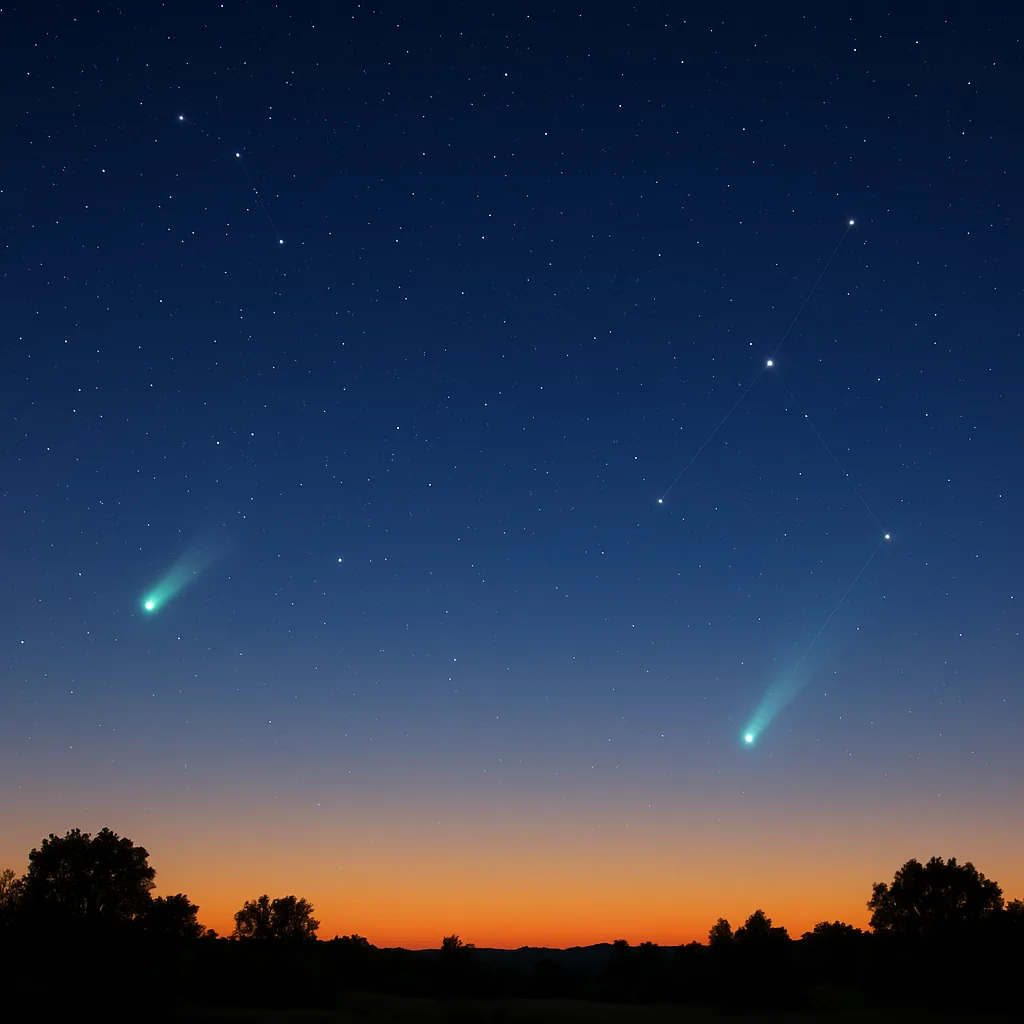
Две кометы будет относительно легко обнаружить на вечернем небе в средних северных широтах в четверг, 23 октября 2025 года. Комета Lemmon (C/2025 A6) — более яркая из этой пары, она появится низко на северо-западе после заката; комета SWAN (C/2025 R2) видна на юго-западе под яркой звездой Альтаир. В ближайшие дни условия станут менее благоприятными, так как обе кометы удаляются от Земли, а растущая Луна будет делать небо всё более ярким.
Основные факты
- Лучшее время для наблюдений: примерно через 90 минут после местного заката в течение около 30 минут.
- Комета Lemmon (C/2025 A6) имеет звездную величину около +4.4 и является более легкой целью.
- Комета SWAN (C/2025 R2) имеет синевато-зеленый оттенок и видна в бинокль.
- Для наблюдения хвостов комет рекомендуется использовать бинокль или небольшой телескоп; темное небо вдали от светового загрязнения обеспечит наилучший вид.
Когда и куда смотреть
Обе кометы видны после заката, но в противоположных частях неба. Ищите их примерно через 90 минут после местного захода солнца — это лучший момент; окно для наблюдений относительно короткое, так как сумерки быстро сгущаются. Пример: в Нью-Йорке (закат ~18:00 по восточному времени 23 октября) идеальное время для наблюдения — примерно с 19:30 до 20:00.
Как найти комету Lemmon (C/2025 A6)
Расстояние от Солнца: 60,3 миллиона миль (97,1 миллиона километров).
Расстояние от Земли: 56,3 миллиона миль (90,5 миллиона километров).
После заката смотрите низко на северо-запад рядом с яркой звездой Арктур. Проследите за изгибом ручки Большой Медведицы в сторону Арктура, затем поднимитесь на пару градусов выше Арктура к звезде Ицар. Комета Lemmon будет находиться в нескольких градусах справа от Ицара. В Нью-Йорке около 19:30 23 октября комета будет находиться примерно в 20 градусах над северо-западным горизонтом и будет опускаться в течение вечера.
Как найти комету SWAN (C/2025 R2)
Расстояние от Солнца: 96,5 миллионов миль (155,3 миллиона километров).
Расстояние от Земли: 25,5 миллионов миль (41 миллион километров).
Комета SWAN будет располагаться низко на юге после заката в созвездии Орла. Она будет находиться прямо под яркой звездой Альтаир, входящей в Летний треугольник, и выше астеризма «Чайник» в созвездии Стрельца. В Нью-Йорке комета будет казаться относительно высоко — около 41 градуса над горизонтом в момент появления.
Советы по наблюдению
- Используйте бинокль, чтобы лучше рассмотреть кометы и их хвосты; небольшой телескоп позволит увидеть больше деталей.
- Найдите темное место вдали от городского освещения; большая высота над уровнем моря и чистое сухое небо улучшают видимость.
- Приложения для созерцания звезд или программы-планетарии, показывающие ночное небо для вашего местоположения, помогут точно определить координаты комет.
- Ожидайте, что в ближайшие дни кометы станут тусклее по мере удаления от Земли; свет от растущей Луны также снизит контрастность позже на этой неделе.
Дополнительное примечание: межзвездный гость
Во внутренней части Солнечной системы также находится межзвездный объект под обозначением 3I/ATLAS. Он гораздо тусклее, и его труднее увидеть, но он примечателен тем, что прибыл из-за пределов Солнечной системы и движется через нее на очень высокой скорости.
Ясное небо и простые оптические приборы увеличат ваши шансы заметить кометы в течение короткого вечернего окна 23 октября.




Comments
No comments yet. Be the first!