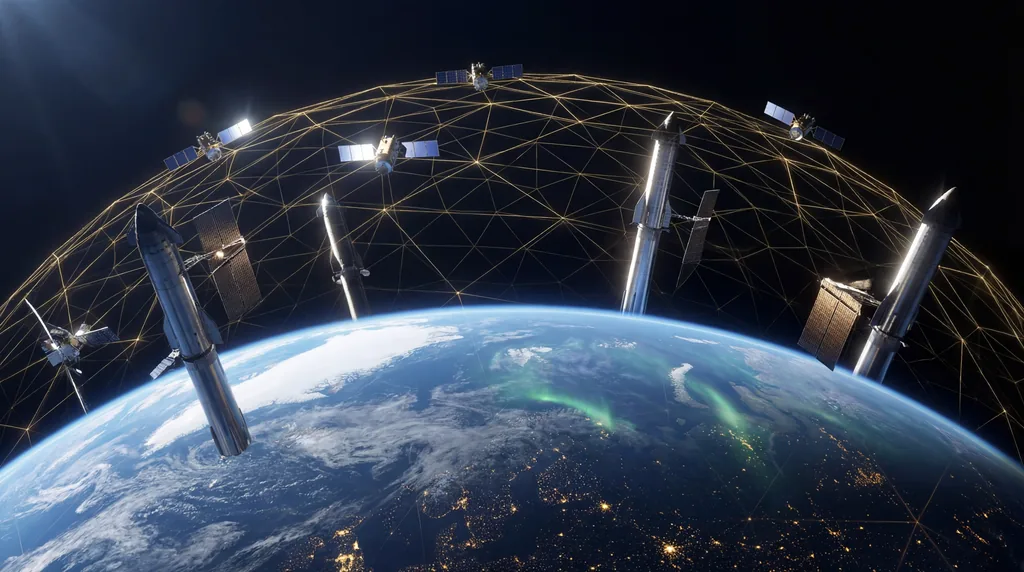

The Golden Dome initiative represents a fundamental shift in United States national security, aiming to establish a seamless, multi-layered shield against ballistic, hypersonic, and cruise missile threats by the year 2026. This ambitious missile defense architecture requires an unprecedented level of real-time coordination between U.S. Space Command (USSPACECOM), U.S. Northern Command (NORTHCOM), and U.S. Strategic Command (STRATCOM) to navigate the extreme speed and complexity of modern global risks. By integrating ground, air, and space-based sensors into a unified fire-control network, the Pentagon seeks to eliminate the traditional boundaries between geographic commands and orbital domains.
Why is coordination between USSPACECOM, STRATCOM, and NORTHCOM unprecedented?
Coordination between these three combatant commands is unprecedented because they are "co-writing" the operational requirements for Golden Dome from its inception to ensure total interoperability. This structural integration allows USSPACECOM to manage orbital sensors, NORTHCOM to execute homeland defense, and STRATCOM to maintain global nuclear deterrence under a single, unified data-sharing framework. This level of collaboration is essential to counter threats that move across multiple jurisdictions in seconds.
Speaking on February 24, 2026, at the Air & Space Forces Association’s Warfare Symposium, Gen. Stephen Whiting, commander of U.S. Space Command, emphasized that the speed of modern warfare has necessitated a "tightly connected" relationship between command offices. To facilitate this, liaison officers have been embedded within the Golden Dome program office for months at a time. The goal is to ensure that as new space-based assets come online, they nest perfectly into existing command and control systems, allowing for split-second decision-making across the entire Department of Defense (DoD) hierarchy.
The methodology behind this collaboration involves an Executive Council where leaders from all three commands support the program manager, Gen. Michael Guetlein. Lt. Gen. Michael Lutton, deputy commander of Strategic Command, noted that this council was tasked directly by the President to ensure that global missile defense planning remains integrated with the nation's nuclear deterrent. By aligning their vision on timelines and follow-on capabilities, the commanders hope to deliver a defensive architecture that is much closer to operational readiness than the previously estimated 2040 timeframe.
How does Golden Dome plan to defend against hypersonic missiles?
Golden Dome plans to defend against hypersonic missiles by utilizing a massive space-based sensor layer capable of tracking high-speed, maneuvering targets throughout their entire flight path. Unlike traditional ballistic missiles that follow a predictable arc, hypersonics glide and maneuver within the atmosphere, requiring low-latency data integration between space assets and atmospheric interceptors. This multi-layered approach ensures that a threat is never "lost" as it transitions between orbital and regional airspaces.
The core challenge of hypersonic defense is the "blurring of domains," a concept Gen. Stephen Whiting highlighted during the symposium. Because hypersonic glide vehicles can move at high speeds within the upper atmosphere and cross multiple combatant command boundaries, a localized defense is no longer sufficient. The Golden Dome architecture addresses this by deploying hundreds, potentially thousands, of satellites that provide a continuous "track-and-custody" chain. These satellites feed real-time targeting data directly into joint fire-control networks, allowing interceptors to be launched with high precision.
Furthermore, U.S. Northern Command (NORTHCOM) plays a critical role in the execution phase of this defense strategy. Gen. Gregory Guillot, commander of NORTHCOM, explained that his command is responsible for defending the continental United States, Alaska, and Canada. By integrating ground-based interceptors in Alaska and California with the new space-based sensing layer, NORTHCOM can better respond to non-ballistic threats that bypass traditional radar systems. This integrated sensing network effectively eliminates the "blind spots" that older, siloed systems once possessed.
Is Golden Dome similar to Israel's Iron Dome?
Golden Dome is fundamentally different from Israel's Iron Dome in scale and scope, as it is designed for continental-scale defense against long-range intercontinental threats rather than short-range rockets. While it shares the "layered" philosophy of the Iron Dome, the Golden Dome must intercept much faster hypersonic and ballistic missiles across the vast expanse of the United States and Canada. It is more accurately compared to a modern, integrated version of the 1980s Strategic Defense Initiative (SDI).
The technical requirements for Golden Dome are exponentially more complex than tactical systems. For instance, the Iron Dome operates within a limited geographic area to protect against unguided, short-range projectiles. In contrast, Golden Dome must account for threats moving at Mach 5 or higher that can maneuver mid-flight. This requires a global sensor network and interceptors that can operate both within the atmosphere and in the vacuum of space. The "Dome" in the project title refers to a conceptual digital and physical shield covering the entire North American continent.
- Scale: Iron Dome covers cities; Golden Dome covers the entire U.S. homeland.
- Threat Profile: Iron Dome targets rockets; Golden Dome targets hypersonics and ICBMs.
- Sensors: Golden Dome relies heavily on a proliferated space layer (satellites) for global visibility.
- Interoperability: Golden Dome requires the coordination of three major military commands (USSPACECOM, NORTHCOM, STRATCOM).
What role does SpaceX play in the Golden Dome initiative?
SpaceX is expected to play a vital role in the Golden Dome initiative by providing the rapid launch capabilities and satellite bus technology required for the program's massive space layer. While the primary planning is led by the Missile Defense Agency (MDA) and the DoD, the sheer volume of satellites needed for low-latency tracking necessitates high-frequency commercial launch partnerships. Leveraging Starlink-derived sensor technology allows for a more resilient and cost-effective orbital network.
Commercial partnerships are essential for the proliferated Low Earth Orbit (pLEO) architecture that Golden Dome relies on. By utilizing companies like SpaceX, the military can deploy "mega-constellations" of sensors that are difficult for adversaries to disable. If one satellite is targeted, dozens of others remain in the network, maintaining a continuous kill chain. This shift toward commercial integration represents a move away from the "exquisite" and expensive satellites of the past toward a resilient, distributed network.
The Missile Defense Agency has already begun exploring how rapid launch capabilities can be used to replace sensors during an active conflict. If an adversary attempts to blind the Golden Dome by attacking its space layer, companies like SpaceX could potentially launch replacement sensors in a matter of days rather than years. This responsive space capability is a cornerstone of the 2026 operational goal, ensuring that the U.S. missile defense shield remains functional even under direct kinetic or electronic attack.
Strategic Implications and the Path to 2026
The transition toward an integrated missile defense shield marks a significant evolution in the global balance of power. As AI and machine learning are increasingly used to process the high-velocity data coming from the Golden Dome sensors, the time between detection and interception will continue to shrink. This technological advantage aims to render modern hypersonic weapons obsolete by removing the element of surprise they currently rely on. For the United States, the successful deployment of this system by 2026 would secure the homeland against a new generation of high-speed threats.
Looking forward, the "What's Next" for Golden Dome involves the final validation of automated command-and-control systems. The three commands—USSPACECOM, NORTHCOM, and STRATCOM—are currently refining the software protocols that will allow data to flow seamlessly between disparate military branches. Gen. Gregory Guillot expressed confidence that many of the necessary capabilities are already available, suggesting that the "Buck Rogers" future of missile defense is arriving much sooner than the public or America's adversaries might anticipate.





Comments
No comments yet. Be the first!