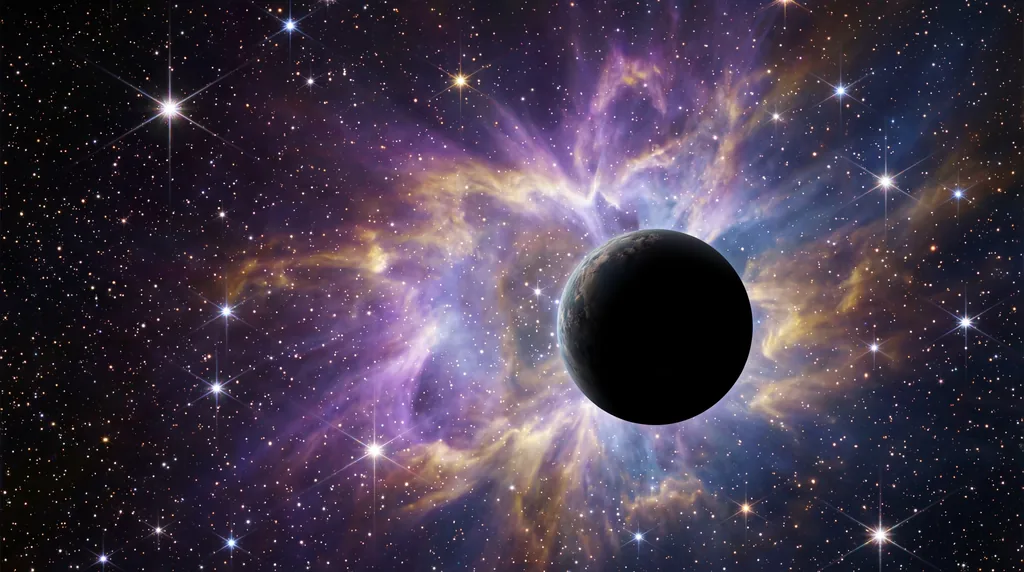

NASA identifies the primary hurdle in exoplanet discovery as the extreme contrast ratio between a host star and its orbiting planets, which can be billions of times brighter than the faint reflected light of an Earth-sized world. This blinding stellar glare, coupled with the tiny angular separation between the objects, necessitates revolutionary starlight suppression technologies to isolate planetary signatures. Current detection methods often struggle with the noise generated by scattered light and stellar radiation, requiring a paradigm shift in how we observe the cosmos to find a "second Earth."
Why is detecting reflected light from exoplanets so challenging?
Detecting reflected light from exoplanets is challenging due to the extreme contrast between the star and planet, which ranges from 10^6 to 10^9, rendering the planet's light billions of times fainter than its host. This massive discrepancy, combined with the minute angular separation between celestial bodies, creates a "searchlight next to a firefly" effect that overwhelms modern sensors.
The physics of reflected light isolation requires overcoming the overwhelming interference of stellar radiation that leaks into telescope optics. To address this, NASA researchers are developing the Hybrid Observatory for Earth-like Exoplanets (HOEE). This concept involves a space-borne starshade—a large, specifically shaped screen—that flies tens of thousands of kilometers in front of a telescope to cast a shadow over the star while leaving the light from the planet visible. This starlight suppression allows for the direct imaging of small, rocky planets that would otherwise remain hidden in the glare of their parent suns.
According to Dr. John Mather, HOEE principal investigator at NASA’s Goddard Space Flight Center, this approach suppresses stellar glare before it even enters the atmosphere. This is crucial because even the best ground-based telescopes are limited by atmospheric turbulence and internal diffraction. By moving the "shield" into space, researchers can achieve a near-perfect shadow, enabling high-contrast imaging that was previously considered impossible. This methodology was recently detailed in the March 2026 issue of Nature Astronomy, highlighting a transformative path for the future of astrophysics.
What biosignatures like water and oxygen are scientists looking for?
Scientists are searching for atmospheric biosignatures such as molecular oxygen, water vapor, methane, and carbon dioxide, which together indicate a chemical imbalance potentially caused by biological activity. Detecting these gases in a planet's spectra provides a chemical fingerprint of the world’s habitability and current state of life.
The quest for biosignatures relies on high-fidelity, wide-band spectroscopy, a technique that analyzes how matter interacts with light. When light reflects off an exoplanet's atmosphere, specific molecules absorb distinct wavelengths. By isolating this reflected light, the HOEE concept allows scientists to identify the presence of liquid water and molecular oxygen. These are critical indicators, as oxygen is highly reactive and would disappear from an atmosphere unless constantly replenished by processes like photosynthesis.
Beyond simple detection, the NASA team aims to differentiate between abiotic processes and genuine biological markers. For instance, oxygen can be produced by the breakdown of water by ultraviolet light, but the presence of both oxygen and methane in specific ratios is a much stronger indicator of biological activity. The research led by Dr. Eliad Peretz and Dr. Stuart Shaklan suggests that the HOEE’s sensitivity could even detect large dwarf planets and complex planetary systems, providing the data needed to conduct deep atmospheric characterization.
Which future NASA space telescopes will use this technology?
Future missions like the Habitable Worlds Observatory (HWO) and the Nancy Grace Roman Space Telescope are primary candidates for implementing advanced starlight suppression and starshade technologies. These observatories are designed specifically to utilize coronagraphs and orbiting shades to capture direct images of Earth-like worlds in the habitable zones of distant stars.
The Nancy Grace Roman Space Telescope, currently undergoing final prelaunch tests, will carry a technology demonstration coronagraph that paves the way for these discoveries. However, the long-term goal lies with the Habitable Worlds Observatory, which NASA envisions as the premier tool for identifying life-bearing planets. The HOEE concept, supported by the NASA Innovative Advanced Concepts (NIAC) program, provides a roadmap for combining these space assets with massive ground-based telescopes, such as the Extremely Large Telescopes (ELTs).
- Nancy Grace Roman Space Telescope: Testing high-contrast imaging and speckle suppression.
- Habitable Worlds Observatory (HWO): The first mission designed specifically to search for biosignatures on 25+ Earth-like planets.
- HOEE Concept: A hybrid model using a starshade in space and a telescope on the ground.
- Starshade Technology: Essential for achieving the 10^-10 contrast ratio required for Earth-sized planet detection.
From Detection to Characterization: A New Era of Discovery
Moving from the simple transit method—where we detect a planet by the shadow it casts on its star—to direct atmospheric analysis marks a new frontier in space exploration. Historically, the Kepler and TESS missions have found thousands of planets, but most are too distant or poorly positioned for us to see their surfaces. The NASA roadmap now focuses on characterization, where we don't just know a planet exists, but we know what its air is made of and whether it has oceans.
The HOEE study, which received Phase I NIAC awards in 2022 and 2025, represents a collaborative effort between NASA’s Jet Propulsion Laboratory, Goddard Space Flight Center, and Ames Research Center. By leveraging architected metamaterials and ultralight starshade designs, the team is working to make these massive structures deployable and stable in the harsh environment of space. This engineering feat is necessary to ensure the shadow remains perfectly centered over the telescope for the hours required to collect enough light for a spectral reading.
As of March 24, 2026, observational conditions on Earth remain a vital component of this hybrid approach. While space telescopes provide clarity, ground-based components offer the sheer light-collecting power of 30-meter mirrors. Interestingly, as researchers look outward, Earth’s own atmosphere continues to provide data; for instance, current solar activity has resulted in a Quiet intensity aurora, visible primarily in Tromsø, Norway (69.6° N), reminding us of the dynamic interaction between stars and planetary atmospheres that we hope to witness in other solar systems.
What's next for the search for life? The KISS team will convene in March 2026 for a workshop at the Caltech Keck Institute of Space Studies to refine the engineering roadmap for the starshade. The ultimate goal is a buildable, scalable system that can be launched within the next decade. By suppressing the glare of the stars, NASA is finally peeling back the curtain on the universe, moving us closer to answering the age-old question: Are we alone?





Comments
No comments yet. Be the first!