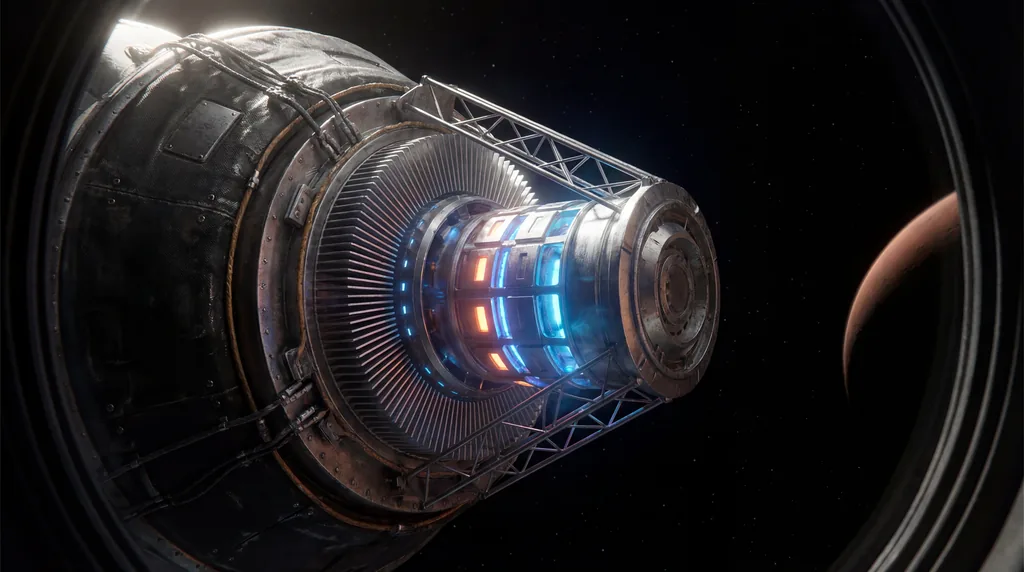

NASA has officially unveiled the Space Reactor-1 (SR-1) Freedom mission, a groundbreaking initiative slated for 2028 that will deploy the first fission nuclear-powered spacecraft to Mars. Under the leadership of Administrator Jared Isaacman, the agency plans to utilize high-efficiency nuclear electric propulsion (NEP) to significantly reduce transit times and increase payload capacity for deep-space exploration, marking a pivotal transition from traditional chemical-based propulsion to advanced nuclear systems. This mission represents a strategic shift in the NASA roadmap, prioritizing the validation of power-dense nuclear hardware to sustain a long-term human presence on the Red Planet.
How does nuclear electric propulsion work on SR-1 Freedom?
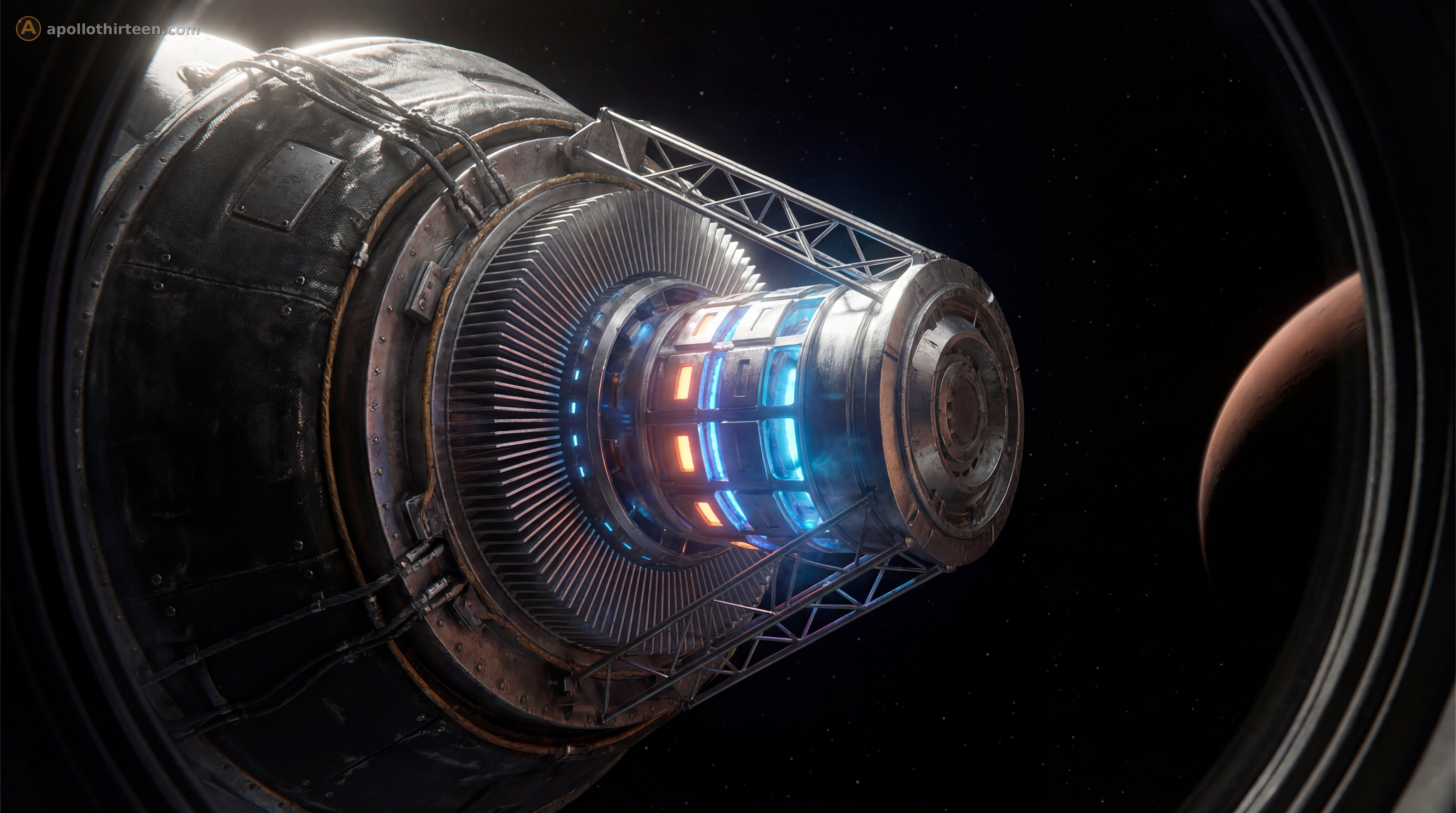
The SR-1 Freedom uses nuclear electric propulsion (NEP) with a 20-plus kilowatt fission reactor fueled by High-Assay Low-Enriched Uranium (HALEU) and Uranium Dioxide, encased in a Boron Carbide Radiation Shield. A closed Brayton cycle power conversion system converts the reactor's thermal energy into electricity, which powers xenon ion thrusters for propulsion. This differs from nuclear thermal propulsion by generating electricity rather than direct thrust from heated propellant.
The core of the SR-1 architecture lies in its ability to decouple energy generation from propellant mass. Unlike chemical rockets, which rely on short, violent bursts of energy from combustion, nuclear electric propulsion provides a continuous, low-thrust acceleration that can operate for months or years. By leveraging HALEU fuel, the reactor achieves a higher energy density than conventional solar-powered systems, which lose efficiency as a spacecraft moves further from the Sun. This technological leap allows the Freedom mission to carry heavier scientific instruments while maintaining a leaner propellant profile.
Thermal management is a critical component of the SR-1 design. The fission process generates significant heat, which must be efficiently harvested or radiated away to prevent hardware degradation. The closed Brayton cycle utilizes a gas mixture to spin a turbine, creating a highly efficient loop that maximizes electrical output. To protect sensitive onboard electronics and potential future crew modules, NASA engineers have integrated a multi-layered Boron Carbide Radiation Shield, ensuring that the ionizing radiation from the core is directed away from the spacecraft’s primary bus and payload sections.
Why is NASA repurposing Lunar Gateway hardware for Mars?
NASA is repurposing the Power and Propulsion Element (PPE) from the Lunar Gateway to serve as the spacecraft bus for SR-1 Freedom, maximizing use of existing taxpayer-funded hardware. This redirection supports the Mars mission while pausing Lunar Gateway development to prioritize a permanent lunar surface habitat. The PPE provides ion thrusters, power systems, and solar panels that generate electricity when the reactor is inactive.
This strategic pivot is designed to accelerate the development timeline for the 2028 launch. By utilizing the Power and Propulsion Element (PPE)—a module originally destined for the lunar orbit—the agency avoids the "clean sheet" design phase that typically delays deep-space missions by decades. The PPE has already undergone significant testing and integration, making it a "flight-ready" platform capable of supporting the massive power requirements of the Freedom reactor. This synergy between the Artemis lunar goals and Mars exploration demonstrates a new era of modular mission planning at NASA.
The integration of existing hardware also serves a dual purpose in power redundancy. While the SR-1 Freedom reactor will be the primary source of energy during the deep-space transit, the PPE’s high-performance solar arrays will remain functional. These arrays provide a secondary power source during the initial departure from Earth's orbit and act as a backup system should the reactor require maintenance. This hybrid approach ensures that the mission remains viable even in the extreme environment of the inner solar system, where hardware reliability is the difference between success and catastrophic failure.
What are the primary goals of the SR-1 Freedom 2028 mission?
The primary goals of the SR-1 Freedom 2028 mission are to demonstrate advanced nuclear electric propulsion in deep space and establish flight heritage for nuclear hardware. It will deliver the Skyfall payload of three Ingenuity-class helicopters to Mars to survey human landing sites, search for subsurface water ice using ground-penetrating radar, and relay critical data back to Earth before subsequent human arrivals.
A major objective of this mission is the validation of fission reactor stability within the harsh vacuum and high-radiation environment of interplanetary space. NASA researchers intend to monitor the reactor's performance throughout the long-duration transit to ensure that the fission core maintains consistent power output without fuel cladding degradation. Successfully establishing "flight heritage" for this hardware is a prerequisite for more ambitious missions, such as the proposed Lunar Reactor-1, which would provide base power for a permanent moon colony.
The scientific return of the mission is spearheaded by the Skyfall payload. These three advanced helicopters, building on the legacy of the Ingenuity Mars helicopter, will be deployed upon arrival to conduct high-resolution aerial surveys. Equipped with ground-penetrating radar and multispectral cameras, these scouts will hunt for subsurface water ice—a critical resource for fuel production and life support for future astronauts. By mapping these deposits, the SR-1 Freedom mission provides the logistical foundation for the first human landing sites on Mars.
Safety and Regulatory Framework for Nuclear Spaceflight
Launching a nuclear-equipped spacecraft requires stringent safety protocols and international coordination. NASA, in conjunction with the Department of Energy (DOE) and the Office of Science and Technology Policy, has established rigorous guidelines for the launch of HALEU-fueled systems. The SR-1 reactor is designed to remain "cold" or subcritical during the launch phase, only achieving criticality once the spacecraft has reached a sufficiently high "nuclear safe" orbit, far beyond the reach of Earth's atmosphere. This ensures that in the event of a launch vehicle failure, no radioactive material would pose a threat to the biosphere.
International planetary protection guidelines also play a significant role in the mission's trajectory and landing protocols. NASA is committed to ensuring that the SR-1 Freedom mission does not contaminate "special regions" on Mars where indigenous microbial life might exist. The use of nuclear electric propulsion actually aids in these efforts by allowing for more precise orbital insertions and landing maneuvers, reducing the risk of unintended impacts. As the 2028 launch window approaches, these safety standards will serve as the global benchmark for the future of nuclear-powered space exploration.
The Future of Interplanetary Transit
The success of the SR-1 Freedom mission will likely signal the end of the chemical propulsion era for long-distance space travel. As NASA looks beyond 2028, the lessons learned from the fission-based Brayton cycle and NEP systems will be applied to larger, crew-rated vessels. These future ships could theoretically cut the travel time to Mars from nine months to less than four, drastically reducing the radiation exposure and physiological toll on human crews. By turning the "Space Reactor" concept into a flight-proven reality, the Freedom mission is not just a scientific endeavor; it is the cornerstone of humanity's expansion into the solar system.
- Launch Date: Late 2028
- Reactor Type: Fission-based SR-1 Freedom
- Fuel: High-Assay Low-Enriched Uranium (HALEU)
- Propulsion: Nuclear Electric (NEP) with Xenon Ion Thrusters
- Primary Payload: Skyfall (Three Mars Helicopters)
- Collaborators: NASA, DOE, and various private aerospace partners




Comments
No comments yet. Be the first!