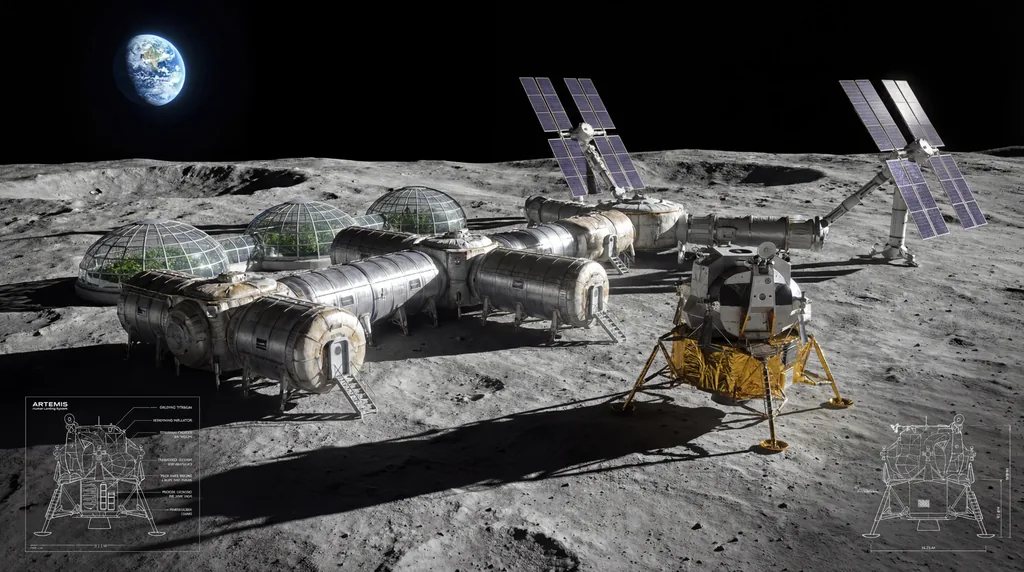

NASA has officially halted development of the orbital Lunar Gateway to prioritize the construction of a permanent lunar base on the Moon's surface. This strategic pivot, announced on March 24, 2026, aims to streamline the Artemis Program by redirecting $20 billion over the next seven years toward surface-focused infrastructure. NASA Administrator Jared Isaacman confirmed that while orbital logistics remain a future possibility, the agency's immediate focus must shift to surface operations to ensure a sustained human presence and achieve the "Moon to Mars" objectives more efficiently.
Why did NASA decide to halt the Gateway program?
NASA halted the Gateway program to eliminate technical complexity and high costs that were diverting resources from direct lunar surface missions. By removing the orbital station from the immediate critical path, the agency can accelerate the development of surface-based power, habitation, and mobility systems necessary for long-term human survival. This decision allows for a significant increase in mission cadence and more direct investment in ground-based scientific research.
Strategic resource allocation drove the decision to sideline the Gateway, as officials concluded the orbital outpost was not strictly required for near-term surface goals. Carlos Garcia-Galan, the program executive for NASA’s moon base effort, stated that while the Gateway architecture is relevant for deep space exploration, it is no longer the primary objective for the current phase of the Artemis Program. By pivoting now, the agency avoids the "sunk cost" of an orbital platform that might delay a permanent surface presence until the 2030s.
Economic and legislative factors also played a role in this transition. Last July, a budget reconciliation bill provided $2.6 billion for the Gateway; however, NASA leadership now believes these funds are better spent on Commercial Lunar Payload Services (CLPS) and advanced surface robotics. The agency intends to work with Congress to seek approval for this redirection, emphasizing that sustained operations on the lunar south pole offer a higher return on investment for both science and international diplomacy.
How does the new lunar base plan differ from the Gateway?
The new lunar base plan replaces the orbiting Gateway hub with a three-phase surface development strategy focused on the lunar south pole. Unlike the Gateway’s orbital logistics, the surface base emphasizes immediate infrastructure like the MoonFall hopping drone and simplified Lunar Terrain Vehicles to support twice-yearly crewed missions by 2031. This "ground-up" approach prioritizes in-situ resource utilization and long-duration habitation directly on the regolith.
Phase 1 of the new architecture, spanning 2026 to 2028, focuses on "getting to the moon reliably" through a surge in uncrewed lander missions. During this period, NASA will spend approximately $10 billion to establish "ground truth" at potential base locations. This phase is critical for identifying water ice and stable terrain, leveraging the CLPS program to deliver scientific instruments that will inform the construction of permanent structures in later years.
Phase 2 and Phase 3 will transition from exploration to industrialization and long-term residency. Between 2029 and 2031, NASA expects to invest another $10 billion to build out power grids, navigation beacons, and communication arrays on the surface. By 2032, the focus will shift to Phase 3, which enables routine logistics and uncrewed cargo return missions. This phase aims to support "long distance and long duration human exploration," transforming the Moon from a destination into a functional deep space outpost.
- Phase 1 (2026-2028): Increased landing cadence and site characterization at the south pole.
- Phase 2 (2029-2031): Infrastructure deployment, including power and navigation, and two crewed missions per year.
- Phase 3 (2032+): Sustained habitation and uncrewed cargo return to Earth.
Will the Artemis program continue without the Gateway?
Yes, the Artemis Program will proceed by repurposing existing hardware and shifting the workforce focus toward the lunar surface. NASA plans to adapt modules like the Habitation and Logistics Outpost (HALO) and the Power and Propulsion Element (PPE) for ground-use or other mission architectures. This ensures that the technical progress made over the last several years is integrated into the permanent lunar base rather than discarded.
Repurposing established technology is a cornerstone of this new strategy to maintain momentum without starting from scratch. Carlos Garcia-Galan noted that the agency will leverage the avionics and systems developed for the Mars helicopter, Ingenuity, to create the MoonFall drone. This hopping robot will allow researchers to explore craters and difficult terrain around the base, providing a level of mobility that an orbital station could never offer. Similarly, the Lunar Terrain Vehicle (LTV) program is being revamped to deliver simplified, upgradeable rovers to the surface much faster than previously projected.
International and commercial partnerships will remain vital, though their roles will necessarily shift from orbital support to surface operations. NASA’s partners—including ESA (Europe), JAXA (Japan), CSA (Canada), and the UAE—have already invested heavily in Gateway modules. NASA officials have indicated they are in discussions to reshape these contributions to fit the surface base model. While the specific details of these reshaped agreements have not yet been disclosed, the goal is to maintain a unified international coalition for lunar exploration.
The future of deep space exploration under this new plan aligns more closely with the ultimate goal of reaching Mars. By mastering surface habitation and resource management on the Moon, NASA intends to build the expertise required for a multi-year mission to the Red Planet. Administrator Isaacman emphasized that while the orbital outpost is sidelined for now, the transition to the lunar surface provides the "advantages of local presence," creating a more robust foundation for humanity's expansion into the solar system.





Comments
No comments yet. Be the first!