March 14, 1879: a birth that reshaped physics
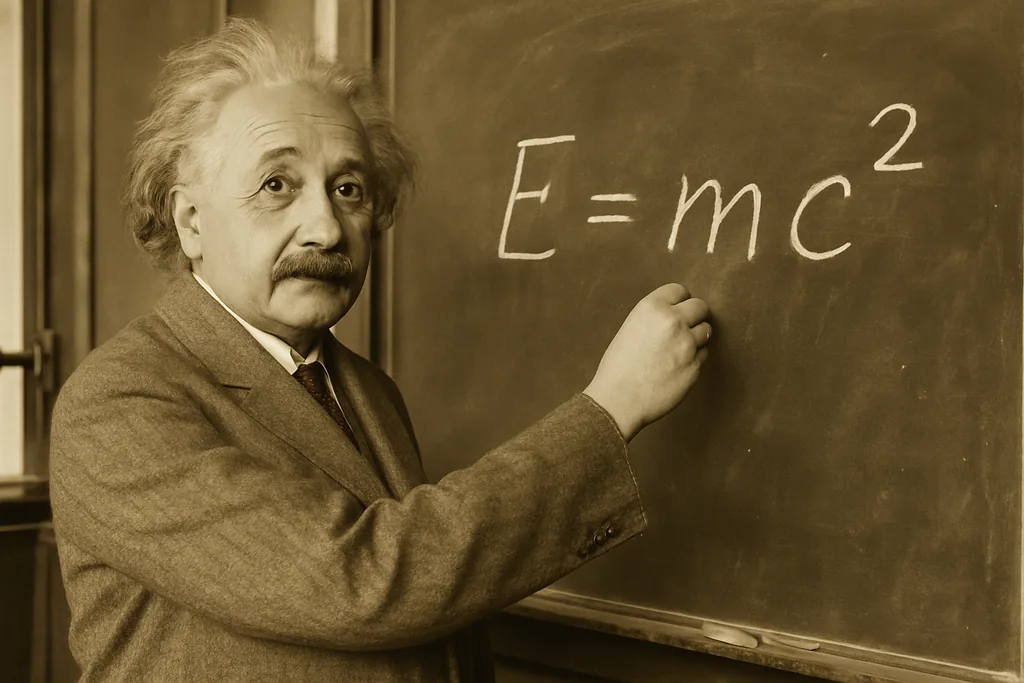
Today history: March 14 carries a double resonance — it is the date on which Albert Einstein was born, in Ulm, Germany, in 1879, and it is now widely observed as a day to recall the sweep of events that the date has accumulated. Einstein's birth in a modest house on the banks of the Danube marked the arrival of a thinker whose ideas would overturn familiar notions of space, time and energy and change how scientists model the universe. He grew from an inquisitive child into a scientist whose 1905 papers and later work gave us the special and general theories of relativity, E = mc², and definitive contributions to quantum theory and the explanation of Brownian motion.
Today history: March 14 — what else happened on this date
March 14 is studded with other historical signposts. In 1794, Eli Whitney received a patent for the cotton gin, a machine that reshaped agriculture and trade in the United States. In 1900 President William McKinley signed the Gold Standard Act. The date also carries somber chapters: in 1964 Jack Ruby was convicted in Dallas, and in 1980 a LOT Polish Airlines jet crashed near Warsaw. Political transitions and milestones have fallen on March 14 as well — in 1990 Mikhail Gorbachev was elevated to a new presidency in the Soviet system, and in 2013 Xi Jinping was elected president by the National People’s Congress. The roster of space and science moments includes 1995, when Norman Thagard became the first American to fly to space aboard a Russian Soyuz rocket bound for Mir. More recently, March 14 is also the date observers mark the 2018 death of Stephen Hawking, another giant in theoretical physics.
Einstein's origins and early life in Ulm
Albert Einstein was born on March 14, 1879, in Ulm, in the Kingdom of Württemberg, part of the German Empire. The son of Hermann and Pauline Einstein, he spent his early years in southern Germany before his family moved to Munich and later Milan and Pavia as his father's business fortunes changed. These moves exposed him to a mix of formal and autodidactic learning: Einstein later described how a compass and early encounters with geometry and physics stirred a lifelong curiosity about nature's order. He trained as a student of physics and mathematics, and his formative years combined disciplined study with a deep, sometimes solitary habit of thought experiments — imaginative probes that would underpin much of his later theoretical work.
Einstein's scientific legacy and major contributions
Einstein's name is shorthand for a set of revolutionary ideas. He first came to international attention in 1905, his so-called annus mirabilis, when he published four short papers that reshaped physics. One introduced the idea that light could be thought of as quanta — photons — explaining the photoelectric effect; that work won the Nobel Prize in Physics in 1921. Another 1905 paper set out the Special Theory of Relativity, which redefined simultaneity and demonstrated that measurements of space and time depend on the observer's motion. From that theory came the iconic formula E = mc², a concise statement of mass–energy equivalence with profound implications for both fundamental science and the later development of atomic energy.
Einstein continued to refine and generalize these ideas, publishing the General Theory of Relativity in 1915. This was not a tweak to Newtonian gravity but a new conceptual framework: gravity became geometry. Massive objects curve spacetime, and that curvature tells other objects how to move. General relativity predicted phenomena such as the bending of starlight by the Sun and the precession of planetary orbits; empirical confirmation in the 1919 solar eclipse helped cement Einstein's fame. Beyond relativity, Einstein made essential contributions to statistical physics and the study of Brownian motion, helping to confirm the atomic hypothesis, and he engaged deeply — sometimes contentiously — with the emerging quantum theory, arguing for caution about its philosophical completeness even as his early work had helped to build it.
Einstein and the public life of science
Einstein became, in the first half of the 20th century, one of the world's best-known scientists. His scientific acclaim and moral voice placed him at the intersection of science, politics and public life. He was a committed pacifist in many periods of his life but later warned about the dangers of fascism and urged the Allied powers to take steps that would lead to the development of nuclear weapons rather than allow Nazi Germany to obtain them. After relocating to the United States in the 1930s and taking a position at the Institute for Advanced Study in Princeton, he continued to comment on social issues, civil rights and international cooperation. Einstein's stature made him a public interpreter of science even as his work continued to inspire technical advances in cosmology, astrophysics and quantum physics.
Why Einstein matters to science and technology today
Einstein's ideas are not relics; they are foundational to technologies and research programs in the 21st century. Global positioning systems (GPS) rely on corrections from both special and general relativity to deliver the precise timing needed for everyday navigation. In astrophysics, general relativity is essential for modeling black holes, gravitational waves, and the dynamics of the expanding universe; Einstein's equations are used daily by researchers analyzing data from gravitational-wave observatories and radio telescopes. Even debates over the interpretation of quantum mechanics often invoke Einstein's early doubts and famous thought experiments, such as the EPR paradox, which spurred later work on entanglement and quantum information.
How March 14 entered public culture
Beyond the archival records of births and patents, March 14 has acquired cultural resonances. In many countries today the date is recognized as Pi Day — a playful celebration of the mathematical constant π that matches the date's numeric form (3/14). That coincidence has helped make Einstein's birthday a day when science outreach and public events often coincide with mathematics celebrations, classroom activities and museum programming. The alignment of a luminary's birthday with a mathematician's day has proved convenient for educators aiming to connect physics, mathematics and public curiosity.
Remembering March 14 across disciplines
On any given March 14 official commemorations, museum exhibits and classroom lessons draw lines between the personal history of figures such as Einstein and larger trends in science, politics and culture. The date offers a convenient anchor for recalling how a single life can intersect with broader historical forces: industrial inventions and economic policy in the 18th and 19th centuries, geopolitical shifts in the 20th, and scientific milestones in exploration and theory. For historians and scientists alike, March 14 is productive because it layers those stories — invention, governance, flight, war, exploration and theory — around a single remembered birthday.
Sources
- Carnegie Institution for Science / Mount Wilson Observatory (historical records)
- Nobel Foundation (Nobel Prize in Physics, 1921)
- Albert Einstein Archives, Hebrew University of Jerusalem



Comments
No comments yet. Be the first!