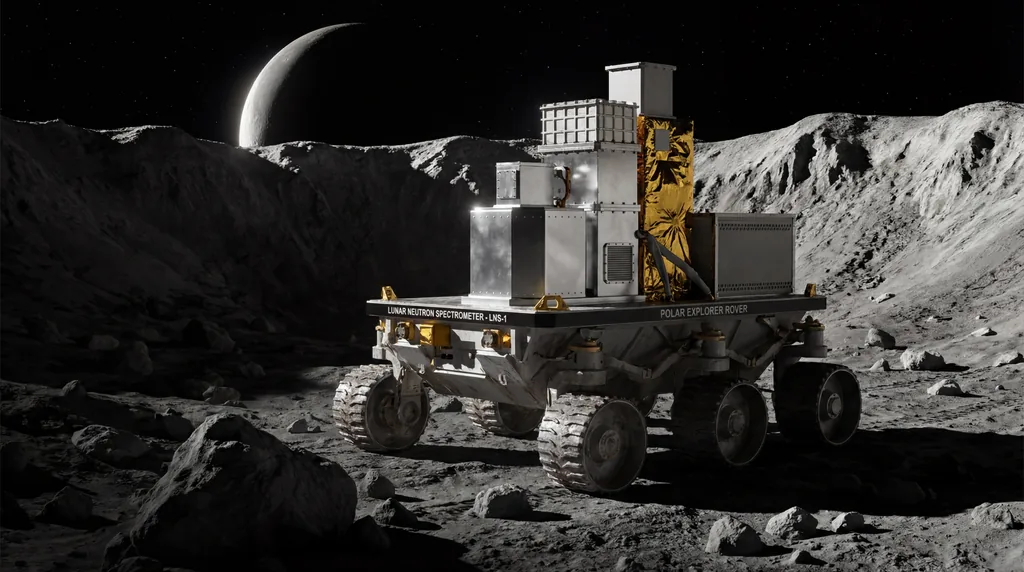

The LUPEX (Lunar Polar Exploration) mission is a landmark international collaboration between JAXA and ISRO, designed to explore the Moon’s South Pole to determine the quantity and distribution of subsurface water ice. By deploying a sophisticated rover to permanently shadowed regions, the mission aims to validate the availability of local resources necessary for sustainable human habitation and fuel production. This joint effort, which includes a critical water-detecting instrument from NASA, represents a pivotal step in transitioning from lunar observation to active resource utilization.
What is the LUPEX mission and why is it important?
The LUPEX mission is a strategic partnership between the Japan Aerospace Exploration Agency (JAXA) and the Indian Space Research Organisation (ISRO) to scout the lunar South Pole for volatiles. By utilizing a JAXA-built rover and an ISRO-developed lander, the mission seeks to map water ice deposits that could support future Artemis astronauts. This research is vital because it provides the ground-truth data needed to transform the Moon from a remote celestial body into a functional base for deep-space exploration.
Scheduled for launch no earlier than 2028, the Lunar Polar Exploration mission will target the Lunar South Pole, a region characterized by extreme terrain and constant shadows. Unlike previous orbital surveys that provided broad-stroke data, LUPEX will operate directly on the surface, allowing scientists to analyze the lunar regolith at a granular level. The integration of NASA’s Neutron Spectrometer System (NSS) onto the rover allows for a precise "search-and-characterize" operation that is essential for identifying landing sites for human-led missions.
The mission’s importance extends beyond pure science; it is a fundamental test of In-Situ Resource Utilization (ISRU). Extracting water from the Moon would drastically reduce the cost of space travel, as water can be processed into breathable oxygen and hydrogen rocket fuel. According to researchers at NASA’s Ames Research Center, understanding the "small-scale distribution" of this ice—ranging from centimeters to kilometers—is the missing link in our current lunar models. LUPEX aims to bridge this gap, providing a roadmap for the next century of lunar activity.
Why is the Moon’s South Pole the 'holy grail' for future exploration?
The Moon’s South Pole is considered the 'holy grail' because its permanently shadowed regions (PSRs) act as cosmic refrigerators, trapping water ice and other volatile chemicals for billions of years. These craters never receive direct sunlight, creating temperatures cold enough to preserve hydrogen-rich materials just beneath the surface. Detecting and harvesting these resources is the primary objective for agencies like NASA to enable a permanent human presence on the Moon.
Exploration of the South Pole is technically challenging but scientifically rewarding due to these "cold traps." These regions, such as the Shackleton Crater, contain concentrations of hydrogen that suggest the presence of substantial ice deposits. For decades, orbital missions have hinted at this frozen wealth, but surface-level verification is required to determine if the ice is accessible for human life support. Mapping these deposits allows mission planners to identify "high-yield" areas where future bases could be constructed near essential supplies.
Beyond its resource potential, the South Pole offers unique geological insights into the history of the solar system. The ice trapped in these shadows may contain cometary material and ancient volatiles that have remained undisturbed since the Moon’s formation. By studying these samples, NASA and its partners are not just looking for fuel; they are looking into a prehistoric record of the celestial environment. The success of the LUPEX mission will determine whether these resources are concentrated enough to sustain a long-term lunar colony.
How will international partners (NASA, JAXA, ISRO) work together on this mission?
In the LUPEX mission, international cooperation is divided by technical specialty: JAXA provides the H3 launch vehicle and the lunar rover, while ISRO develops the precision lander system. NASA contributes the Neutron Spectrometer System (NSS) to detect hydrogen, and the European Space Agency (ESA) provides mass spectrometers for chemical analysis. This synergy allows each agency to leverage its unique strengths to solve the complex problems of polar lunar survival.
The Neutron Spectrometer System (NSS), developed at NASA’s Ames Research Center in collaboration with Lockheed Martin Advanced Technology Center, is a centerpiece of this collaboration. As the rover traverses the difficult lunar terrain, the NSS will constantly scan the ground for neutron signatures that indicate the presence of hydrogen. This data will be shared across the participating agencies, fostering a global scientific database that accelerates the timeline for the Artemis program and other international lunar goals.
This partnership also serves as a model for the future of space diplomacy and resource management. By combining ISRO’s proven landing capabilities—demonstrated by the Chandrayaan-3 mission—with JAXA’s advanced robotics and NASA’s sensor technology, the mission reduces individual risk while maximizing scientific output. The collaboration ensures that the data gathered is robust, peer-reviewed, and applicable to a wide variety of future spacecraft and habitats designed by different nations.
How does the Neutron Spectrometer System (NSS) detect subsurface water?
NASA’s Neutron Spectrometer System (NSS) detects water by measuring the energy of neutrons that bounce off the lunar soil after interacting with hydrogen atoms. Because hydrogen atoms are roughly the same mass as neutrons, they effectively "slow down" these particles upon impact. By counting the deficit of medium-energy neutrons, the NSS can infer the presence of hydrogen—and thus water ice—up to three feet below the surface without the need for immediate drilling.
The technical heart of the NSS is its gas proportional counter, which utilizes two tubes filled with helium-3, a rare and highly sensitive gas. When neutrons strike the helium-3 atoms, they generate distinct electrical pulses that the instrument records and translates into hydrogen concentration maps. Rick Elphic, the NSS lead at NASA Ames, notes that surface exploration is the only way to truly understand the distribution of lunar ice, as orbital measurements lack the resolution to identify small-scale deposits.
- Neutron Interaction: Cosmic rays constantly strike the Moon, kicking neutrons out of the soil.
- Hydrogen Buffering: If hydrogen (from water) is present, it absorbs the energy of these neutrons.
- Data Interpretation: A lower count of fast-moving neutrons signals a higher concentration of subsurface ice.
- Depth Range: The NSS is capable of "seeing" into the lunar regolith to a depth of approximately one meter (three feet).
What are the implications for the future of lunar habitation?
The ability to locate and harvest lunar water is the "force multiplier" for NASA’s goal of establishing a sustainable presence on the Moon. If the LUPEX mission confirms significant ice deposits, it will validate the Artemis architecture, which relies on using local resources to reduce the mass—and therefore the cost—of supplies launched from Earth. Success here could transform the Moon into a stepping stone for Mars, serving as a refueling station in deep space.
Furthermore, the NSS is part of a broader "series of water-hunters" designed by NASA to ensure mission redundancy and data cross-validation. While an earlier version of the NSS aboard the Astrobotic Peregrine mission provided valuable data on deep-space particles, the LUPEX deployment will be its most critical test on a planetary surface. As NASA prepares for the Artemis II and III missions, the data provided by the NSS will help refine landing zones where astronauts can safely access water for life support systems.
Looking ahead, the LUPEX mission sets the stage for a new era of lunar industrialization. Once the "where" and "how much" of lunar water are established, the focus will shift from exploration to extraction. The technologies refined during this mission—ranging from autonomous rover navigation in extreme cold to high-sensitivity neutron spectroscopy—will become the standard for future missions to Mars and beyond. By scouting the Moon’s South Pole today, NASA and its international partners are securing the foundation for humanity’s future among the stars.





Comments
No comments yet. Be the first!