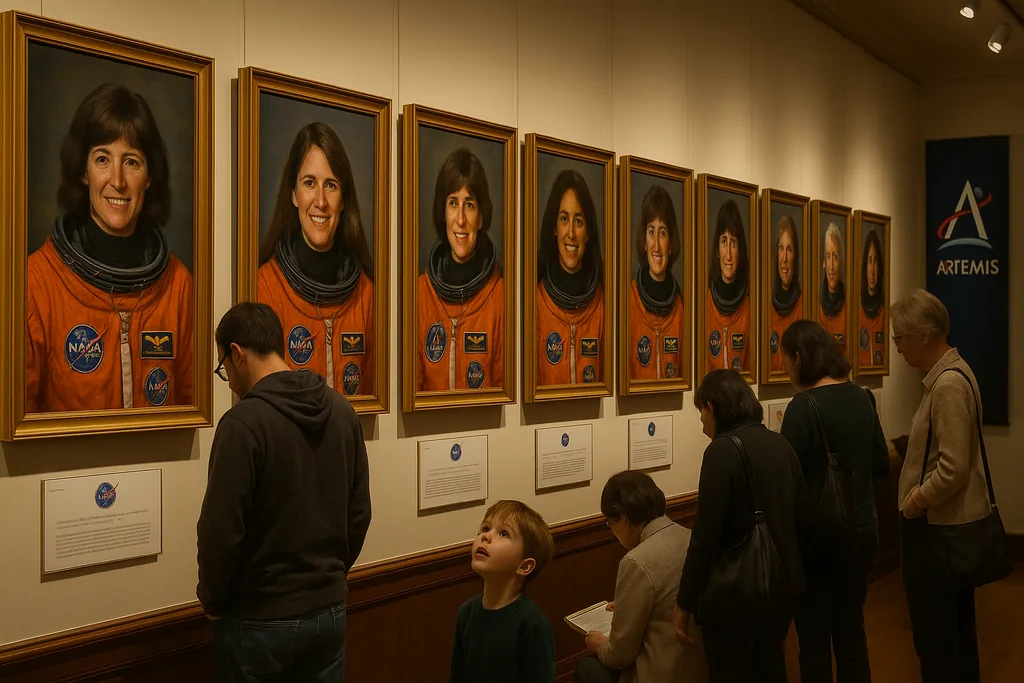
Women space gallery reflects history and hard numbers
Women space gallery reflects the early exclusions — Mercury 13 to Soviet firsts
The gallery opens with the paradox of the early space age: the Soviet Union put the first woman into orbit — Valentina Tereshkova on Vostok 6 in June 1963 — while in the United States a privately run program showed that women could pass the same grueling physiological tests given to male astronaut hopefuls yet still be kept from official selection. Tereshkova’s flight remains a hard historical marker; the parallel story of the American "Mercury 13" — women who underwent Lovelace Clinic testing in the late 1950s and early 1960s but were never integrated into NASA’s astronaut corps — is a centerpiece of the museum’s early displays. Those exhibits link policies (military test-pilot hiring rules, social expectations about gender) with individual careers that were delayed or derailed by institutional choices.
The gallery also highlights milestone names whose biographies became shorthand for particular barriers being breached: Sally Ride, the first American woman in space in 1983 after NASA opened selections to women in the 1970s; Mae Jemison, who in 1992 became the first Black woman to fly aboard Space Shuttle Endeavour; and later figures whose long careers changed what a space résumé could look like. By pairing archival press clippings with oral-history excerpts and personal artifacts, the exhibit turns abstract policy debates into face-to-face stories.
What visitors learn: representation, role models and museum pedagogy
Visitors to the women-focused gallery do more than tick historical boxes: they see the mechanics of exclusion (selection rules, educational pipelines, cultural attitudes) and the tangible benefits of representation. The museum frames this as civic education: photographs of international women astronauts — from Canada, Japan, France, Russia and elsewhere — remind visitors that human spaceflight is not a single nation’s story, while panels that explain career pathways show how mentorship, advanced STEM training and policy change combine to open access. The exhibit’s designers deliberately include emotional first-person testimony so that the lesson isn’t merely statistical; one visitor described weeping upon recognizing a personal lineage of aspiration that had been absent in earlier museum collections.
Changing pipelines: from token milestones to systematic shifts
The gallery traces how the pathways into space changed across decades: a mid-century model that favored military test pilots gradually gave way to a more diverse portfolio of scientists, engineers and physicians. That shift is not just semantic. It changed who could qualify as an astronaut and, in turn, who could be visible to younger generations. The museum places this evolution beside artifacts from the Artemis-era workforce: training photos, mission patches and oral histories that speak to mentorship networks and new recruitment practices.
One of the clearest indicators of that pipeline change came in NASA’s most recent selections: the 2025 Astronaut Candidate Class announced in September included a majority of women (six women and four men), a first for NASA and a concrete sign the candidate pool and selection criteria are yielding different outcomes. The gallery uses that announcement as a bridge between history and what might happen on the lunar surface in coming years.
Women space gallery reflects Artemis-era aspirations
The museum places the Artemis program at the heart of its forward-looking narrative. NASA has made landing the first woman and the first person of color on the Moon a stated objective of Artemis; the gallery treats that goal not as symbolic tokenism but as the product of decades of workforce change, international partnerships and new mission architectures. Panels explain Artemis missions, the role of Orion and SLS systems, and how extended lunar operations will require engineers, scientists and mission specialists from more varied career paths than Apollo did. The gallery pairs technical schematics with personal portraits so visitors understand that lunar missions are both engineering projects and social projects about who gets to participate.
From emotional response to civic action: how galleries inspire next steps
The physical experience of the gallery — a corridor of portraits, a wall of mission patches, hands-on STEM stations for school-age visitors — is designed to transform empathy into action. The museum emphasizes mentorship stories and local education initiatives, with take-home resources tied to community college programs, teacher-training workshops and regional internship pipelines. These pragmatic elements are key: representation in museums can spark individual ambition, but sustainable change requires institutions to build pathways that translate inspiration into higher-education seats, apprenticeships and workforce-entry points.
Curators told local reporters they intentionally named the gallery after Karan Conklin to link commemoration with community stewardship: the gallery is meant to be both a memory and a resource, a place where historical lessons meet practical opportunities. Those choices make clear how public history institutions can play a role in recruitment and retention, not just celebration.
Why the past matters as Artemis unfolds
Understanding the early exclusions — the Mercury 13, the long lag between the Soviet first and the first American woman, and the slow acceptance of women into military and test‑pilot pipelines — helps explain why policy, mentoring and recruitment still matter. The gallery’s chronological arc shows that representation did not arrive by accident; it was the product of legal changes, shifting military policies, advocacy, and visible role models that altered younger generations’ sense of possibility. By presenting those forces side-by-side, the exhibit encourages a more structural view of progress: that inclusion requires sustained institutional change, not occasional milestones.
That perspective is particularly timely as Artemis moves from test flights to sustained lunar operations. The mission architecture being rehearsed for Artemis II and later landings is complex and international, and the skills required extend well beyond piloting — geology, habitat systems, robotics, medical science and station-keeping will all be essential. Galleries that connect those technical needs to real career paths can help close the pipeline gaps museums identify.
Sources
- American Space Museum (museum coverage and gallery materials)
- National Aeronautics and Space Administration (Artemis and astronaut candidate information)
- Britannica (biography and historical context for Valentina Tereshkova)
- NASA (biographies of Sally Ride and Mae Jemison)
- Library of Congress / Smithsonian material on the Mercury 13 and early women in space




Comments
No comments yet. Be the first!