A statue, a mission patch and a misplaced expectation
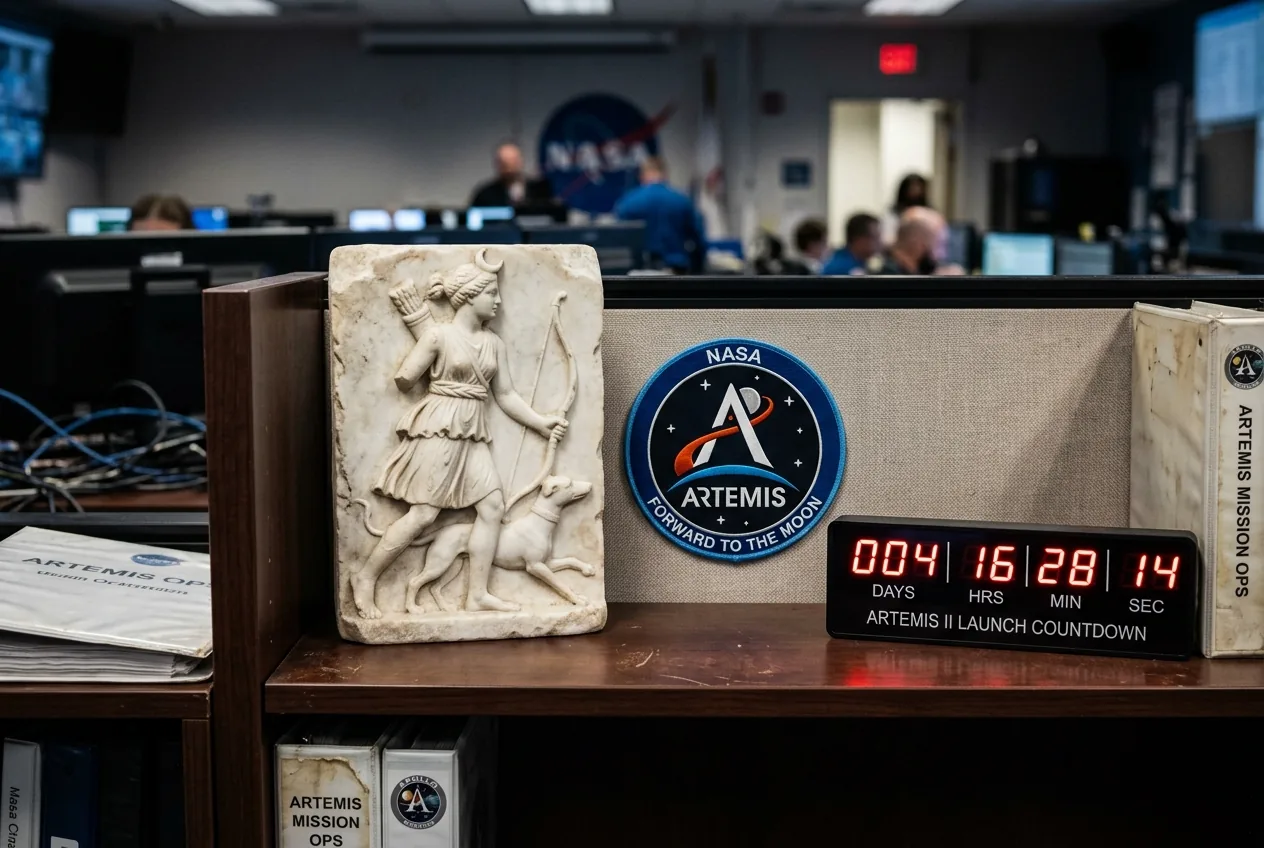
On a shelf in a NASA briefing room this week sat a small plaster relief: a lunar crescent beside the faint suggestion of a bow. It was the kind of image design teams love — compact, emblematic, easy to reproduce on patches and posters — and yet the contrast felt deliberate. Nearby lay a launch cadence chart with a hard date for Artemis 2 and a slip in the projected timeline for Artemis 3. That visual contradiction — mythic clarity overlaid on programmatic messiness — is where the story begins.
The question at the center is simple and oddly modern: who artemis? meet greek. It’s a search term you could type into a browser and expect either a hymn, a museum label or a NASA press release to answer. But the overlap between the goddess of wildlands and an agency planning crewed lunar sorties is not coincidence; it’s a deliberate, sometimes awkward piece of branding that strains against political, technical and cultural realities.
Nut graf: Why a myth matters to a federal program
Give a nation a name and it will use it to tell a story about itself. NASA’s choice of Artemis — the twin sister of Apollo in Greek myth — is meant to signal continuity, inclusiveness and a different kind of lunar program than the Cold War-era Apollo missions. The label affects who gets credit, which contractors get prioritized, and how political appetites are marshalled. Those are not cosmetic decisions: they shape budgets, timelines and, increasingly, which private companies stand to land next on the Moon.
who artemis? meet greek — the goddess and the surprising places she turns up
Artemis in the old sources is not a lunar tourist. She arrives in Homeric fragments and later poems as a huntress, protector of young women, and a figure tied to wild places and childbirth. Over centuries the image layered with Selene (the personified Moon) and others, so by the Roman and Renaissance periods she looks very much at home as a moon-goddess. Museums display marble heads with a bow and crescent carved into their diadems; liturgies and poems preserve a catalogue of her powers and moods.
That layered identity explains why the name feels right for a Moon programme: Artemis is at once familiar to Western audiences, evocative of the Moon’s pale presence, and gendered in a way NASA can use to signal a departure from Apollo’s all-male legacy. The hitch is cultural: classical epics and modern mission statements do not always translate to operational clarity, and the mythology often obscures internal tensions about who benefits from the new lunar economy.
who artemis? meet greek — why NASA picked a mythic twin
The logic of the name is plain on press slides and in the agency’s briefings. Apollo put humans on the Moon; Artemis is supposed to bring them back — including the first woman and the first person of colour to step on lunar soil. Naming the programme after Apollo’s sister makes the rhetorical point instantly: this is the next chapter, not a replay. NASA used that rhetorical shorthand in a series of briefings this month as it previewed Artemis 2’s crewed flyby on or around April 1 and discussed schedule updates announced on March 24.
From Apollo to Artemis: a difference beyond pronouns
That shift promises lower recurring costs and more frequent missions — if the industrial base and contracts hold. It also introduces fragility: contractor slips, a delayed SLS rollout, or a reworked Starship architecture for Artemis 3 create ripple effects. The result is an operational programme more like an ecosystem than a single enterprise — and ecosystems are both more resilient and more prone to subtle failure modes than centralized machines.
Three tensions the name illuminates
Call them branding tensions: the first is symbolic versus operational. Artemis as a symbol invites inclusion and a public narrative; Artemis as a program lives and dies in cryogenic plumbing, avionics, and launch slots. Second, there is an equity tension: promising the “first woman” on the Moon is politically resonant, but it places telescopic focus on astronaut selection while underlying infrastructure — lunar habitats, surface power, and logistics — remains uncertain. Third, the commercial tension: NASA’s reliance on private landers and potentially SpaceX Starship innovations for Artemis 3 speeds timelines but leaves crucial elements outside direct agency control.
Those tensions are visible in current documents and headlines. A March 24 update from the agency reiterated ambitions; an earlier report about a launch-vehicle glitch and a pad rollback in late February showed how hardware problems can instantly muddle a carefully curated narrative. In short: the story NASA wants the name to tell and the program’s day-to-day problems are often at odds.
Why mythic naming matters beyond marketing
Choosing Artemis is not mere poetry. Names shape policy and public expectations. When NASA promises an Artemis architecture that is “sustainable,” it obliges lawmakers and funders to judge future budgets against that promise. When the program says it will include international partners and commercial providers, those actors begin investing millions and signing memoranda of understanding. The consequence: myth acts as a north star for real investments, and when the star wobbles, contracts and political commitments can become points of friction.
There are also cultural stakes. For audiences in Europe, Asia and Africa, Artemis’s symbolic reach is uneven: the myth is Western, the political capital predominantly American, and international partners may prefer a more neutral framing. That mismatch matters because today’s lunar architecture depends on cooperation not competition.
What the Artemis name obscures — and what it reveals
Artemis does a neat rhetorical job of promising something new: wider access, scientific return, and a foothold for a lunar economy. But the label obscures trade-offs: adding more partners means more coordination, faster commercial innovation raises questions about regulation and lunar property norms, and a programme spread across vendors increases systemic risk. There is also the human cost: every slip in schedules or budgets delays opportunities for scientists, engineers and potential astronaut candidates waiting for the promised ‘firsts’. These are not abstract concerns — they are real decisions about who gets to go and when.
At the same time the name reveals an intention. Picking Artemis is a public commitment to a different kind of story about exploration — one that at least aspires to be less exclusionary than Apollo. The success or failure of that aspiration will be measured not in press photos but in the cadence of launches, the stability of partnerships, and whether the Moon becomes a place for routine science and commerce or just another geopolitical chessboard.
Final scene: a patch, a countdown clock and a question
In the mission control display, a patch with a crescent and a stylised bow sits beside a digital countdown to Artemis 2. The image is tidy; the clock is not. For now, the name Artemis will do the rhetorical heavy lifting — promising women on the Moon, sustainability and international cooperation — while engineers and policy teams try to reconcile those promises with budgets, launch vehicles and contracts. The real test of the name will not be the poetry of its origin but whether the programme’s messy, expensive logistics can match it.
That leaves a simple public question, older than rockets and as modern as a mission patch: do we mean what we name? For NASA and the global partners signing up to Artemis, that question is no longer rhetorical.
Sources
- NASA (Artemis program briefings and press materials)
- Homeric Hymns and Pausanias (classical sources on Artemis)
- Smithsonian National Air and Space Museum (historical context on Apollo and lunar exploration)




Comments
No comments yet. Be the first!