Frontline detail: a statistic that sounds like doctrine
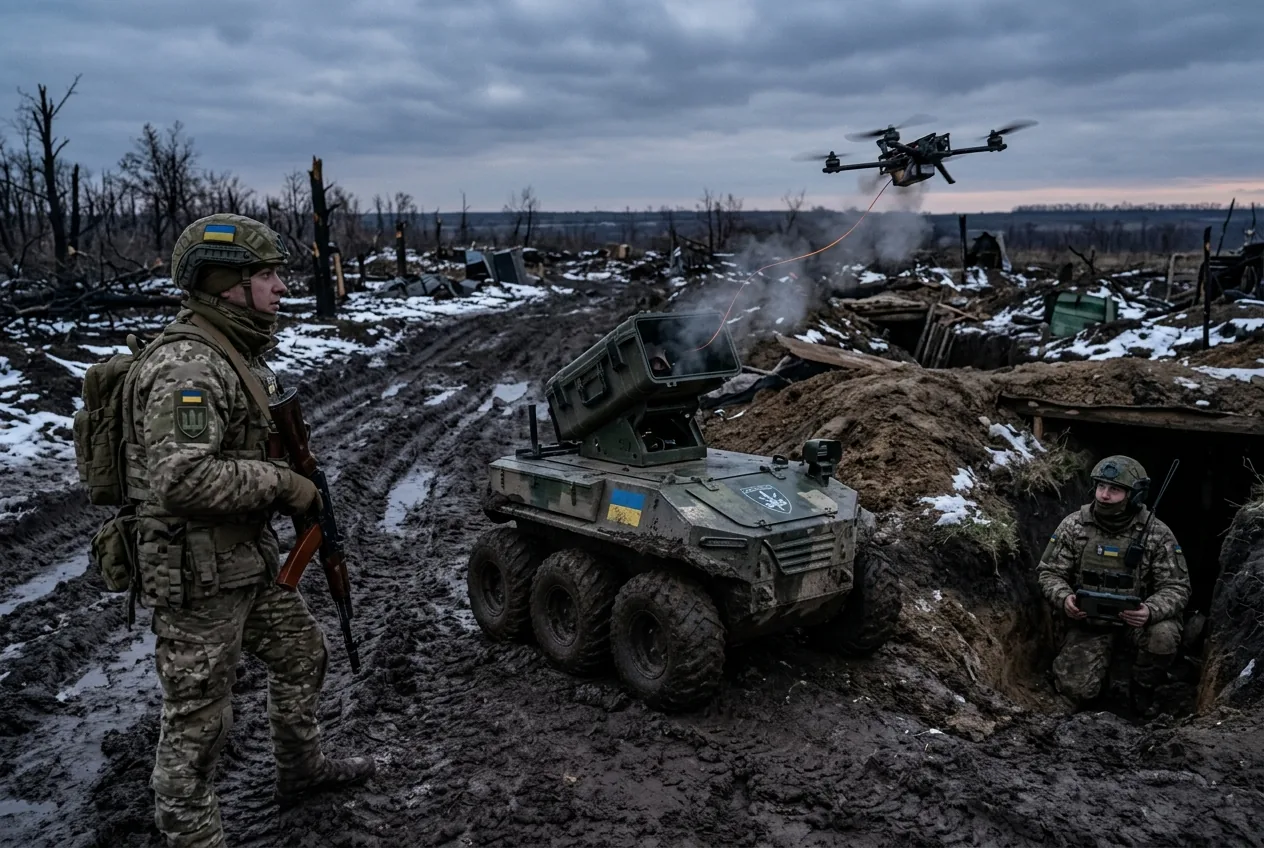
In a terse statement this week, ukraine says replaced human soldiers with ‘ground robots’ in over 21,500 missions in the first quarter of the year — a figure that landed as both a metrics boost and a policy headache. The defence ministry recorded more than 9,000 uncrewed ground vehicle (UGV) missions in March alone, up from roughly 2,900 in November, and said 167 units now deploy UGVs compared with 67 last year. The raw number — 21,500-plus missions — is the kind of metric modern militaries love: simple, repeatable, politically useful.
ukraine says replaced human soldiers with ground robots — scale and mission types
The ministry’s tally mixes combat and logistics missions: everything from ammunition runs and casualty evacuations to mine-laying, demining and remote firing. UGVs in Ukrainian service today range from cheap, wheeled stretchers used to drag wounded troops out of exposed positions to larger, multipurpose platforms that can carry 400kg–880lb of cargo, launch fiber-optic drones, or be fitted with weapons and electronic-warfare payloads. Companies such as Ratel Robotics show how a single chassis can be a logistics mule in the morning and a drone-launch base at night; small firms have adapted machines to carry four fiber-tethered drones, extending effective surveillance into jammed areas without exposing operators.
That variety is important: most of the 21,500 missions were not some futuristic autonomous assault but practical, remote-piloted tasks that reduced soldier exposure. In short: robots often took the place of the human who would otherwise have walked, crawled or driven into a kill zone.
ukraine says replaced human operators — who uses the robots and why
The spread of UGVs is not limited to a few elite units. The defence ministry said four of the top five UGV-using formations were combat brigades on the eastern and northeastern fronts; the other was a specialised medical battalion that has pioneered casualty-evacuation robots. Volunteers, foreign non-profits and small Ukrainian arms makers have all contributed systems and improvised tactics, which helps explain why the number of units deploying UGVs nearly tripled between November and March.
Cheap attrition beats precious perfection
One recurring lesson from on-the-ground reporting is that the best UGV is the one you can replace. Field veterans, and even Western observers, stress that simplicity and low cost matter because attrition is high. Some Ukrainian commanders say many of their robots cost under $10,000; examples like Tencore’s Termit are often priced nearer $14,000. Others — especially larger, weaponised platforms — cost far more, but commanders warn against high-priced perfection when $800 drones and small munitions can take an expensive machine out of play.
That economics drives design choices. Cheap chassis, off-the-shelf sensors, modular payload bays and locally sourced repairs have become the norm. The result is a battlefield ecosystem where quantity, rapid iteration and redundancy can outcompete single, high-spec platforms — an approach that should make procurement officers in Berlin and Brussels sit up straight. Germany has the machining capacity; Brussels can sign cheques; but the frontline needs volume and speed more than a boutique robot with a glossy brochure.
Fiber-optic drones, jamming, and the limits of autonomy
Two technical threads run through recent UGV innovations. First, fiber-optic drones: tethered UAVs receive control and video through a thin cable, making them largely immune to radio-frequency jamming. Ground robots that can carry and launch these tethered drones keep operators farther from the front while providing near-real-time eyes. Ratel Robotics’ demonstrations of a launch-capable Ratel H model show that a UGV can be more than a carrier — it becomes a distributed base station in contested airspace.
Second, autonomy is constrained. Most systems are remote-control, line-of-sight or operator-in-the-loop arrangements. Environments cluttered with debris, crops and trenches defeat simple SLAM (simultaneous localisation and mapping) routines, and electronic warfare can blind sensors. For now, autonomy is an assist, not a substitute: UGVs reduce human exposure on discrete tasks but do not replace tactical judgement or command decisions.
Strategic and ethical frictions
The operational payoffs — fewer soldiers walked into obvious ambushes — sit next to thorny strategic and ethical questions. If robots make dangerous tasks less costly in human terms, will militaries be tempted to accept greater risk or expand offensive operations? Who is responsible when a remotely operated weapon misidentifies a target? Ukraine’s experience shows both restraint and improvisation: many units treat robots as tools for specific, high-risk chores or as last-resort CASEVAC (casualty evacuation) options rather than as autonomous killers.
Legal frameworks lag technology. NATO allies are observing closely because how you integrate UGVs changes doctrine, rules of engagement, and medical evacuation procedures. The cheap-robot model also implies a different industrial policy: mass-producible gear that can be repaired locally, rather than highly protected supply chains for exotic components. That matters for European defence planners deciding whether to subsidise bespoke systems or scale resilient, lower-cost production lines across the continent.
Production, supply chains and a distinctly European moment
For Brussels and Berlin, Ukraine’s robot surge is simultaneously an operations manual and a warning. On one hand, Ukrainian firms and partners have fielded usable platforms fast because the political and industrial imperative is immediate. On the other hand, scaling manufacturing across the EU will test export controls, component supply — particularly of sensors and rugged batteries — and procurement rules that prize competition and audits over speed.
Germany’s workshops can build the frames; Poland and the Baltics supply software and field crews; France and Italy have relevant subsystems. But matching the Ukrainian model — rapid iteration, low unit cost, and local repair networks — may require changing public procurement norms. If Europe wants robot-aided deterrence it will have to decide whether to buy a few expensive systems for parade-ground demonstrations or fund thousands of cheaper platforms that units can expend without bureaucratic remorse.
Where this leaves the battlefield next
In operational terms, ground robots are not replacing frontline soldiers en masse; they replace the most dangerous chores those soldiers performed. UGVs are tools that shrink immediate risk for a unit while shifting some risk to logistics and maintenance networks. The longer-term consequence could be cultural: if commanders grow comfortable sending machines into danger, the calculus of human exposure and acceptable loss may quietly change.
Practically speaking, Ukraine’s Q1 numbers are a demonstration of scale and improvisation more than a technological leap. They show what happens when necessity meets a domestic supplier base and international attention: rapid adoption, high attrition, and continuous adaptation. For European planners, the lesson is blunt: build for numbers, not just headlines.
Germany has the machine tools; Brussels has the paperwork; Ukraine's experience shows what to do with both — but only if European procurement can match the tempo of war, not the tempo of committees.
Sources
- Ukraine Ministry of Defence (DELTA battle management system statement)
- Ratel Robotics (company demonstrations and product information)
- Ukrainian Defence Minister Mykhailo Fedorov statements
- Tencore / Termit platform (manufacturing and field reports)
- Da Vinci Wolves Battalion (robotics unit reporting)




Comments
No comments yet. Be the first!