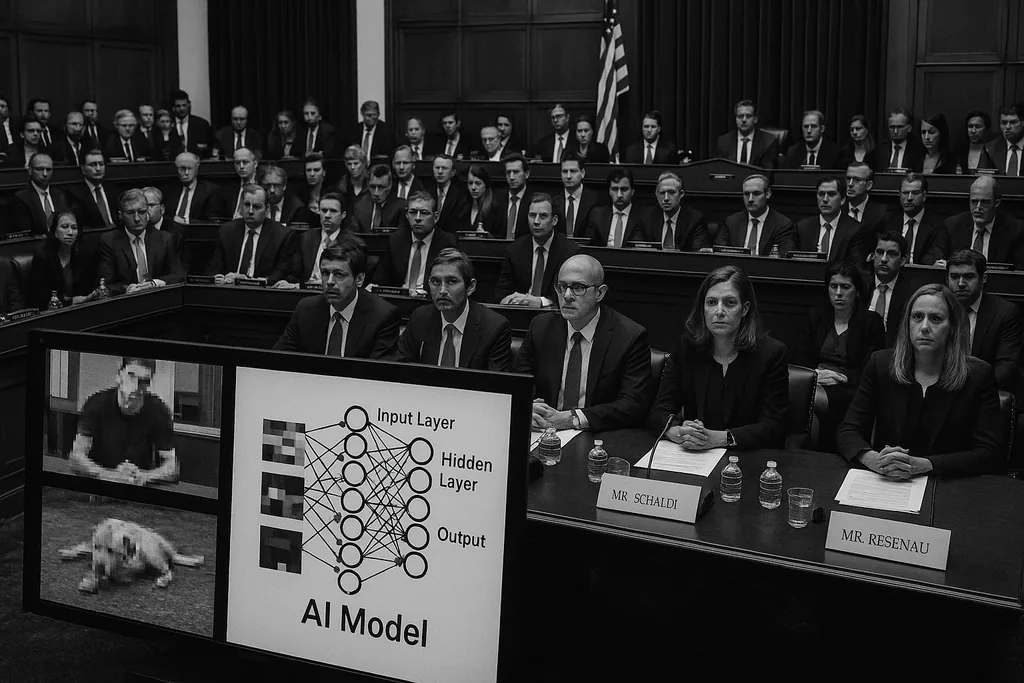
The moment: why “american democracy know might” matters now
On March 9, a headline from a popular podcast snapped into the public conversation a sentence meant to shock: american democracy know might. It was shorthand for a new, urgent anxiety — that a cluster of technologies built to automate speech, images and decision‑making are moving faster than the institutions that keep civic life honest. The episode featured Dean Ball, a technology writer who served as a senior AI policy adviser at the White House last year, and it used a recent confrontation between U.S. defence buyers and private AI labs as the opening scene.
Contract disputes between the Pentagon and prominent labs, and the department’s decision to designate one vendor a "supply‑chain risk," have prompted pushback inside and outside government. For people who worry about democratic norms, the story has two linked edges: the ability of powerful actors to fabricate or flood the information environment with convincing fake content, and the ability of the state to bend private companies by using national‑security labels and procurement leverage. Both trends, listeners and experts told the show, point at how fragile the shared facts that underpin democratic choice have become.
american democracy know might — the Anthropic standoff and what state pressure reveals
The dispute over a major AI lab’s role on government contracts is an instructive example. Negotiations between a defense client and a leading research lab recently broke down, and officials labeled the lab a supply‑chain risk — a classification normally reserved for foreign firms suspected of espionage. The move prompted alarm among policy people who view such a label as tantamount to a government threat: accept our terms or lose access to contracts and partners. As Dean Ball put it on the podcast, that dynamic can feel like a near‑tyrannical reach of the state into private enterprise.
Why does that matter for democracy? Because when governments can selectively cut a firm off, when regulatory designations can be applied with political discretionary force, commercial gatekeepers can become de‑facto instruments of political power. That is doubly true in tightly concentrated markets: a handful of labs and chipmakers supply most of the compute, models and hosting that modern AI needs. When procurement pressure, export controls, or informal sanctions are wielded without clear, durable guardrails and independent oversight, it changes the incentives for companies and the options available to citizens and politicians alike.
Those incentives matter. If policy pushes labs to hide guardrails or accelerate releases to keep government business, or conversely if firms abandon public interest safeguards to retain commercial clients, democracy’s ability to adjudicate political conflict on the basis of shared evidence is degraded. That’s not a hypothetical; it plays out today in boardrooms and inside procurement offices, and it shapes who writes the rules and who benefits from them.
american democracy know might — misinformation, deepfakes and the Minnesota test
At the same time, the information ecosystem is being tested on a different front: veracity. Earlier this year, video evidence of violent incidents involving federal agents in a U.S. city created a national backlash because the footage was so plainly at odds with official descriptions. That episode — in which widely circulated recordings helped refute government claims — showed the stabilising power of clear, shared evidence. But it also highlighted the fragility of that stabiliser.
Why fragile? Because the same machine‑learning systems now make it cheap and fast to produce synthetic video, audio and images that look and sound authentic. Researchers have warned about coordinated, AI‑driven "disinformation swarms" capable of saturating social platforms with many subtly different false narratives, overwhelming normal verification processes. If future incidents are accompanied not by a single unambiguous clip but by dozens of plausible but conflicting versions, the public may conclude that the truth is unknowable and cede judgment to whichever authoritative source they trust most — exactly the failure mode authoritarian actors aim for.
A story economy: AI hype, bubbles, and political risk
That storytelling economy creates political side‑effects. Overvalued firms and celebrity founders command outsized attention; acquisitions and media ownership shifts concentrate control of distribution and editorial power. When companies promising to power tomorrow’s public discourse are in the hands of politically aligned oligarchs or when a single chipmaker accounts for a significant share of market indices, vacillations in private capital markets can ripple into civic institutions. And in a crisis, those with control over distribution and compute can shape which narratives survive and which die.
Policy levers and technological safeguards
None of this is inevitable. There are concrete steps that can reduce the risk that technology will outflank democracy. Technical measures include robust provenance systems — cryptographic signatures, traceable content metadata and forensic watermarking for synthetic media — so that photos, videos and model outputs carry verifiable origin information. Standards for provenance need international coordination and independent verification to be effective.
Regulatory and civic measures matter too. Platforms should be required to disclose algorithmic incentives and provide transparency reports about content amplification, especially around elections. Procurement and national‑security authorities must adopt clear, public rules when they label firms or restrict access, and those actions should be subject to judicial or congressional oversight to prevent politicised coercion. Investment in local journalism and public verification infrastructure — funded and legally protected from capture — will strengthen the societal baseline of verifiable facts.
Finally, resilience is social as well as technical. Media literacy campaigns, better funding for fact‑checking operations, rules to limit microtargeted political ads, and bipartisan agreements on digital conduct during elections can blunt the effects of algorithmic manipulation. Building these systems will require cross‑sector cooperation among governments, standards bodies, research institutions and civil society — and urgent attention, because the technologies involved continue to accelerate.
Where we go from here
Technology has always shifted the balance between private power and public accountability. The present moment is distinctive because three powerful forces converge: generative AI that can fabricate convincing evidence, platforms that can amplify and target content at scale, and political actors willing to weaponise both narratives and institutional levers. That combination is why people are saying american democracy know might — it is a shorthand for the collision between rapid technological change and slower, weaker democratic repair mechanisms.
But there is reason for purposeful optimism: the same tools that make deception easier can also be harnessed for verification; the institutions that can be captured can also be reformed and defended. The choice is political and technical, and it will be decided in boardrooms, courtrooms and parliaments as much as in research labs. The most important work over the next decade will be building the public infrastructure and legal guardrails that make it costly, visible and risky to erode the common ground democracy needs.
Sources
- Science (research paper on AI‑driven disinformation swarms)
- Pew Research Center (analysis of data‑center energy and infrastructure)
- Deutsche Bank (report on AI market risks and corrections)
- MIT Sloan (analysis and commentary on AI industry narratives)
- Bank of England (technical report on market vulnerabilities)




Comments
No comments yet. Be the first!