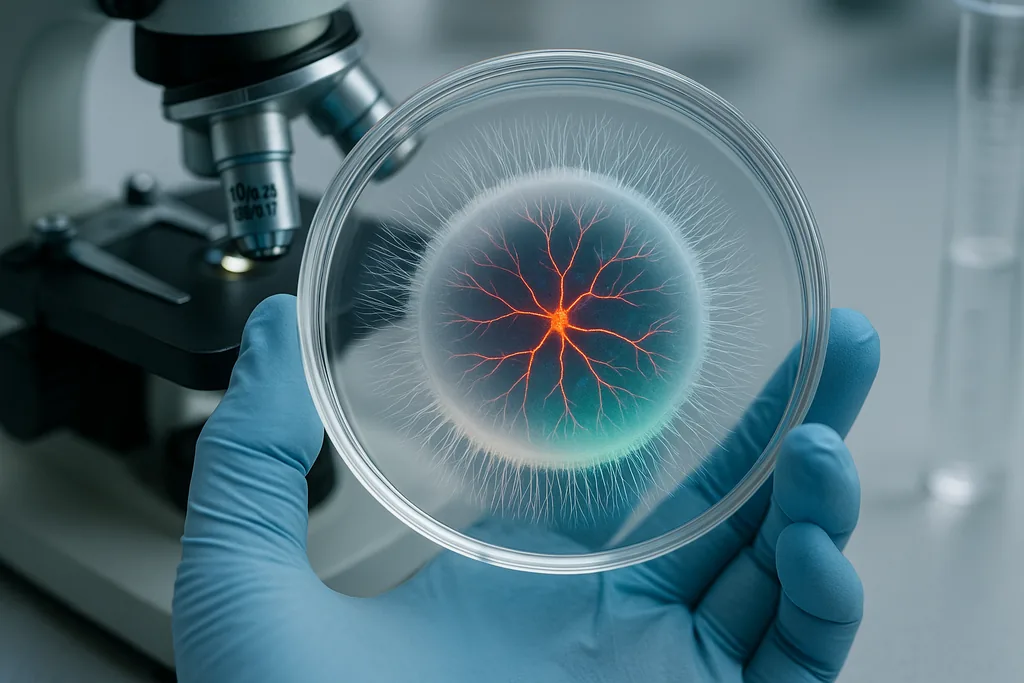
Scientists create novel organism: a brief, hands-on breakthrough
On 16 March 2026, researchers at Tufts University and the Wyss Institute reported that they had successfully caused living cell assemblies to build rudimentary nervous systems inside tiny, self-healing constructs. The experiment — a direct follow-up to earlier work that produced xenobots from African clawed frog (Xenopus laevis) cells — deliberately implanted neural precursor cells into forming tissue spheroids. The result was a new, fully biological entity the team calls a neurobot: a short-lived living construct in which neurons matured, extended axons and dendrites, showed electrical activity, and changed how the organism moved.
Scientists create novel organism: building neurobots
The production of neurobots began with a familiar technique from developmental biology: researchers excised small groups of cells from early frog embryos and allowed them to self-assemble into spherical, ciliated bodies that swim by coordinating surface cilia. At a narrow window in that assembly process the team inserted clusters of neural precursor cells — cells that had been dissociated and then nudged toward a neuronal fate by timing — into the center of the forming sphere. Over the next few days those precursors differentiated into neurons, extended branching processes through the interior and in some cases reached the outer layer of ciliated cells.
Crucially, the neurobots were not genetically engineered. They were assembled from primary frog cells and relied on the cells' intrinsic developmental programmes to organize. Researchers used microscopy and immunostaining to identify axons, dendrites and synapse-associated proteins; calcium imaging to show electrical activity across the network; and transcriptome sequencing to reveal broad changes in gene expression. The neurobots lived for roughly nine to ten days, sustained by yolk platelets in the embryonic cells, and could self-repair minor injuries in that time.
Scientists create novel organism: what the primitive nervous system looked like
Describing the neurobot nervous system requires two clarifications. First, "primitive" here means structurally and functionally simple: the networks are composed of neurons that self-organize into loose, variable patterns rather than the tightly specified circuits you find in an animal shaped by millions of years of evolution. Second, primitive does not imply nonfunctional. The implanted neurons developed hallmark neural features — axons and dendrites, synaptic markers, and spontaneous electrical activity — and formed small-scale networks able to influence body-level behavior.
Under the microscope no two neurobots had identical wiring. Some neural processes made contact with the ciliated surface and with each other, and calcium imaging revealed loosely coordinated activity across regions of the construct. When researchers exposed neurobots to pentylenetetrazole, a drug that modifies neural excitability, their movement patterns changed in ways that differed from nerveless controls. That pharmacological sensitivity provides strong evidence that the nascent nervous systems were functionally coupled to the motor structures that drive locomotion.
How the team tested behaviour, genes and function
The investigators combined behavioral assays, pharmacology and molecular profiling to build a convergent case that neurons were both present and active. Movement tracking showed that neurobots tended to grow larger and more elongated than controls and exhibited more complex, repeating trajectories across a dish instead of the simple circular or halted motions typical of nerveless xenobots. Applying a GABA-blocking drug produced population-level differences between neurobots and controls, implicating neural signaling in the altered locomotion.
At the molecular level bulk RNA sequencing found thousands of genes differentially expressed in neurobots versus controls. Not only were expected neural genes upregulated — ion channels, neurotransmitter receptors and synaptic machinery — but the team also observed surprising activation of genes associated with visual perception and phototransduction. Those results are provocative but preliminary: expression of photoreceptor-related genes does not yet mean functional eyes or light-sensing behaviour, and the researchers emphasize that longer-lived constructs or protein-level assays would be needed to test that possibility.
Comparisons with simple model animals and what 'primitive nervous system' means in context
It helps to compare neurobots with well-studied simple organisms. Caenorhabditis elegans, a nematode used extensively in neuroscience, has a fixed, genetically specified nervous system: 302 neurons with an almost completely mapped connectome and predictable behaviour. Neurobots, by contrast, contain neurons that self-organize within a body plan that evolution never shaped. Their networks are not genetically hardwired or stereotyped; they are emergent, variable and exploratory. This makes neurobots useful for asking what intrinsic cellular rules govern network formation when environmental and evolutionary constraints are removed.
That variability is both scientifically interesting and technically important. While C. elegans offers reproducibility and a complete wiring diagram, neurobots provide a window into the flexibility of neuronal patterning and how simple networks might bootstrap sensorimotor coupling from first principles. Comparing outcomes across these systems can reveal which features of nervous systems require evolutionary tuning and which arise from more ancient cellular programmes.
Potential applications and scientific payoffs
The research is primarily basic science: the immediate goal is to understand the rules cells use to self-organize into functional neural tissue. But the findings point toward longer-term possibilities. If researchers can learn how neurons find targets and wire sensory organs to effectors in novel contexts, that knowledge could inform regenerative-medicine strategies for re-innervating damaged tissues, for designing innervated engineered tissues, or for creating living sensors and biohybrid devices that integrate sensing and actuation without rigid electronics.
Technically, the team envisions using optogenetics and more refined molecular tools to causally link neural activity to ciliary beating and behaviour, and exploring whether extended lifespans or altered conditions let the upregulated sensory genes produce functional proteins. However, translating these basic insights into medical therapies would require years of work, additional safety testing, and careful scaling from tiny, short-lived constructs to clinically relevant tissues.
Ethics, biosafety and oversight
Research that constructs new living entities inevitably raises ethical and biosafety questions. The neurobots reported here are short-lived, non-reproductive assemblies made from frog cells and were produced without genetic modification. Still, the emergence of electrically active neural networks and the activation of genes tied to sensory systems mean researchers, funders and regulators must re-evaluate oversight frameworks for tissue-engineering experiments.
Key concerns include dual use (how results could be misapplied), welfare or moral status if constructs acquire more complex neural function, containment and environmental release risks, and standards for transparency and review. The authors and institutions stress that the work is performed under established laboratory biosafety practices and that the constructs cannot survive or reproduce outside controlled conditions. Nevertheless, the field is maturing faster than existing governance in some areas, and many scientists call for interdisciplinary oversight that includes ethicists, biosafety experts and public engagement as these platforms evolve.
The next steps for the team are empirical and procedural: replicate results, probe mechanisms with causal tools, test whether light or other stimuli modify behaviour, and work with institutional review structures to ensure responsible development. The experiments are a reminder that basic discovery in developmental biology can create new categories of biological systems that require both scientific curiosity and careful stewardship.
Sources
- Advanced Science (research paper on neurobots)
- Tufts University (Allen Discovery Center / Tufts Now coverage)
- Wyss Institute (Harvard) research materials




Comments
No comments yet. Be the first!